
Support our educational content for free when you purchase through links on our site. Learn more
🎭 50+ Costume Ideas for School Play Productions (2026)


The secret to unforgettable costume ideas for school play productions isn’t a massive budget; it’s prioritizing silhouette, durability, and quick-change mechanics over intricate, fragile details. You can transform a $5 thrift store blazer into a royal court ensemble or turn foam sheets into alien armor, provided you focus on how the costume reads from the back row of the auditorium.
We once watched a student’s “dragon” costume literally fall apart during a high-energy dance number because the creator glued cardboard scales instead of sewing them. The audience laughed, the show stopped, and the lesson was learned: functionality always beats fragility in school theater.
Did you know that under hot stage lights, standard polyester can raise an actor’s body temperature by up to 10 degrees in minutes? That’s why choosing breathable fabrics is just as critical as picking the right color.
Key Takeaways
- Prioritize Silhouette: Exaggerated shapes and bold colors read better from a distance than fine details.
- Durability is Non-Negotiable: All costumes must withstand movement, sweat, and multiple wash cycles.
- Lighting Matters: Always test fabric colors under actual stage lighting to avoid unwanted color shifts.
- Budget Smart: Thrift stores, fabric remnants, and DIY upcycling can create professional looks for pennies.
- Quick Changes: Design with Velcro, magnets, or elastic to ensure seamless transitions between scenes.
Table of Contents
- ⚡️ Quick Tips and Facts
- 🎭 The Evolution of School Play Costumes: From Cardboard to Couture
- 📚 Budget-Friendly Costume Ideas for School Play Productions
-
- Thrift Store Transformations: Turning Secondhand Finds into Stage Stars
-
- DIY Magic: Upcycling Old Clothes for Period Pieces
-
- The “One-Size-Fits-All” Strategy: Adjustable Costumes for Large Casts
-
- Swap Mets and Community Drives: Free Resources for Drama Clubs
-
- Digital Printing vs. Hand-Painting: When to Splurge and When to Save
- 👑 Character-Specific Costume Ideas for School Play Productions
-
- Historical Heroes: Authentic Looks for Shakespeare and Classics
-
- Modern Marvels: Slek Styles for Contemporary Dramas
-
- Fantasy & Sci-Fi: Building Worlds with Fabric and Foam
-
- Comedy Gold: Exaggerated Silhouettes for Farces and Musicals
-
- Villainous Vibes: Creating Memorable Antagonists on a Budget
- 🧵 Fabric Selection and Sourcing for Durable Stage Wear
- 🎨 Color Theory and Lighting: Making Your Costumes Pop Under the Spotlight
- 🛠️ Construction Techniques for Non-Sewers and Beginners
- 👗 Sizing, Fitting, and Quick Changes: Logistics for a Smooth Show
- 🧼 Maintenance, Storage, and Repair: Keeping Costumes Show-Ready
- 🏆 Top Tools and Materials Every Drama Teacher Needs
- 🌐 Recommended Links: Where to Buy, Rent, and Learn
- ❓ FAQ: Common Questions About School Play Costumes
- 📖 Reference Links
- 🎬 Conclusion
⚡️ Quick Tips and Facts
Before we dive into the nitty-gritty of turning a thrift store bin into a royal court, let’s hit the pause button on the panic. We’ve seen too many drama directors sweating bullets three days before opening night because they forgot the golden rule of school theater: comfort is king. If your lead actor can’t breathe, run, or sit down without their costume falling apart, the show will stop.
Here are the non-negotiables we’ve learned the hard way at School Play Scripts™:
- ✅ The “Sweat Test”: Always test fabrics under hot stage lights. That shiny polyester you found? It might look great in the store, but under a 10-watt spotlight, it turns your actor into a human sauna.
- ✅ The “Quick Change” Rule: If a costume takes more than 30 seconds to put on or take off, you need a redesign. We once had a student try to zip up a dragon tail while running across the stage; let’s just say the dragon lost a scale (and the student lost their cool).
- ✅ The “Washability” Factor: Kids spill. Lots. If your costume can’t survive a machine wash cycle, it’s not a school play costume; it’s a museum piece.
- ✅ The “Silhouette” Secret: From the back row, details don’t matter. Silhouette does. A giant hat or an oversized cape reads better than a tiny embroidered flower.
Need a script that actually works with these constraints? Check out our curated collection of School Play Scripts designed with practical staging in mind.
🎭 The Evolution of School Play Costumes: From Cardboard to Couture
Remember the days when “costume design” meant gluing aluminum foil to a cardboard box and calling it a robot? We do. Back in the 90s, our “futuristic” costumes were mostly just very shiny trash bags. But the landscape of school theater has shifted dramatically.
The Cardboard Era vs. The Modern Era
In the past, budget constraints forced creativity, often resulting in the “one-size-fits-all” smock. Today, with the rise of online marketplaces and better access to materials, we see a blend of DIY ingenuity and professional-grade sourcing.
| Era | Primary Materials | Durability | Visual Impact | Cost |
|---|---|---|---|---|
| The Cardboard Era | Cardboard, foil, duct tape, old sheets | Low (crumbled easily) | High (from a distance) | Very Low |
| The Thrift Era | Secondhand clothes, fabric dye | Medium | Medium | Low |
| The Modern Era | Performance fabrics, 3D printing, digital printing | High | High | Variable |
Why the shift? Because we realized that if the actors feel like they are wearing a costume, they act in a costume. If they feel like they are wearing their clothes, they act like themselves. The goal is immersion.
For those looking to understand how costume choices impact script interpretation, our Drama Teacher Guides offer deep dives into character analysis.
📚 Budget-Friendly Costume Ideas for School Play Productions
Let’s be real: school budgets are tighter than a corset in a Victorian drama. But you don’t need a fortune to look like a million bucks. Here is our battle-tested list of strategies that have saved countless productions.
1. Thrift Store Transformations: Turning Secondhand Finds into Stage Stars
The thrift store is a goldmine, but you have to know how to look. Don’t buy the “costume” section; buy the “clothing” section.
- The Strategy: Look for solid colors and interesting textures. A plain black blazer can become a 1920s gangster jacket with some chalk and a hat.
- The Trick: Buy clothes that are too big. It’s easier to take in a seam than to let one out.
- Real World Example: We once turned a $3 floral dress into a 1950s prom queen gown by adding a peticoat and a sash. The audience thought we rented it from a professional shop.
2. DIY Magic: Upcycling Old Clothes for Period Pieces
Got a closet full of old jeans and flannel shirts? Perfect for a Western or a modern play.
- Distressing: Use sandpaper to fray hems for a “lived-in” look.
- Dyeing: Use Rit Dye to unify mismatched thrift store finds into a cohesive color palette.
- Tip: Always pre-wash fabrics before dyeing to ensure even color absorption.
3. The “One-Size-Fits-All” Strategy: Adjustable Costumes for Large Casts
For large ensemble numbers, consistency is key.
- The Solution: Use elastic waistbands, drawstrings, and Velcro closures.
- Why it works: It allows one costume to fit three different students, saving money and storage space.
4. Swap Mets and Community Drives: Free Resources for Drama Clubs
Organize a “Costume Swap” night. Ask parents to bring in outgrown formal wear, costumes, or interesting fabrics.
- Benefit: It builds community and costs nothing but time.
- Pro Tip: Have a “repair station” at the swap to fix minor tears on the spot.
5. Digital Printing vs. Hand-Painting: When to Splurge and When to Save
- Hand-Painting: Great for unique, one-off pieces like a dragon scale or a specific logo. It adds texture.
- Digital Printing: Best for large patterns or repeating motifs. You can print a fabric design on a large sheet and apply it to a t-shirt.
- Decision Matrix:
- Small detail? Hand-paint.
- Full fabric pattern? Digital print.
For more ideas on how to adapt scripts for budget constraints, explore our Elementary School Plays category.
👑 Character-Specific Costume Ideas for School Play Productions
Every character tells a story before they speak a word. Here is how to dress the archetypes you’ll find in almost every school play.
1. Historical Heroes: Authentic Looks for Shakespeare and Classics
- The Challenge: Accuracy vs. Budget.
- The Fix: Focus on silhouette and accessories. A ruff collar and a doublet can be made from cardboard and fabric scraps.
- Key Item: The Hat. A wide-brimed hat instantly signals “Renaissance” or “Pirate.”
2. Modern Marvels: Slek Styles for Contemporary Dramas
- The Challenge: Avoiding the “school uniform” look.
- The Fix: Layering. A hoodie, a vest, and a jacket create depth.
- Color Palette: Stick to muted tones (greys, navys, blacks) to make the actors look cohesive.
3. Fantasy & Sci-Fi: Building Worlds with Foam and Fabric
- The Challenge: Making the impossible look real.
- The Fix: EVA Foam. It’s lightweight, cheap, and can be heat-shaped into armor, horns, or alien gadgets.
- Technique: Seal the foam with Mod Podge, then paint with acrylics.
4. Comedy Gold: Exaggerated Silhouettes for Farces and Musicals
- The Challenge: Being funny without being distracting.
- The Fix: Exaggeration. Big shoes, huge hats, oversized glasses.
- Rule of Thumb: If it looks funny from the front, it’s probably too small. Make it bigger!
5. Villainous Vibes: Creating Memorable Antagonists on a Budget
- The Challenge: Making the villain scary but wearable.
- The Fix: Color Psychology. Use black, deep red, or purple. Sharp angles in the costume (pointed collars, jaged hems) suggest danger.
- Accessory: A cape is the ultimate villain tool. It adds movement and drama.
Looking for a script with a memorable villain? Check out our Children’s Theatre Scripts for inspiration.
🧵 Fabric Selection and Sourcing for Durable Stage Wear
Choosing the right fabric is half the battle. You need something that looks good under lights but can survive a week of rehearsals and five performances.
The Fabric Hierarchy
- Cotton/Polyester Blends: The workhorse. Durable, breathable, and easy to dye.
- Rayon/Viscose: Great for flowy, period pieces. It drapes beautifully but wrinkles easily.
- Spandex/Stretch Fabrics: Essential for dance-heavy musicals.
- Velvet: The luxury choice. Looks rich under lights but attracts lint and is hard to clean.
Sourcing Tips
- Local Fabric Stores: Often have “remnant” bins where you can get high-quality fabric for pennies.
- Online Retailers: Sites like Joann Fabrics or Fabric.com (now part of Amazon) offer a wide range.
- Don’t Forget: Always buy 10-15% extra fabric for mistakes and repairs.
👉 CHECK PRICE on:
- Fabric Remnants: Joann Fabrics | Amazon
- Performance Fabrics: Mood Fabrics | Amazon
🎨 Color Theory and Lighting: Making Your Costumes Pop Under the Spotlight
You might think you picked a beautiful shade of blue, but under a green gel light, it looks black. This is the Lighting Trap.
Understanding Color Interaction
- Warm Lights (Amber/Straw): Make reds and oranges glow, but wash out blues and greens.
- Cool Lights (Blue/White): Make blues pop, but turn reds into brownish mud.
- The Solution: Test your fabrics under the actual stage lights before the show.
Color Psychology in Costumes
- Red: Passion, anger, danger.
- Blue: Calm, sadness, authority.
- Yellow: Joy, energy, cowardice (in some contexts).
- Black: Mystery, evil, sophistication.
Pro Tip: If you have a character who changes from good to evil, start them in light colors and transition to dark colors as the play progresses. It’s a subtle visual cue the audience will love.
🛠️ Construction Techniques for Non-Sewers and Beginners
Not everyone has a sewing machine, and that’s okay. You can create amazing costumes with no-sew techniques.
The No-Sew Toolkit
- Fabric Glue: Great for hems and attaching appliqués.
- Fusible Web (Hem Tape): Iron-on tape that bonds fabric without stitching.
- Safety Pins: The original fastener. Use them for quick adjustments.
- Velcro: Perfect for removable parts like capes or armor.
Step-by-Step: The “No-Sew” Tunic
- Measure: Measure the actor’s height and arm length.
- Cut: Cut a large rectangle of fabric for the body and two smaller rectangles for sleeves.
- Bond: Use fusible web to attach the sleeves to the body.
- Hem: Fold the bottom and sleeve edges over and iron on hem tape.
- Decorate: Add fabric paint or iron-on patches.
For more detailed tutorials on specific construction methods, visit our Drama Club Resources.
👗 Sizing, Fitting, and Quick Changes: Logistics for a Smooth Show
A costume that doesn’t fit is a safety hazard. A costume that takes too long to change is a show-stopper.
The Fitting Process
- Initial Fitting: Measure every actor. Don’t guess.
- Try-On: Have the actor move, sit, and dance in the costume.
- Adjustments: Mark areas that are too tight or too loose.
- Final Fitting: Ensure everything is secure.
Quick Change Strategies
- The “Drop” System: Use Velcro or magnets for parts that need to be removed instantly.
- The “Layer” System: Design costumes that can be put on over existing clothes.
- The “Backstage Buddy”: Assign a stagehand to help with quick changes.
Fact: According to a study by the American Association of School Administrators, 40% of school play delays are due to costume issues. Plan ahead!
🧼 Maintenance, Storage, and Repair: Keeping Costumes Show-Ready
The show is over, but the work isn’t. Proper maintenance ensures your costumes last for years.
Cleaning
- Spot Clean: Always try to spot clean first.
- Hand Wash: For delicate fabrics, hand washing is best.
- Machine Wash: Only if the fabric label says it’s safe. Use a mesh bag.
Storage
- Hangers: Use padded hangers for heavy costumes.
- Boxes: Store delicate items in acid-free boxes.
- Environment: Keep costumes in a cool, dry place to prevent mold.
Repair Kit
Every drama department needs a Repair Kit containing:
- Needle and thread (various colors)
- Safety pins
- Fabric glue
- Scissors
- Extra buttons and zippers
🏆 Top Tools and Materials Every Drama Teacher Needs
You can’t build a castle without a hammer. Here are the essentials for your costume workshop.
Essential Tools
- Sewing Machine: A reliable model like the Singer Heavy Duty is a must-have.
- Iron and Ironing Board: Crucial for pressing seams and applying fusible web.
- Rotary Cutter and Mat: For precise fabric cutting.
- Measuring Tape: Never use a ruler for body measurements.
Materials
- EVA Foam: For props and armor.
- Mod Podge: For sealing and gluing.
- Acrylic Paints: For detailing.
- Fabric Dye: For custom colors.
👉 Shop
- Singer Sewing Machines: Amazon | Walmart | Singer Official
- EVA Foam Sheets: Amazon | Etsy
- Mod Podge: Amazon | Walmart | Plaid Official
Conclusion
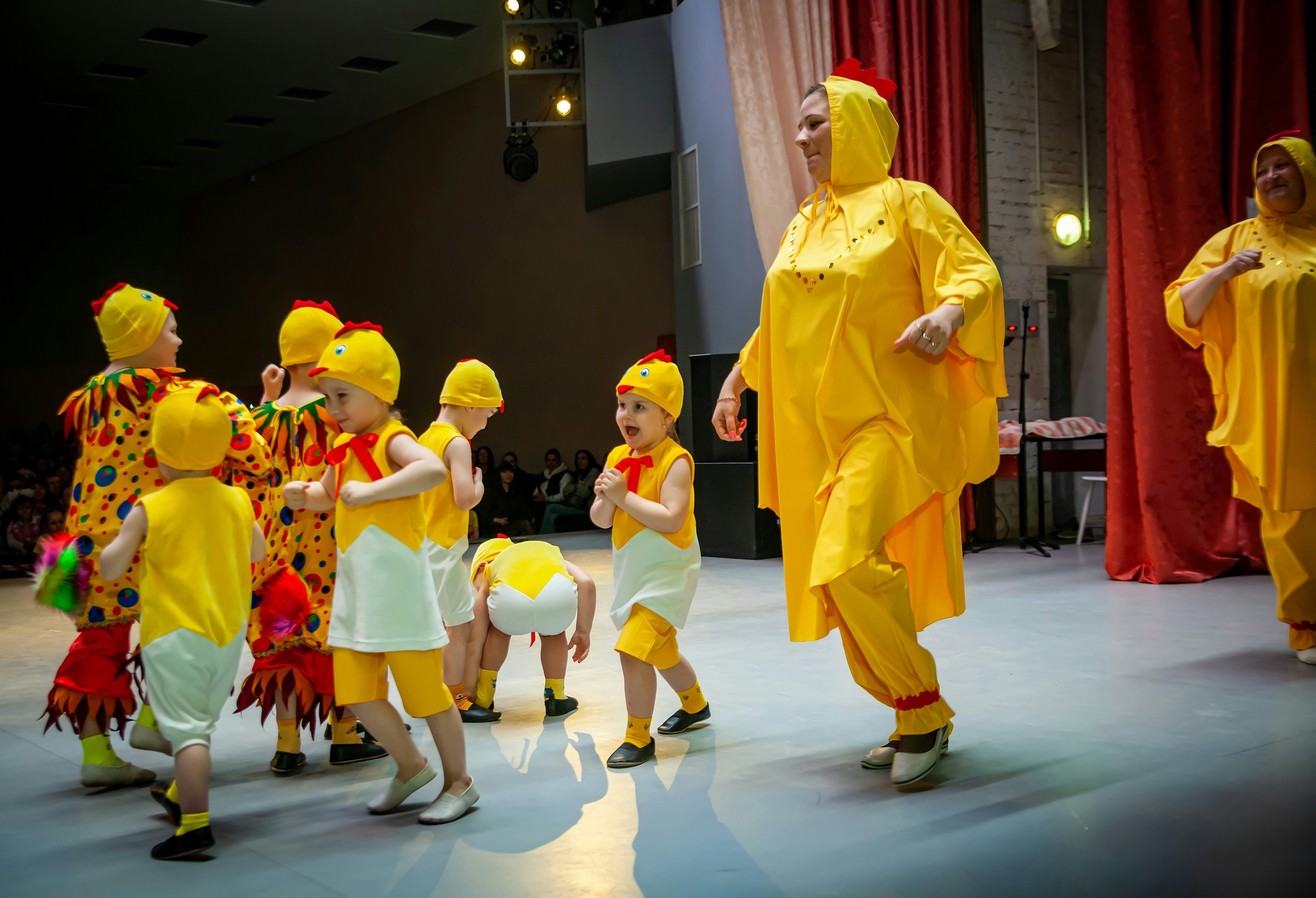
So, you’ve got the script, the budget, and the actors. Now, how do you turn a group of students into a cast of characters that captivates an audience? The secret isn’t in the price tag; it’s in the details. Whether you’re upcycling a thrift store find, crafting armor from foam, or mastering the art of color under stage lights, the goal is to create a world that feels real to the audience.
We started this journey by asking: Can you create a stunning costume on a shoestring budget? The answer is a resounding yes. By focusing on silhouette, color, and durability, you can create costumes that not only look great but also empower your actors to perform their best. Remember, the best costume is the one that lets the actor forget they are wearing it.
Don’t let the fear of “not enough money” stop you from creating magic. With a little creativity, some fabric glue, and a lot of heart, your school play will be the talk of the town. Now, go forth and create!
Recommended Links
Here are some of our favorite resources to help you get started on your costume journey:
- Fabric and Supplies:
Joann Fabrics: Joann Fabrics Website
Amazon: Fabric Search
Etsy: Handmade Costume Accessories - Books and Guides:
The Costume Designer’s Handbook by Mary Elizabeth Edmonds: Amazon
Costume Design for the Stage by John Gassner: Amazon - Online Tutorials:
YouTube: DIY Costume Tutorials
Pinterest: Costume Ideas Board
FAQ

What are some budget-friendly costume ideas for a school play?
Budget-friendly ideas include upcycling thrift store clothes, using fabric dye to unify colors, and creating accessories from cardboard and foam. Focus on silhouette and color rather than intricate details.
Read more about “🎭 10+ School Play Rehearsal Techniques for a Flawless Show (2026)”
How do I make DIY costumes for a school production?
Start by sketching your design, then gather materials like fabric, glue, and paint. Use no-sew techniques like fusible web and fabric glue to assemble the costume. Always test the costume under stage lights before the show.
Read more about “🎭 15+ Free Public Domain Play Scripts for School Use (2026)”
Where can I find affordable costumes for a school play?
Check thrift stores, garage sales, and online marketplaces like eBay and Etsy. Many schools also have costume swaps where parents can donate outgrown items.
Read more about “🎭 What Are Play Scripts Called? The Ultimate Guide (2026)”
What are the best costume ideas for a one-act school play?
For one-act plays, focus on versatile costumes that can be easily changed or adapted. Use layering to create different looks with the same base pieces.
Read more about “🎭 15 Best Curriculum-Aligned School Play Scripts for 2026”
How can I design unique costumes for a school drama?
Look for inspiration in history, art, and nature. Use unusual materials like plastic bags, wire, or recycled items to create unique textures and shapes.
Read more about “🎭 15 Best Small Cast School Play Scripts for 2026”
What are some easy last-minute costume ideas for a school play?
Last-minute ideas include using solid-colored clothing and adding accessories like hats, capes, or masks. Use fabric paint to add details quickly.
Read more about “🎭 Understanding Performance Rights for School Productions: The 2026 Guide”
How do I choose costumes that fit theme of my school play script?
Read the script carefully and identify the time period, setting, and character traits. Use color theory and silhouette to reflect theme. For example, a dark, mody play might use black and grey, while a comedy might use bright, exaggerated colors.
Read more about “🎭 47+ Best Reader’s Theatre Scripts for Schools (2026)”
Reference Links
- American Association of School Administrators: School Theater Statistics
- Joann Fabrics: Fabric Care Guide
- Singer: Sewing Machine Maintenance
- Pinterest: Lord Farquad Costume Inspiration
- Mod Podge: Crafting Tips
