Support our educational content for free when you purchase through links on our site. Learn more
15 Popular Play Themes for Grade 3 Students 🎭

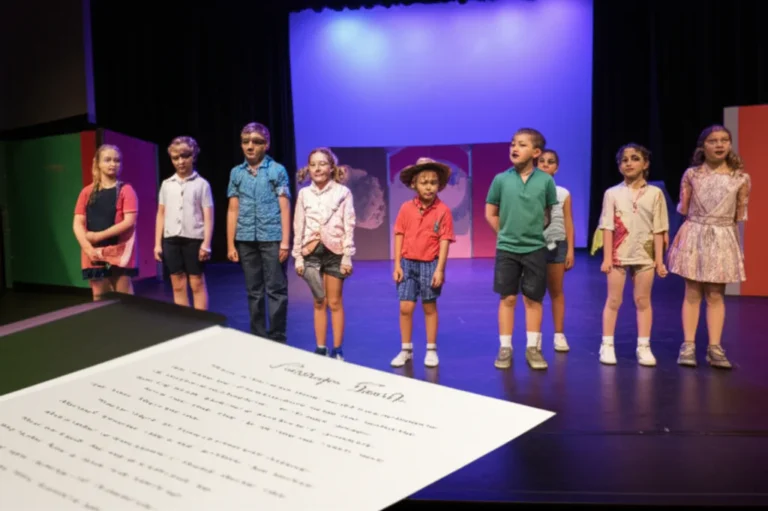
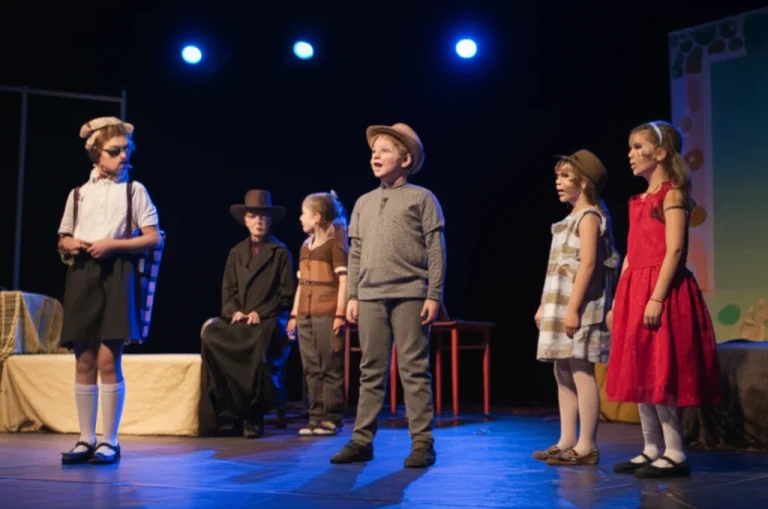
Popular play themes for Grade 3 students include fairy tales, animal adventures, space exploration, mysteries, friendship, and environmental care. The best choice pairs a story kids can follow with a problem they can solve together—and gives every student a meaningful way to take part.
A mystery about a missing map, for example, can bring together a narrator, clue-finders, a chorus, and student-made props. Suddenly, even the student who’d rather not deliver a solo speech has an essential role in cracking the case. 🕵️
Key Takeaways
- Choose an engaging, age-appropriate theme: fairy tales, talking animals, space missions, school comedy, and teamwork are strong starting points.
- Give the story a clear problem: a simple goal and obstacle help third graders follow the plot and keep the audience curious.
- Make participation flexible: narrators, ensemble lines, design tasks, and shared roles help include different interests and confidence levels.
- Connect theme to learning: plays can encourage students to explore literacy, science, history, collaboration, and creative problem-solving.
- Keep staging practical: clear storytelling and a few useful props beat an elaborate set that eats the rehearsal schedule.
Table of Contents
- ⚡️ Quick Tips and Facts About Grade 3 Play Themes
- 🎭 Why Play Themes Matter for Third Graders
- 📚 How Play and Drama Develop in Grade 3
- 🌟 15 Popular Play Themes for Grade 3 Students
- 1. Fairy Tales and Fractured Fairy Tales
- 2. Animal Adventures and Talking Creatures
- 3. Space Exploration and Science Fiction
- 4. Mystery and Detective Stories
- 5. Friendship, Teamwork, and Belonging
- 6. Community Helpers and Everyday Heroes
- 7. Historical Adventures and Local History
- 8. Environmental Care and Nature
- 9. Myths, Legends, and Folktales
- 10. School-Day Comedy and Classroom Adventures
- 11. Sports, Games, and Friendly Competition
- 12. Magical Worlds and Make-Believe
- 13. Cultural Celebrations and Family Traditions
- 14. Problem-Solving and Social-Emotional Learning
- 15. Sily Stories, Wordplay, and Nonsense
- ✍️ How to Choose the Right Play Theme for Your Class
- Match Themes to Grade 3 Reading and Learning Goals
- Consider Class Size, Interests, and Performance Time
- Choose Inclusive, Age-Appropriate Stories
- 🧩 Turning a Theme into a Short Classroom Play
- Build a Simple Plot with a Clear Beginning, Middle, and End
- Create Roles for Every Student
- Add Narrators, Chorus Parts, and Flexible Speaking Roles
- 🎨 Costumes, Props, and Low-Budget Stage Ideas
- 🎤 Rehearsal Tips for Confident Grade 3 Performers
- ✅ Quick Tips for a Successful Third-Grade Play
- 🎬 Sample Grade 3 Play Theme Ideas by Subject
- Conclusion
- Recommended Links
- FAQ
- What kinds of plays do third graders enjoy most?
- How long should a Grade 3 classroom play be?
- How do you include shy students in a class play?
- Can Grade 3 students write their own plays?
- What are easy play themes for a small group?
- Reference Links
⚡️ Quick Tips and Facts About Grade 3 Play Themes
A great Grade 3 play theme gives children room to imagine, cooperate, solve a problem, and be heard. It needn’t involve a castle, a fog machine, or a teacher secretly learning to operate a fog machine.
If you’re choosing a script as well as a theme, start with our guide to what a play script is for Grade 3. Then browse Elementary School Plays and Children’s Theatre Scripts for age-appropriate starting points.
| Quick fact | What it means for your play |
|---|---|
| A theme is more than a setting. | “Space” is a setting; “teamwork helps us solve hard problems” is a theme. |
| Third graders can handle meaningful ideas. | Friendship, fairness, responsibility, courage, and caring for nature work well when presented through concrete characters and situations. |
| Flexible casting makes participation easier. | Narrators, chorus parts, ensemble roles, and shared lines can make room for more students. |
| Drama can support literacy. | Students can read dialogue aloud, retell stories, write signs or letters, and discuss character choices. |
| Play-based learning can still involve real work. | In an article on early-grade literacy centers, educator Alissa McCabe writes that “some ‘work’ at this stage is play.” Her examples include restaurant, post office, grocery store, and veterinary-clinic play; adapt these role-play setups for third graders by adding scripts, research, and student-created problems. Read the article. |
| The best theme is one your class can perform confidently. | Match the idea to students’ interests, reading comfort, class size, available time, and support needs. |
Teacher tip: Ask, “What do the characters learn?” That question turns a fun premise into a story with a clear message. The featured video uses the ant and grasshopper story to illustrate preparation and the turtle and rabbit story to highlight persistence. Those familiar tales can spark useful theme discussions, though a class performance can give the characters more than one point of view.
🎭 Why Play Themes Matter for Third Graders
A theme gives a class play its big idea: the feeling, question, or lesson audiences carry out of the room. Students may come for the talking racoon. They remember why the racoon apologized.
A strong play theme can give students a shared purpose as they:
- Practice speaking and listening by performing lines and responding to scene partners.
- Explore character motivation by asking what each character wants and why.
- Work through a problem together, from a missing library book to a spaceship with one faulty button.
- Connect drama to classroom learning in literacy, science, social studies, and social-emotional learning.
- Build a sense of belonging when roles and creative contributions are designed to include everyone.
Drama is not a substitute for reading instruction, science experiments, or thoughtful class discussion. It can, however, give students a lively context for applying those skills. The National Core Arts Standards for Theatre describe learning in areas including creating, performing, responding, and connecting—useful lenses when planning a classroom performance.
Theme, topic, setting, and moral: what’s the difference?
These terms are easy to mix up. Here’s a classroom-friendly distinction:
| Story element | Example | The question it answers |
|---|---|---|
| Topic | Friendship | What is the story about broadly? |
| Setting | A school, forest, or planet | Where and when does it happen? |
| Plot | Friends search for a missing map | What happens? |
| Theme | Trust grows when people listen and help each other | What bigger idea does the story explore? |
| Moral or lesson | “Tell the truth when you make a mistake” | What specific takeaway might an audience hear? |
A story can explore a theme without announcing a lesson at the end. That’s often better drama: audiences get to think instead of being handed a moral on a glittery poster.
📚 How Play and Drama Develop in Grade 3
Grade 3 students bring a mix of experience to performance. Some happily invent whole planets during lunch. Others prefer a clear script and a quick exit from the spotlight. Both are normal. Plan for variety rather than assuming every student wants the same kind of role.
Many third graders enjoy plots with recognizable rules, funny surprises, teamwork, and a problem they can understand. They may also be ready to explore ideas such as fairness, responsibility, or caring for a community—especially when those ideas are connected to specific choices the characters make.
For developmentally thoughtful planning, the National Association for the Education of Young Children discusses the value of play in children’s learning. Its resources focus broadly on early childhood, so use them as general context—not as a Grade 3 script formula.
What makes a theme a good fit?
Look for a theme that:
- Has a clear, child-understandable conflict.
- Offers several possible characters or contributions.
- Lets students make meaningful choices rather than just repeat a slogan.
- Can be staged with simple props and sets.
- Treats characters respectfully and avoids turning differences into jokes.
- Gives the audience something to wonder about, laugh at, or discuss.
One quick test we use: Can students explain what the main character wants and what gets in the way? If they can, you have the beginnings of a playable story.
🌟 15 Popular Play Themes for Grade 3 Students
“Popular” doesn’t mean every class will choose the same theme. It means these ideas tend to offer useful ingredients for an elementary school play: imaginative settings, understandable conflicts, flexible roles, and lots of chances for student creativity.
| Theme | Possible central question | Easy stage element |
|---|---|---|
| Fairy tales | Can old stories change when characters make new choices? | A signpost or cardboard castle |
| Animal adventures | How do very different creatures solve one problem? | Simple animal gestures or masks |
| Space exploration | What does a crew need to do when a plan goes wrong? | Paper control panels |
| Mystery | Can clues help a team discover what happened? | A notebook or clue cards |
| Friendship | How do friends repair a misunderstanding? | Shared classroom or playground setting |
| Community helpers | How do people contribute to a neighborhood? | Handmade signs or pretend tools |
| History | How might people from different times see the same event? | A “time-travel” doorway |
| Environment | How can a community care for a shared habitat? | Recycled-paper props |
| Myths and folktales | What happens when a familiar tale gets a new point of view? | A storyteller or chorus |
| School comedy | What if an ordinary school day took a silly turn? | Desk, backpack, or announcement |
| Sports and games | How does a team handle winning, losing, or changing rules? | A ball or handmade scoreboard |
| Magical worlds | What rules govern a world where anything seems possible? | A simple wand or map |
| Cultural celebrations | How do families and communities celebrate meaningfully? | Student-created signs or music |
| Problem-solving | What can characters do when they disagree? | A shared object or challenge |
| Wordplay and nonsense | What if language followed delightfully odd rules? | A sign with a made-up word |
1. Fairy Tales and Fractured Fairy Tales
Fairy tales give students a familiar launchpad: a forest, a quest, a surprise helper, a confusing rule. A fractured fairy tale turns the familiar version around. What if the giant is afraid of heights? What if the wolf wants to join the picnic committee?
Why it works: Familiar characters help audiences follow the story, while a twist gives students room to create something original.
Try this: Retell a tale from a side character’s perspective, swap the setting, or let the characters hold a meeting to rewrite an unfair rule.
Teacher caution: Avoid treating a culture’s sacred or living traditions as interchangeable “fairy-tale material.” Choose stories thoughtfully and credit sources where appropriate. The Library of Congress’s Folklife resources offer a starting point for exploring folklore and cultural traditions with care.
2. Animal Adventures and Talking Creatures
A talking-animal play can be funny, expressive, and surprisingly thoughtful. A group of forest animals might disagree about a new bridge; ocean creatures might organize a rescue; birds might plan a better neighborhood.
Why it works: Animal characters offer a playful way to explore coperation, habitats, differences, and responsibility.
Try this: Give each creature a distinct strength, then make sure no single animal can solve the whole problem alone. That keeps teamwork at the center instead of crowning one “best” character.
Watch for: Stereotypes. A character can be boastful, timid, or clever without making an entire species—or a real-world group—the joke.
3. Space Exploration and Science Fiction
Space themes make it easy to invent settings and dramatic problems: a crew receives a strange message, a moon rover gets stuck, or an alien visitor misunderstands an ordinary school rule.
Why it works: Students can combine science vocabulary, imagination, collaboration, and problem-solving.
Try this: Give the crew one clear mission and one complication. Add a “mission control” narrator role, a crew chorus, or student-designed planet descriptions.
For science connections, check NASA’s child-friendly NASA Space Place for space topics and activities. Keep fictional inventions distinct from real facts: students can be imaginative without accidentally presenting a made-up planet as a NASA discovery.
4. Mystery and Detective Stories
A mystery invites the audience to pay attention. Who moved the classroom plant? Where did the library bookmark go? Why is there a trail of paper stars in the hallway?
Why it works: Clues, suspects, and a reveal give students a clear structure and encourage careful listening.
Try this: Plant three clues before the solution. Make the final answer fair: an audience should be able to look back and say, “Ah, that makes sense!”
Keep it kind: Use harmless mysteries rather than stories that make a student, family, or community member the target. The missing item can be a prop, not someone’s personal belonging.
5. Friendship, Teamwork, and Belonging
Friendship plays can explore joining a group, sharing a job, repairing a misunderstanding, or realizing that people contribute in different ways.
Why it works: Students recognize the emotional stakes, and theme can support classroom conversations about listening and inclusion.
Try this: Give characters different perspectives without making one person a villain. A good conflict might begin when two friends interpret the same message differently.
For broader social-emotional learning context, the CASEL framework describes core areas such as relationship skills and social awareness. A play can illustrate these ideas; it shouldn’t be used to diagnose students or force them to reveal private experiences.
6. Community Helpers and Everyday Heroes
A neighborhood play could feature a librarian, crossing guard, nurse, baker, bus driver, caregiver, or a whole team responding to a community problem.
Why it works: Students can see that helpfulness takes many forms—and that everyday heroes are not always wearing capes.
Try this: Start with a shared need, such as preparing for a community fair or helping a new neighbor find the library. Let each character contribute a practical skill.
Add literacy: Students can create pretend menus, letters, notices, maps, or schedules. These ideas echo the restaurant and post-office literacy centers described in Learning at the Primary Pond, which focuses on younger grades but offers adaptable role-play inspiration.
7. Historical Adventures and Local History
History-themed drama can bring a local landmark, community story, or historical question into the classroom. Students might stage a fictional conversation between people from different eras or imagine a museum exhibit that comes to life.
Why it works: It connects performance with research, perspective-taking, and historical context.
Try this: Ask students to distinguish verified facts from invented dialogue. A narrator can explain what is known, while characters dramatize a clearly labeled imagined scene.
For research, the Library of Congress primary-source collections can help teachers find documents and images. Select sources that are suitable for your students and provide context—one old photograph doesn’t tell an entire community’s story.
8. Environmental Care and Nature
A nature-themed play might follow a class caring for a garden, animals adapting to change, or neighbors deciding how to protect a shared outdoor space.
Why it works: The theme can connect to science learning while giving students a concrete community problem to explore.
Try this: Give the characters a goal they can act on. “Save the planet” is enormous; “help the school garden recover after a storm” is a playable challenge.
NASA’s Climate Kids and the U.S. Environmental Protection Agency’s Students resources offer educational starting points. Check the materials yourself before assigning them, and keep the play’s claims accurate and age-appropriate.
9. Myths, Legends, and Folktales
Myths, legends, and folktales often feature transformation, courage, cleverness, or a character facing a difficult choice. A class might perform an adapted tale or create an original story inspired by a broad storytelling pattern.
Why it works: These stories offer memorable characters and recurring motifs that can prompt discussion about theme.
Try this: Ask students to compare versions: Who tells the story? What changes? What does each version suggest?
Respect the source: Stories belong to communities and traditions. When adapting a specific tale, research its origin, credit the source, and avoid presenting a living culture as a costume or a collection of props. The Smithsonian Center for Folklife and Cultural Heritage provides resources for exploring cultural traditions with greater context.
10. School-Day Comedy and Classroom Adventures
A familiar school setting can become wonderfully ridiculous. A backpack gives announcements, the class hamster becomes principal for a day, or the timetable begins rearranging itself.
Why it works: Students know the setting, so they can spend their creative energy on character, timing, and comic surprises.
Try this: Make the humor come from the situation, not from humiliating a student or imitating a real teacher. Repeated jokes, misunderstandings, and over-the-top rules are usually safer comedy tools.
11. Sports, Games, and Friendly Competition
A team play can explore practice, fair play, teamwork, disappointment, or creating a new game everyone can join.
Why it works: A match or challenge gives the plot momentum—and a natural excuse for energetic movement.
Try this: Make the goal broader than winning. Perhaps the team must invent a game that works for everyone, or learn how to respond when the rules change.
The third-grade basketball coaching page supplied for comparison could not be verified because its accessible content showed a security-verification screen. We therefore don’t rely on it for claims about youth sports or Grade 3 performance. For a play, keep physical action simple, supervised, and safe; the dramatic moment is more important than a realistic slam dunk.
12. Magical Worlds and Make-Believe
Magic can make an ordinary problem extraordinary: a library book predicts the next day, a door opens into a world of lost socks, or a spell causes everyone to speak in questions.
Why it works: Imaginative rules can help students invent a story quickly.
Try this: Set one or two clear rules for the magic. If anything can happen at any time, the audience may stop caring what happens next. Give the characters choices and consequences, not just special effects.
13. Cultural Celebrations and Family Traditions
A play about a celebration, meal, song, or family tradition can highlight community and belonging. It can also go wrong if students are asked to represent an entire culture or perform traditions they don’t understand.
Plan with care:
- Invite voluntary student contributions; never put a child on the spot to explain a culture.
- Use reliable sources and, when appropriate, consult community members.
- Avoid costume shortcuts, accents, or caricatures.
- Let characters be individuals, not stand-ins for a whole group.
- Ask whether the story feels respectful to people it represents.
The Smithsonian Folklife Center offers context for cultural heritage and tradition. When the class is unsure, choose a fictional community celebration rather than borrowing a specific ceremony without understanding it.
14. Problem-Solving and Social-Emotional Learning
This theme puts a group of characters in a situation where they need to communicate, make decisions, and repair a mistake. The story might involve a shared project that goes awry or a team that can’t agree on a plan.
Why it works: Students can see strategies in action: listening, asking questions, considering options, and trying again.
Try this: Write the conflict so every character has a reason for their point of view. Then let the group test solutions rather than having one character deliver a perfect speech.
For a story-theme mini-lesson, the featured video asks, “What did the characters learn?” It uses the ant and grasshopper to discuss preparation and the turtle and rabbit to discuss steady effort. Those are useful interpretations, but stories can support more than one thoughtful reading. Invite students to explain their evidence instead of insisting that everyone identify exactly the same message.
15. Sily Stories, Wordplay, and Nonsense
Nonsense plays celebrate language: a town bans the letter “E,” a talking sandwich runs for mayor, or everyone takes idioms literally. They’re excellent for wordplay, sound effects, and a chorus that can join in.
Why it works: Students can contribute short lines, repeated phrases, signs, or sound effects without needing a complicated plot.
Try this: Give the silliness a simple rule. For example, every character must describe ordinary things using a new word. A rule gives the jokes something to bounce against.
✍️ How to Choose the Right Play Theme for Your Class
The “best” theme is the one that fits your students and your practical conditions. A brilliant script that requires a dozen scene changes may be less useful than a simple story your class can rehearse with confidence.
Use this quick planning table:
| Consideration | Ask yourself | What to do |
|---|---|---|
| Student interest | What stories, topics, or activities are students talking about? | Offer a short menu of themes and let students vote or suggest ideas. |
| Reading comfort | Can students manage the vocabulary and line length? | Simplify language, add narration, or share dialogue. |
| Class size | How many students need meaningful participation? | Look for ensemble roles, chorus lines, and flexible casting. |
| Time | How many rehearsals and performance minutes are realistic? | Choose a short, focused plot with few scene changes. |
| Resources | What props, spaces, and help are actually available? | Design around the classroom, not a wish list of elaborate scenery. |
| Inclusion | Can students participate in different ways? | Offer speaking, movement, design, narration, and backstage contributions. |
Match Themes to Grade 3 Reading and Learning Goals
Start with a learning goal, then choose a theme that supports it naturally.
- Reading comprehension: retell a story, compare character decisions, or identify a theme.
- Writing: create dialogue, invitations, signs, clues, or a short original scene.
- Science: stage a problem involving habitats, weather, space, or observation.
- Social studies: explore a local place, community role, or historical question.
- Speaking and listening: practice clear delivery, turn-taking, and responding to others.
Browse Educational Play Scripts for scripts connected to classroom topics, and use our Drama Teacher Guides for planning and teaching support.
Consider Class Size, Interests, and Performance Time
A small class can perform a mystery with distinct characters. A large class might thrive in a myth with a chorus of clouds, trees, reporters, or narrators. Neither format is automatically better; the right one depends on how students want to participate.
Before choosing, decide:
- How many students need a speaking part?
- Can roles be doubled or shared?
- How long should the finished performance be?
- How many rehearsals can you reasonably schedule?
- Will the performance be for classmates, families, or another audience?
When time is limited, select a short script and use repeated lines or narration to keep transitions simple. A clear two-minute scene can feel more polished than a sprawling play that never quite finds its ending.
Choose Inclusive, Age-Appropriate Stories
An inclusive play makes room for students to participate without requiring anyone to disclose personal experiences or perform an identity for the audience.
Check for:
- Flexible casting: characters needn’t be defined by gender unless the story requires it.
- Accessible contributions: students can act, narrate, create sound, design signs, or help with props.
- Respectful humor: jokes should not rely on disability, culture, family structure, body, or reading ability.
- Clear content: conflicts should feel manageable and suitable for your particular class.
- Authentic representation: research and consult appropriate sources when portraying a specific community.
For ideas that suit elementary audiences, visit Elementary School Plays and Children’s Theatre Scripts.
🧩 Turning a Theme into a Short Classroom Play
A theme becomes a play when characters want something and encounter a problem. Here’s a practical sequence we use to turn “let’s do a space play” into an actual story.
Build a Simple Plot with a Clear Beginning, Middle, and End
-
Choose the big idea.
Example: People solve problems better when they listen to one another. -
Choose a familiar setting.
Example: A student crew is preparing to visit a new planet. -
Give the characters a shared goal.
They need to deliver a science message before the planet’s weather changes. -
Add one understandable obstacle.
The crew has different ideas about which route to take. -
Let characters try and adjust.
Each idea reveals a useful clue or a new complication. -
Resolve the problem through action.
The team combines their observations and finds a safe route. -
End with a choice, image, or short line that reflects theme.
Avoid a long lecture. A shared action can make the point more clearly.
| Plot stage | Questions for students |
|---|---|
| Beginning | Who are the characters, and what do they want? |
| Middle | What gets in their way? What do they try? |
| Turning point | What new information or decision changes the story? |
| Ending | How is the problem resolved? What has changed? |
Create Roles for Every Student
Start with characters, then add useful ensemble roles instead of inventing unnecessary characters who have nothing to do.
A class play might include:
- Main characters who make key decisions.
- Supporting characters who offer information or challenge a plan.
- Narrators who explain transitions or set the scene.
- A chorus that repeats a clue, sound, or community response.
- A group that helps create a setting through safe movements or sound effects.
- Student roles in prop-making, signs, costumes, or stage transitions.
A practical check: Give every role a purpose. If a character can be removed without changing anything, combine it with another role or give it a meaningful contribution.
Add Narrators, Chorus Parts, and Flexible Speaking Roles
Narrators help audiences follow the action, especially when scenery is minimal or students are still building confidence with long dialogue. A chorus can add rhythm and energy with repeated lines such as, “The clue is here!” or “One team, many ideas!”
Try these options:
- Shared lines: two or more students speak a sentence together.
- Echo lines: one character speaks; a group repeats the key phrase.
- Choice of role: students select a speaking or non-speaking contribution.
- Split narration: several students share the narrator’s work.
- Flexible casting: adjust character count to suit class size.
These are not consolation prizes. Narration, ensemble work, and design all help make a production function.
🎨 Costumes, Props, and Low-Budget Stage Ideas
A classroom play needs clear storytelling—not a Broadway-sized prop room. One well-used object can become a compass, a microphone, or a very important sandwich.
| Stage need | Simple solution | Teacher check |
|---|---|---|
| Set | A few labeled signs or a painted cardboard panel | Can students move it safely? |
| Costume | A color, hat, badge, or simple accessory | Can it be worn comfortably and respectfully? |
| Prop | Recycled paper, classroom objects, or student-made items | Is it safe and easy to handle? |
| Location change | Narration, a sign, or a short sound cue | Can the audience understand the new setting? |
| Sound | Students create gentle sound effects or use approved audio | Is the volume comfortable and the audio licensed for use? |
Make props part of the learning
Students can write menus for a restaurant scene, letters for a post-office story, or clues for a mystery. The role-play center suggestions in Learning at the Primary Pond were designed for younger students, but the authentic reading-and-writing idea can be adapted for Grade 3 with more complex tasks.
Use classroom materials where possible and follow school safety guidelines. Avoid props that are sharp, breakable, difficult to see, or likely to become a projectile once a cast discovers them.
🎤 Rehearsal Tips for Confident Grade 3 Performers
Rehearsals work best when students know what they are practicing. “Run it again” is less helpful than “Let’s try that scene with clearer pauses so the audience catches the clue.”
A step-by-step rehearsal routine
- Read the script aloud together. Pause to explain unfamiliar words.
- Mark entrances and exits. Use floor markers or simple instructions.
- Practice one scene at a time. Focus on the story, not perfect acting.
- Add expression and volume. Ask students to speak to the back of the room without shouting.
- Practice transitions. Rehearse where props go and how the next scene begins.
- Run the whole play. Celebrate what is working, then choose one practical improvement.
- Prepare for the audience. Review where performers stand, how the play starts, and what to do if someone forgets a line.
Support different comfort levels
- Let nervous students begin in pairs or the chorus.
- Provide a copy of the script and time to practice.
- Use cue cards if appropriate.
- Praise clear communication, listening, and teamwork—not only loudness.
- Offer meaningful backstage or design roles without treating them as lesser roles.
- Never require a student to share a personal story as “acting material.”
The National Core Arts Standards for Theatre can help teachers think about performance alongside creating, responding, and connecting. For practical classroom support, explore Drama Teacher Guides and Drama Club Resources.
✅ Quick Tips for a Successful Third-Grade Play
- Choose a theme first, then find the script. A script should serve the class, not force the class into an awkward fit.
- Keep the plot simple and the characters active. A clear problem beats a crowded cast of characters who only wave.
- Share creative responsibility. Invite students to help with lines, props, sound, or signs.
- Use repetition strategically. Repeated phrases support memorization and help audiences follow the story.
- Make every role count. A chorus member can drive the mood or reveal a clue.
- Check the performance space early. A classroom, library, or multipurpose room may shape blocking and sound.
- Plan for the unexpected. If a line disappears, a narrator can move the story along.
- Choose a kind ending. The story can be funny or surprising without humiliating a character.
For ready-to-explore script collections, see Elementary School Plays, Children’s Theatre Scripts, and Educational Play Scripts.
🎬 Sample Grade 3 Play Theme Ideas by Subject
If your class already has a curriculum topic, use it as a springboard rather than squeezing a whole lesson into a performance. Here are some manageable starting points:
| Subject connection | Play idea | Possible theme |
|---|---|---|
| Literacy | A book club enters the story they are reading | Different perspectives change how we understand a story |
| Science | A team investigates why a garden is struggling | Observation and cooperation help us solve problems |
| Space science | A crew must communicate with a new visitor | Listening matters when people have different ways to communicate |
| Social studies | A town plans a shared public space | Communities work through decisions together |
| Math | A market team has to organize supplies fairly | Planning helps a group meet a shared goal |
| Environmental learning | Animals respond to a changing habitat | Small choices can affect a shared environment |
| Social-emotional learning | Friends repair a misunderstanding | Honest communication can rebuild trust |
For science and nature ideas, use resources such as NASA Space Place and EPA Students as starting points for accurate, age-appropriate information. For a script connected to a classroom theme, browse Educational Play Scripts.
A quick classroom example: “The Mystery of the Missing Map”
A class is preparing a trip to a pretend planet, but the map has vanished. One student suspects the robot, another thinks the map was left in the library, and a third notices that the clues point to the classroom garden.
The class can turn this idea into a short play:
- Introduce the mission and the missing map.
- Let characters make guesses.
- Reveal clues through short scenes or a chorus.
- Have the group compare evidence.
- Resolve the mystery through teamwork.
- End by asking what the characters learned about listening to one another.
The theme might be “Good ideas emerge when we examine evidence together.” Or students may spot another theme based on what the characters actually do. That’s the useful surprise: theme doesn’t have to be announced before the story is finished.