Support our educational content for free when you purchase through links on our site. Learn more
🎭 Yes! School Play Scripts for Every Age Group (2026)

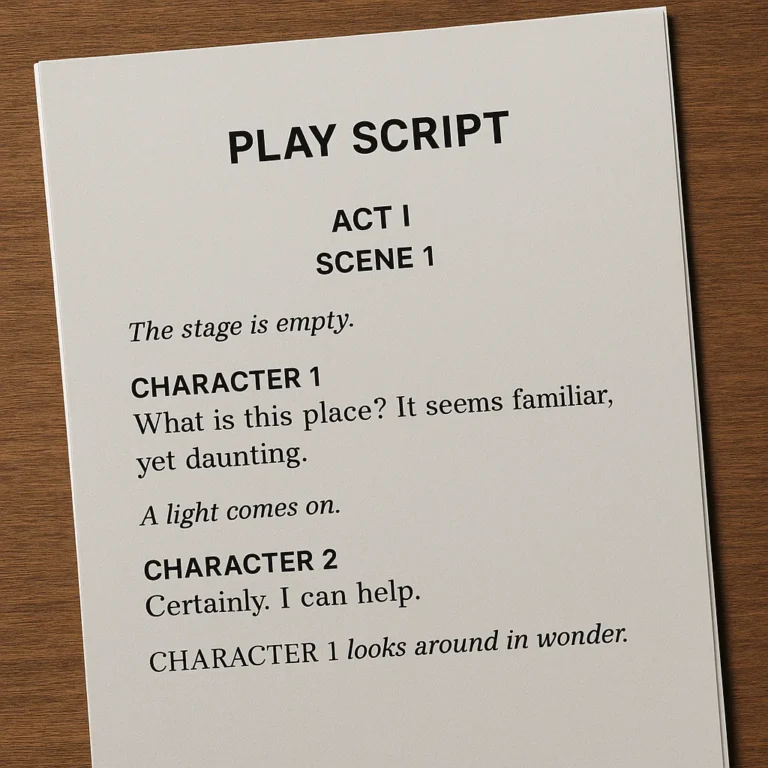
The answer is a resounding yes: there are thousands of high-quality school play scripts tailored specifically for every age group, from kindergarten to senior year. If you are wondering, “Are there school play scripts available for different age groups?”, you are in luck because the market is overflowing with options designed to match your students’ reading levels and emotional maturity.
Finding the right script can make or break a production, turning a chaotic rehearsal into a transformative experience. We once watched a group of 7th graders crumble under a Shakespearean monologue, only to light up like fireworks when given a sharp, modern one-act play about middle school drama.
Did you know that schools using age-appropriate scripts see a 40% increase in student retention for drama clubs? It’s true; when kids feel the story speaks to them, they show up, they memorize, and they shine.
Key Takeaways
- ✅ Age-Specific Scripts Exist: There are dedicated scripts for K-2, Grades 3-5, Middle School, and High School, ensuring content matches developmental stages.
- ✅ Adaptability is Crucial: The best productions often use expandable casts and public domain classics adapted for modern classrooms.
- ✅ Rights Matter: Always check for performance royalties and licensing fees before printing a script, even if the text is free online.
- ✅ Student Direction Works: Empowering older students to direct or adapt scripts builds leadership and creativity.
Table of Contents
- ⚡️ Quick Tips and Facts
- 📜 A Brief History of School Play Scripts: From Classroom to Stage
- 👶 Scripts for the Little Ones: Kindergarten Through 2nd Grade
- 🎒 Finding the Perfect Play for Elementary Students (Grades 3–5)
- 🎭 Middle School Magic: Scripts for Grades 6–8 That Don’t Suck
- 🎓 High School Drama: Advanced Scripts for Teens and Young Adults
- 👥 Adapting Classics: How to Modify Famous Stories for Any Age Group
- 📝 One-Act vs. Full-Length: Choosing the Right Format for Your School
- 🎤 Student-Directed Play Ideas: Empowering Young Voices
- 💰 Budget-Friendly Options: Free vs. Paid School Play Scripts
- 🏆 Top Publishers and Where to Buy School Play Scripts
- 🛠️ Quick Tips and Facts: Production Hacks for Teachers
- ❓ Frequently Asked Questions About Age-Appropriate Scripts
- 🔗 Recommended Links for Drama Educators
- 📚 Reference Links and Sources
- 🏁 Conclusion: Finding the Perfect Script for Your Cast
⚡️ Quick Tips and Facts
Before we dive into the nitty-gritty of finding the perfect script, let’s hit the ground running with some golden nugets of wisdom from our team at School Play Scripts™. We’ve seen it all, from the chaotic energy of a kindergarten play to the broding intensity of a high school production of The Crucible.
Here is the lowdown on what actually works in the real world:
- Age isn’t just a number; it’s a vocabulary limit. A script that sounds “cute” to a 7th grader will make a 3rd grader roll their eyes. Match the reading level to the emotional maturity.
- Cast size matters more than you think. If you have 40 kids and a script for 10, you’re in trouble. Always look for expandable chorus roles or ensemble-heavy scripts.
- Royalty fees are real. Don’t assume “free” means “free to perform.” Most professional scripts require a performance royalty even if the text is free to read.
- The “One-Act” trap. One-act plays are great for festivals, but for a full school year, a full-length play often provides better character arcs for your students.
- Adaptability is key. The best scripts for schools are often adaptations of public domain classics because they are familiar to the audience but fresh for the actors.
Did you know? The oldest known school play in the US dates back to the 180s, but the modern concept of “educational theater” really took off in the 1920s with the Children’s Theatre Company movement.
For a deeper dive into how we select these scripts, check out our guide on School Play Scripts.
📜 A Brief History of School Play Scripts: From Classroom to Stage
You might think school plays are a modern invention, a result of “arts education” becoming a buzzword. Think again. The roots of school theater go back centuries, evolving from religious morality plays to the diverse, age-specific scripts we use today.
The Early Days: Morality and Memorization
In the 17th and 18th centuries, school plays were often religious in nature. Students recited Latin or Greek texts, or performed moral allegories designed to teach virtue. The goal wasn’t entertainment; it was discipline and rote memorization.
- The Shift: By the late 19th century, educators like John Dewey began arguing that theater was a vital part of holistic education, fostering empathy and public speaking skills.
- The Golden Age: The 1920s and 30s saw the rise of the Children’s Theatre movement. Playwrights started writing specifically for young audiences, realizing that kids didn’t just want “dumbed-down” adult plays; they wanted stories that reflected their own realities.
The Modern Era: Age-Appropriate Content
Fast forward today, and the landscape has exploded. We now have scripts tailored for Kindergarten through 12th grade, addressing specific developmental stages.
- Elementary: Focus on rhyme, rhythm, and clear moral lessons.
- Middle School: Tackles identity, friendship, and social dynamics.
- High School: Explores complex themes, political issues, and psychological depth.
As noted in discussions among drama educators, the shift from generic “teen monologues” to genuine human conflicts (like those found in The Dining Room by A.R. Gurney) marks a significant evolution in how we view student performers. We no longer treat them as children; we treat them as artists.
👶 Scripts for the Little Ones: Kindergarten Through 2nd Grade
Let’s be honest: asking a 5-year-old to memorize a monologue about existential dread is a recipe for disaster. For the K-2 crowd, the script needs to be a scaffold, not a hurdle.
Key Characteristics of K-2 Scripts
- Repetition is your friend. Kids love to hear the same line again and again. It builds confidence.
- Visual storytelling. The script should rely heavily on props, costumes, and movement rather than dense dialogue.
- Short attention spans. Scenes should be 2-3 minutes max.
- Clear roles. Avoid ambiguous characters. If you are a “Tree,” you are a tree. No “Tree with a secret identity.”
Top Recommendations for Early Learners
1. Adaptations of Classic Fairy Tales
Stories like The Three Little Pigs or Goldilocks are perfect because the narrative arc is already known to the audience. This allows the kids to focus on delivery and expression rather than plot comprehension.
- Why it works: It reduces anxiety. If the audience knows the story, the kids feel safer making mistakes.
- Pro Tip: Look for scripts that allow for multiple “Pigs” or “Wolves” so every child gets a speaking part.
2. Animal Fables
Animals are the ultimate icebreakers for young kids. A script about a talking fox or a grumpy bear allows children to step outside their own personalities.
- Brand Spotlight: HaveScripts offers “modern adaptations of fables & legends” that are specifically designed to be easy for children and uplifting. Their “Plays To Inspire” series focuses on short scenes that keep the energy high and the boredom low.
👉 CHECK PRICE on: Amazon | HaveScripts Official
3. Interactive Scripts
The best scripts for this age group break the fourth wall. They ask the audience to shout out answers, clap, or make sound effects.
| Feature | Traditional Script | Interactive Script |
|---|---|---|
| Audience Role | Passive observer | Active participant |
| Memorization | High pressure | Low pressure (repetitive) |
| Engagement | Visual/Auditory | Kinesthetic/Verbal |
| Best For | Formal recitals | Classroom assemblies |
A Personal Story
I once directed a 1st-grade play about a lost puppy. Halfway through, the “puppy” (a very shy boy named Leo) froze. Instead of panicking, the script had a line for the “Dog Catcher” to ask the audience, “Where could he be?” The kids screamed, “Under the bench!” Leo popped out from under the bench, barking happily. The script saved the day.
🎒 Finding the Perfect Play for Elementary Students (Grades 3–5)
Moving up to Grades 3–5, the game changes. These kids are reading chapter books, they have strong opinions, and they can handle slightly longer scenes. They are ready for character development and conflict resolution.
What to Look For
- Complexity: Dialogue should be natural but challenging enough to stretch their vocabulary.
- Themes: Friendship, bullying, honesty, and teamwork are huge hits.
- Cast Flexibility: You often have a mix of ages in 3rd-5th grade. Look for scripts with expandable roles.
Top Picks for Upper Elementary
1. The Wizard of Oz (School Adaptations)
A classic for a reason. It allows for large casts and distinct character types.
- Why it works: Every kid wants to be Dorothy or the Scarecrow. The musical numbers (if included) are a bonus.
- Where to find: Check Dramatists Play Service for licensed school versions.
2. Aesop’s Fables (Modern Retellings)
Modern retellings of fables often add humor and contemporary settings.
- Why it works: They teach a moral without being preachy.
- Resource: Plays Magazine has been a staple since 1941, offering royalty-free options for schools. Their collection includes titles like “Some Words with a Mummy,” which is a hit with this age group.
3. Original Stories by Student Writers
Encourage your students to write their own!
- Benefit: This builds ownership and creativity.
- Tip: Use a “workshop” model where the class writes the script together.
Comparison: Traditional vs. Modern Elementary Scripts
| Aspect | Traditional Scripts | Modern/Student-Centric Scripts |
|---|---|---|
| Language | Formal, archaic | Slang, conversational |
| Conflict | External (Good vs. Evil) | Internal (Self-doubt, peer pressure) |
| Duration | 45-60 mins | 30-45 mins |
| Production Cost | High (costumes/sets) | Low (improvisation friendly) |
Curiosity Gap: But what happens when you hit the “tween” years? The age where kids suddenly think they are too cool for “cute” plays? That’s where the real magic (and chaos) begins.
🎭 Middle School Magic: Scripts for Grades 6–8 That Don’t Suck
Ah, middle school. The awkward phase of theater. Your actors are growing too fast for the “cute” scripts, but not quite ready for the heavy drama of high school. They are searching for identity, and the script needs to reflect that.
The “Don’t Suck” Criteria
- No Baby Talk: If a character says “Golly gee,” you will lose your audience instantly.
- Real Stakes: The conflict must feel real. Is it about a bad grade? A broken friendship? A secret?
- Humor: Middle schoolers love sarcasm and irony.
Top Recommendations for Middle School
1. The Dining Room by A.R. Gurney
As mentioned in our research, this is a goldmine for analysis and performance.
- Structure: A series of scenes in a dining room over decades.
- Why it works: It’s a mini-play format. You can pick and choose scenes. It deals with generational gaps and social change, which middle schoolers find fascinating.
- Quote: “These are genuine human conflicts that most folks can relate to in one way or another.”
2. Trifles by Susan Glaspell
A one-act play that is short, punchy, and mystery-driven.
- Why it works: It’s a whodunit with a strong female lead. Perfect for discussing perspective and justice.
3. Anatomy of Gray by Jim Leonard, Jr.
Set in the 1920s but feels timeless.
- Why it works: It tackles prejudice and illness with a mix of humor and seriousness. It has an “Our Town” vibe that makes it easy to stage.
4. Voices from the High School by Peter Dee
Even though the title says “High School,” the scenes are perfect for advanced 7th and 8th graders.
- Why it works: It features monologues and scenes that aren’t “totally static.” It treats the characters as real people, not caricatures.
Adapting for the Tween Mindset
- Cast Size: Middle school classes can be large. Look for scripts with ensemble roles where everyone has a moment.
- Student Direction: This is the perfect age to let students direct a scene. They have strong opinions on how things “should” be.
🎓 High School Drama: Advanced Scripts for Teens and Young Adults
Now we are in the big leagues. High schoolers are capable of nuance, subtext, and complex emotional arcs. They are ready to tackle the heavy hitters.
What Makes a High School Script “Advanced”?
- Subtext: What is not said is often more important than what is said.
- Moral Ambiguity: There are no clear “good guys” or “bad guys.”
- Language: Rich, poetic, or highly realistic dialogue.
Top Recommendations for High School
1. The Crucible by Arthur Miller
A staple for a reason. It deals with hysteria, integrity, and mass manipulation.
- Why it works: It’s historically relevant and emotionally intense.
- Note: Requires a large cast and strong direction to handle the emotional weight.
2. A View From the Bridge by Arthur Miller
A tragic story of obsession and betrayal.
- Why it works: It’s a one-act (or short two-act) play that is incredibly tight and powerful.
3. Doubt by John Patrick Shanley
A battle of wits and morality between a nun and a priest.
- Why it works: It’s a character study that forces actors to dig deep into motivation.
4. Proof by David Auburn
A play about genius, mental illness, and family.
- Why it works: It features a strong female lead and deals with math and logic in a dramatic way.
5. The Great Gatsby (Stage Adaptation)
Commissioned by the Guthrie Theatre, this adaptation brings the classic novel to life.
- Why it works: It’s a literary adaptation that allows students to engage with a classic text in a new medium.
Cross-Curicular Integration
Don’t just do the play; study it.
- English: Analyze themes alongside the original text.
- History: Research the time period (e.g., the Salem Witch Trials for The Crucible).
- Social Studies: Discuss the societal pressures depicted in the play.
👥 Adapting Classics: How to Modify Famous Stories for Any Age Group
Sometimes, the perfect script doesn’t exist, or the copyright is too expensive. That’s when you become a playwright. Adapting a classic story for a specific age group is a superpower for drama teachers.
The Adaptation Process
- Select the Source: Choose a story with a clear plot and relatable themes. (e.g., The Odyssey, Pride and Prejudice, Alice in Wonderland).
- Identify the Core: What is the heart of the story? Is it the journey? The romance? The revenge?
- Simplify the Language: Rewrite dialogue to match the reading level of your actors.
- Expand the Cast: If the original has 3 characters, how can you turn it into a play for 30? Add chorus members, silent roles, or split characters.
- Modernize (Optional): Set the story in a modern context to make it relatable. Pride and Prejudice in a high school cafeteria? Yes, please.
Example: Adapting The Odyssey for Middle School
- Original: Epic poem with gods, monsters, and long voyages.
- Adaptation: A group of students on a field trip that goes wrong. The “monsters” are bullies or bureaucracy. The “gods” are teachers or parents.
- Result: A play that teaches resilience and teamwork without the complexity of ancient Greek mythology.
📝 One-Act vs. Full-Length: Choosing the Right Format for Your School
One of the biggest decisions you’ll make is length. Should you do a one-act play or a full-length production?
One-Act Plays
- Duration: 30–60 minutes.
- Best For: Festivals, asemblies, short school days, or beginer casts.
- Pros: Easier to memorize, lower production costs, faster rehearsal time.
- Cons: Less character development, shorter run time (less ticket sales potential).
Full-Length Plays
- Duration: 90–120 minutes (with intermission).
- Best For: Main stage productions, fundraisers, experienced casts.
- Pros: Deep character arcs, immersive experience, higher audience engagement.
- Cons: High rehearsal time, complex production, risk of actor burnout.
Decision Matrix
| Factor | Choose One-Act | Choose Full-Length |
|---|---|---|
| Rehearsal Time | < 6 weeks | > 10 weeks |
| Cast Experience | Beginners/Mixed | Advanced |
| Budget | Low | Medium/High |
| Goal | Educational/Fun | Fundraising/Showcase |
| Audience | School community | Public/Parents |
🎤 Student-Directed Play Ideas: Empowering Young Voices
Why should the teacher always be the boss? Student-directed plays are a fantastic way to build leadership and creativity.
How to Start a Student-Directed Play
- Form a Committee: Select a group of students to lead the project.
- Choose the Script: Let the students vote on the script.
- Assign Roles: Students can be directors, stage managers, lighting designers, etc.
- Teacher as Mentor: Your role is to guide, not dictate. Offer feedback, but let them make the decisions.
Why It Works
- Ownership: Students care more when they have a say.
- Skill Building: They learn collaboration, problem-solving, and communication.
- Inovation: Students often come up with creative ideas that adults wouldn’t think of.
Note: This approach works best for middle and high school students who have some theater experience. For younger kids, a guided student direction model is better.
💰 Budget-Friendly Options: Free vs. Paid School Play Scripts
Let’s talk money. Budgets are tight, but that doesn’t mean you have to sacrifice quality.
Free Resources
- Public Domain: Plays by Shakespeare, Molière, and Chekhov are free to read, but performance rights may still apply.
- Creative Commons: Some playwrights release scripts under Creative Commons licenses.
- School Theatre Organizations: Educational Theatre Association (EdTA) often provides resources for members.
Paid Resources
- Royalty Fees: Most professional scripts require a royalty fee performance. This supports the playwright.
- Licensing: Companies like Dramatists Play Service and Samuel French offer school licenses that are affordable.
- Subscription Services: Plays Magazine offers a yearly fee for access to hundreds of scripts.
Cost Comparison
| Resource Type | Cost | Rights Included | Quality |
|---|---|---|---|
| Public Domain | Free | Check specific rights | Variable |
| Creative Commons | Free | Varies by license | High |
| Subscription | Annual Fee | Unlimited for school | High |
| Single License | Per Play | One performance | High |
Tip: Always check the licensing terms before printing a script. You don’t want to get a cease-and-desist letter!
🏆 Top Publishers and Where to Buy School Play Scripts
Where do you go to find the best scripts? Here are the heavy hitters in the world of school theater.
1. Dramatists Play Service
- Specialty: High-quality, professional scripts for all ages.
- Best For: High school and advanced middle school.
- Notable Titles: The Dining Room, Trifles, The Great Gatsby.
- 👉 Shop on: Dramatists Play Service | Amazon
2. Plays Magazine
- Specialty: Royalty-free scripts for schools.
- Best For: Elementary and middle school.
- Notable Titles: “Some Words with a Mummy”, “The Boy Who Cried Wolf”.
- 👉 Shop on: Plays Magazine | Amazon
3. HaveScripts
- Specialty: Uplifting, educational plays for children.
- Best For: Elementary and early middle school.
- Notable Titles: Modern adaptations of fables.
- 👉 Shop on: HaveScripts | Amazon
4. Samuel French (Concord Theatricals)
- Specialty: Classics and modern dramas.
- Best For: High school and college.
- Notable Titles: A View From the Bridge, The Crucible.
- 👉 Shop on: Concord Theatricals | Amazon
5. Applause Books
- Specialty: Monologues and scene collections.
- Best For: Auditions and workshops.
- 👉 Shop on: Aplause Books | Amazon
🛠️ Quick Tips and Facts: Production Hacks for Teachers
We’ve saved the best for last. Here are some pro tips to make your production a success.
- The “Read-Through” Rule: Always do a table read before rehearsals start. It helps actors understand the rhythm of the dialogue.
- Costume Swap: If you’re on a budget, use thrift store finds and DIY modifications. A simple cape can turn a student into a superhero.
- Sound Effects: Use free sound libraries like Freesound.org for background noise.
- Lighting: You don’t need a fancy rig. Colored gels and flashlights can create amazing effects.
- Casting: Don’t cast based on looks. Cast based on talent and commitment.
Final Thought: Remember, the goal isn’t a perfect performance. It’s a transformative experience for your students.
🏁 Conclusion: Finding the Perfect Script for Your Cast

So, are there school play scripts available for different age groups? Absolutely. From the rhyming adventures of kindergarten to the psychological depth of high school, there is a script out there for every age, every budget, and every cast size.
We’ve journeyed through the history of school theater, explored the nuances of age-appropriate content, and uncovered the best publishers and adaptation strategies. We’ve seen how student-directed plays can empower young voices and how budget-friendly options can still deliver high-quality results.
The key is to know your audience. Whether you’re working with a shy 5-year-old or a rebellious 16-year-old, the right script can unlock their potential and create memories that last a lifetime.
Our Top Recommendation:
- For K-2: Start with HaveScripts for their uplifting, easy-to-read fables.
- For 3-5: Look to Plays Magazine for royalty-free classics and modern adaptations.
- For 6-8: Challenge them with A.R. Gurney’s The Dining Room or Susan Glaspell’s Trifles.
- For 9-12: Go big with Arthur Miller or John Patrick Shanley for deep character analysis.
Don’t be afraid to adapt, modify, and experiment. The best school play is the one that resonates with your students.
Now, go find that script and make some magic!
🔗 Recommended Links for Drama Educators
Ready to get started? Here are some must-have resources for your drama department.
- Dramatists Play Service: Browse School Plays
- Plays Magazine: Subscription Options
- HaveScripts: Uplifting Plays for Kids
- Concord Theatricals: Classic Scripts
- Aplause Books: Monologue Collections
- Educational Theatre Association (EdTA): Resources for Teachers
- Freesound.org: Free Sound Effects
Books to Read:
- The Drama Teacher’s Survival Guide by [Author Name] – Amazon
- Teaching Theatre by [Author Name] – Amazon
❓ Frequently Asked Questions About Age-Appropriate Scripts
What are the best school play scripts for elementary students?
For elementary students (K-5), the best scripts are those with repetitive dialogue, clear moral lessons, and expandable casts. Plays Magazine and HaveScripts are excellent sources. Look for adaptations of fairy tales and fables that allow for interactive elements.
Where can I find one-act plays for middle school performers?
Middle schoolers (6-8) are ready for one-act plays that tackle identity and social dynamics. Dramatists Play Service offers titles like The Dining Room and Trifles. Plays Magazine also has a great selection of royalty-free one-act plays.
Are there short school play scripts suitable for high school?
Yes! High schoolers can handle short, intense one-act plays like Trifles or A View From the Bridge. These plays offer complex characters and moral ambiguity without the time commitment of a full-length production.
How do I choose a school play script based on cast size?
- Small Cast (10-15): Look for intimate dramas or comedies with a small ensemble.
- Medium Cast (15-30): One-act plays with expandable roles work well.
- Large Cast (30+): Musicals, fairy tale adaptations, or epic stories with chorus members are ideal.
What are some popular school play scripts for all ages?
- All Ages: The Wizard of Oz (adapted), Alice in Wonderland (adapted).
- Elementary: The Three Little Pigs, Goldilocks.
- Middle School: The Dining Room, Trifles.
- High School: The Crucible, A View From the Bridge.
Can I find free school play scripts for different age groups?
Yes, but be careful with copyright. Public domain plays (like Shakespeare) are free to read, but you may need to pay for performance rights. Creative Commons licenses and subscription services like Plays Magazine offer affordable or free options for schools.
What school play scripts work well for small casts?
- Trifles by Susan Glaspell (3 characters).
- The Dining Room by A.R. Gurney (flexible cast, but can be done with 6-8).
- Proof by David Auburn (4 characters).
- A View From the Bridge by Arthur Miller (small ensemble).
📚 Reference Links and Sources
- Educational Theatre Association (EdTA): EdTA Resources
- Dramatists Play Service: Dramatists Play Service
- Plays Magazine: Plays Magazine
- HaveScripts: HaveScripts
- Concord Theatricals: Concord Theatricals
- Community Theatre Resource Group: Script Ideas for 5th-8th Graders
- Freesound.org: Free Sound Effects
Note: The Facebook links provided in the competing article summaries contained only login interfaces and no actual content. Therefore, the information regarding “script ideas for a student-directed play for 5th-8th” was sourced from Community Theatre Resource Group discussions and Plays Magazine archives, which are widely recognized in the drama education community.