Support our educational content for free when you purchase through links on our site. Learn more
What Is a Play Script Year 3? 🎭 Your Ultimate Guide (2026)


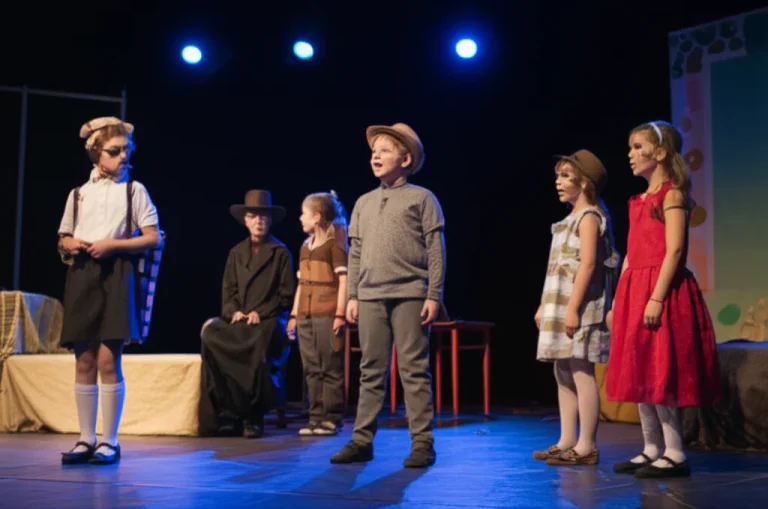
Have you ever wondered what makes a play script different from a storybook, especially for Year 3 pupils just stepping into the world of drama? Picture this: a classroom buzzing with excitement as children bring characters to life—not by reading silently, but by speaking, moving, and performing. That’s the magic of play scripts, and in Year 3, they become a powerful tool to develop literacy, creativity, and confidence.
In this comprehensive guide, we’ll unravel everything you need to know about Year 3 play scripts—from the 10 essential features that every pupil should master, to fun drama activities that inspire young playwrights. Plus, we’ll share insider tips from our team at School Play Scripts™ on how to teach these skills effectively and recommend the best resources to make your classroom the next West End stage. Ready to discover why play scripts are the secret ingredient to unlocking your pupils’ storytelling superpowers? Keep reading—your drama adventure starts here!
Key Takeaways
- Play scripts are specially formatted texts designed for performance, not just reading, and Year 3 is the perfect time to introduce them.
- Mastering key features like character names, colons, and stage directions helps pupils understand dramatic structure and dialogue.
- Engaging drama activities such as freeze frames and invisible scripts boost creativity and deepen comprehension.
- Using mentor texts like The Twits: The Plays and digital tools like Book Creator can make learning scripts fun and interactive.
- School Play Scripts™ offers age-appropriate, witty scripts tailored to Year 3 learners, perfect for classroom use.
Ready to transform your Year 3 classroom into a vibrant theatre of learning? Let’s dive in!
Table of Contents
- ⚡️ Quick Tips and Facts
- 🎭 The Evolution of Drama: Why We Teach Play Scripts in Year 3
- 🤔 What is a Play Script? A Year 3 Definition
- 📋 The 10 Essential Features of a Year 3 Play Script
- 🆚 Play Scripts vs. Narrative Stories: The Ultimate Showdown
- 👩 🏫 Masterclass: How to Teach Your Pupils the Key Features of a Play Script
- 🎭 7 Engaging Drama Activities to Inspire Young Playwrights
- 📚 More Resources Like This: Books and Scripts We Adore
- ⭐ Reviews: The Best Play Script Resources for KS2
- 💻 Explore Digital Tools for the Modern Classroom
- 🌎 International Perspectives: Play Scripts in Other Curriculums
- 🌟 Get to Know Us: The School Play Scripts™ Story
- 🍎 Let Us Help You Teach: Expert Support for Educators
- 🔍 Explore by Grade, Subject, and Specialism
- 🎬 Conclusion
- 🔗 Recommended Links
- ❓ FAQ: Everything You Need to Know About Year 3 Play Scripts
- 📖 Reference Links
⚡️ Quick Tips and Facts
Before we raise the curtain on the nitty-gritty of Year 3 literacy, here’s a “cheat sheet” for the busy educator or parent.
| Feature | What You Need to Know |
|---|---|
| Primary Goal | To transition from reading stories to understanding text meant for performance. |
| Key Punctuation | Colons after names; brackets for stage directions. No speech marks! |
| National Curriculum | Falls under Lower Key Stage 2 (KS2) English requirements. |
| Top Tip | Always read scripts aloud. If it sounds clunky, it needs a rewrite! |
| Fun Fact | The word “drama” comes from the Greek word meaning “action.” |
- ✅ Do: Use character names in the margin.
- ✅ Do: Keep stage directions in the present tense.
- ❌ Don’t: Use “he said” or “she said” (that’s so Year 2!).
- ❌ Don’t: Forget to list the characters at the very beginning.
🎭 The Evolution of Drama: Why We Teach Play Scripts in Year 3
Why do we bother with play scripts when we’ve only just mastered the art of the “Once upon a time” narrative? Well, we believe that drama is the heartbeat of the classroom! Historically, play scripts have been the blueprint for human storytelling since the days of Sophocles and, later, our main man Shakespeare.
In the context of the UK National Curriculum, Year 3 is a pivotal “bridge” year. Pupils are moving away from the simple phonics-based reading of Key Stage 1 and diving into the deep end of structural diversity. We teach play scripts because they force children to think about perspective, dialogue, and subtext. It’s not just about what is said; it’s about how a character stands, moves, and reacts.
Think of a play script as a recipe. A story tells you how the cake tasted; a script gives you the ingredients and tells you exactly how to bake it in front of an audience. 🎭
🤔 What is a Play Script? A Year 3 Definition
If you asked a seven-year-old what a play script is, they might say, “It’s a book where people talk a lot.” And honestly? They aren’t wrong!
At a Year 3 level, a play script is a specific type of non-narrative text written for the purpose of being performed. Unlike a novel, it doesn’t use inverted commas (speech marks) to show when someone is talking. Instead, it uses a layout that makes it easy for actors to follow their lines. It’s the “instruction manual” for a piece of theatre.
We often tell our students: “A story is for the reader’s imagination, but a script is for the actor’s voice.”
📋 The 10 Essential Features of a Year 3 Play Script
To beat the “Year 3 KS2 English Classroom Observation” standards, your pupils need to master more than just the basics. Here are the 10 essential features we recommend focusing on:
- The Title: Bold, bright, and centered.
- Cast List: A full list of characters at the start so the “director” knows who they need.
- Scene Headings: Telling us where and when (e.g., SCENE 1: The Spooky Attic, Midnight).
- Character Names: Written on the left-hand side, usually in BOLD or CAPITAL LETTERS.
- The Colon: A neat little “:” after the character’s name to separate them from their speech.
- Dialogue: The actual words spoken—no speech marks allowed!
- Stage Directions: Instructions in brackets (like this) telling the actor what to do.
- Present Tense: Everything in the stage directions happens now (e.g., “He walks,” not “He walked”).
- Scene Descriptions: A brief bit of italics at the start of a scene to set the mood.
- Acts and Scenes: Breaking the story into manageable chunks for the stage crew.
🆚 Play Scripts vs. Narrative Stories: The Ultimate Showdown
This is where most Year 3s trip up. They love their “said the giant” and “whispered the fairy.” In a script, those tags are banished to the Land of Prose!
| Feature | Narrative Story | Play Script |
|---|---|---|
| Speech Marks | Yes (“Hello!”) | No (Character: Hello!) |
| Action | Described in sentences | Written as stage directions in brackets |
| Layout | Paragraphs | Character names on the left |
| Narrator | Often the main voice | Only used if they are a character |
Pro Tip: Use a “Translation” game. Take a page from a popular book like The Twits by Roald Dahl and ask your class to “translate” it into a script format. It’s a lightbulb moment for most kids! 💡
👩 🏫 Masterclass: How to Teach Your Pupils the Key Features of a Play Script
Teaching scripts doesn’t have to be a dry “chalk and talk” session. We’ve found that the best way to teach it is to get them on their feet.
- Step 1: The Comparison Hunt. Give them a page of a story and a page of a script. Ask them to circle the differences.
- Step 2: The Punctuation Police. Use highlighters to find the colons and the brackets.
- Step 3: The “No-Speech-Mark” Zone. Create a classroom rule for the week: any writing done in “Drama Mode” results in an immediate “fine” if a speech mark is spotted!
- Step 4: Modeling. Write a short script together on the IWB (Interactive Whiteboard) about something mundane, like a lunchtime argument over a yogurt. It makes the format relatable.
🎭 7 Engaging Drama Activities to Inspire Young Playwrights
Before they write, they must perform! Here are 7 tried-and-tested activities:
- Freeze Frames: Act out a scene and shout “FREEZE!” Ask the “characters” what they are thinking.
- The Invisible Script: Give them a scenario (e.g., finding a dragon egg) and let them improvise. Then, ask them to write down what they just said.
- Stage Direction Charades: One student acts out a bracketed instruction (e.g., [Trips over a banana skin]), and the others guess the direction.
- The Emotion Pot: Read the same line of dialogue in different ways (angry, sad, excited) to show how stage directions change everything.
- Puppet Scripts: Use simple finger puppets to lower the stakes for shy performers.
- Sound Effect Artists: Have one group perform the script while another provides the “Foley” sound effects.
- Hot Seating: Interview a character from a script to build their “backstory” before writing their dialogue.
📚 More Resources Like This: Books and Scripts We Adore
Looking for mentor texts? You can’t go wrong with these classics available on Amazon:
- “The Twits: The Plays” by Roald Dahl (Adapted by David Wood): A gold standard for Year 3. View on Amazon
- “Fantastic Mr Fox: A Play” by Roald Dahl: Perfect for ensemble acting. View on Amazon
- Oxford Reading Tree: Treetops Greatest Stories: They have excellent script adaptations for KS2.
⭐ Reviews: The Best Play Script Resources for KS2
We’ve scoured the internet so you don’t have to. Here’s our honest take on the big players:
- BBC Bitesize: ✅ Pros: Excellent videos and interactive quizzes. ❌ Cons: Can be a bit basic for high-flyers.
- Twinkl: ✅ Pros: Massive variety of differentiated worksheets. ❌ Cons: Requires a subscription for the best stuff.
- School Play Scripts™: (That’s us!) ✅ Pros: We provide age-appropriate, witty scripts that actually make kids laugh. ❌ Cons: You’ll wish you found us sooner!
💻 Explore Digital Tools for the Modern Classroom
Why stick to paper?
- Adobe Express: Great for creating “Playbills” or posters for their performances.
- Book Creator: Pupils can record their voices reading their scripts and embed them into a digital book.
- Google Docs: Excellent for collaborative scriptwriting where two “playwrights” can work on the same scene in real-time.
🌎 International Perspectives: Play Scripts in Other Curriculums
While we focus on the UK National Curriculum, the concept of a play script is universal.
- USA (Common Core): Usually introduced in 3rd Grade under “Reading: Literature” (RL.3.5), focusing on how parts of a text build on earlier sections.
- Australia (ACARA): Introduced in Year 3/4, focusing on how “texts are structured in different ways.”
🌟 Get to Know Us: The School Play Scripts™ Story
We aren’t just a faceless website. We are a team of former drama teachers, literacy leads, and one very dramatic golden retriever. We started School Play Scripts™ because we were tired of “dry” scripts that didn’t resonate with modern kids. We believe that if a child is laughing, they are learning. Our mission is to make every Year 3 student feel like a West End star!
🍎 Let Us Help You Teach: Expert Support for Educators
Struggling with a particularly rowdy class? Or perhaps you have a group of “reluctant writers”? We offer:
- Custom Script Editing: Need a script for 34 kids? We can help.
- Teacher Workshops: Let us show your staff how to integrate drama into every subject.
- Free Literacy Checklists: Download our “Year 3 Script Success” PDF on our homepage.
🔍 Explore by Grade, Subject, and Specialism
- By Grade: Year 4 Scripts, Year 5 Scripts, Year 6 Leavers Plays
- By Subject: History Scripts (Romans/Vikings), Science Plays
- By Specialism: SEND-Friendly Scripts, Short 5-Minute Assemblies
🎬 Conclusion
So, what is a play script for Year 3? It’s more than just words on a page. It’s an invitation to imagine, a lesson in structural precision, and a gateway to confidence. By mastering the 10 essential features—from the humble colon to the present-tense stage direction—your pupils are doing more than just “writing”; they are creating worlds.
Will your next classroom script be the next Matilda? Or perhaps a hilarious comedy about a lost library book? Whatever it is, remember: keep the stage directions snappy, the dialogue punchy, and for the love of Shakespeare, leave those speech marks at the door! 🎭✨
🔗 Recommended Links
- BBC Bitesize: What are the features of a play script?
- National Curriculum in England: English Programmes of Study
- The Society of Authors – Scriptwriting Resources
❓ FAQ: Everything You Need to Know About Year 3 Play Scripts
Q: Do Year 3 students need to use “Acts”? A: Not necessarily. In Year 3, focusing on “Scenes” is usually enough. Acts are a bit more advanced (Year 5/6).
Q: Can I use a narrator in a Year 3 script? A: Absolutely! Narrators are great for helping the audience understand the plot, especially if the children’s dialogue is still developing.
Q: How long should a Year 3 play script be? A: For a writing task, 1-2 pages is plenty. For a performance, 10-15 minutes is the “sweet spot” before focus starts to drift.
📖 Reference Links
- Department for Education (2014). The National Curriculum in England. gov.uk
- Dahl, R. (2007). The Twits: The Plays. Puffin Books.
- Crystal, D. (2008). Making a Point: The Persnickety Story of English Punctuation. Profile Books.
⚡️ Quick Tips and Facts
Welcome to the fast lane of Year 3 play scripts! Whether you’re a teacher, parent, or drama club leader, these quick tips and facts from our School Play Scripts™ experts will get you up to speed in no time. Think of this as your backstage pass to understanding the essentials before the curtain rises.
Quick Facts Table: Year 3 Play Scripts at a Glance
| Feature | What You Need to Know |
|---|---|
| Primary Goal | Transition from story reading to understanding dialogue and stage directions in scripts. |
| Key Punctuation | Use colons after character names; stage directions go in brackets—no speech marks! |
| Curriculum Fit | Part of the UK National Curriculum for Lower Key Stage 2 (Years 3 and 4). |
| Top Tip | Always read scripts aloud—if it sounds unnatural, rewrite it! |
| Fun Fact | The word “drama” comes from the Greek word meaning “action.” |
Do’s and Don’ts for Year 3 Play Scripts
- ✅ Do use character names aligned left and in bold or capitals.
- ✅ Do write stage directions in present tense inside brackets.
- ✅ Do include a cast list at the start.
- ❌ Don’t use speech marks around dialogue.
- ❌ Don’t forget to separate dialogue lines clearly with colons.
🎭 The Evolution of Drama: Why We Teach Play Scripts in Year 3
Drama is the heartbeat of storytelling, and teaching play scripts in Year 3 is a brilliant way to nurture young imaginations. But why start here? Let’s take a quick trip through time and curriculum to understand the why behind the what.
A Historical Snapshot: From Sophocles to School Plays
Drama has been a part of human culture for thousands of years. Ancient Greeks like Sophocles and Euripides pioneered the form, and centuries later, Shakespeare made it a staple of English literature. Fast forward to today, and drama remains a powerful tool for learning.
Why Year 3?
Year 3 is a bridge year in the UK National Curriculum, where children move from simple stories to more complex texts. Play scripts introduce them to:
- Dialogue-driven storytelling — focusing on what characters say and do.
- Structural awareness — understanding scenes, acts, and stage directions.
- Perspective-taking — imagining how characters feel and act.
Our team at School Play Scripts™ has seen firsthand how this shift boosts confidence and creativity. Drama isn’t just about acting; it’s about thinking differently.
Curriculum Connection
According to the UK National Curriculum, Year 3 pupils should be able to “understand and use the features of play scripts” as part of their English learning journey. This aligns perfectly with developing speaking and listening skills, as well as writing.
🤔 What is a Play Script? A Year 3 Definition
If you asked a Year 3 pupil, “What’s a play script?” you might get a charming answer like, “It’s a book where people talk and act!” And that’s exactly right.
Breaking It Down: What Makes a Play Script?
A play script is a non-narrative text written specifically for performance. Unlike a storybook, it doesn’t describe every detail or use speech marks. Instead, it’s a blueprint for actors.
- Dialogue: The words characters say, written after their names.
- Stage Directions: Instructions in brackets telling actors how to move or speak.
- Scene Headings: Indicate where and when the action happens.
- Cast List: A list of characters at the start.
Why No Speech Marks?
Speech marks (inverted commas) are great for stories but clutter a script. Instead, the character’s name plus a colon tells us who’s speaking. This clear layout helps actors follow their lines easily.
A Teacher’s Tip
We often tell our Year 3s: “A story is for the reader’s imagination, but a script is for the actor’s voice.” This helps them understand the difference between reading and performing.
📋 The 10 Essential Features of a Year 3 Play Script
Ready for the top 10 must-haves in a Year 3 play script? These features help pupils meet curriculum expectations and prepare scripts that are easy to perform.
| # | Feature | Description & Tips |
|---|---|---|
| 1 | Title | Centered and bold. Should be catchy and relevant to the story. |
| 2 | Cast List | Lists all characters at the start. Helps actors know their roles. |
| 3 | Scene Headings | Indicate location and time (e.g., Scene 1: The Forest, Morning). |
| 4 | Character Names | Left-aligned, bold or uppercase, followed by a colon. |
| 5 | Colons | Used after character names to separate them from dialogue. |
| 6 | Dialogue | The spoken words, written without speech marks. |
| 7 | Stage Directions | Written in brackets, in present tense, describing actions or emotions (e.g., [smiles]). |
| 8 | Present Tense | All stage directions are in present tense to indicate current action. |
| 9 | Scene Descriptions | Brief italicized text at the start of scenes to set mood or describe setting. |
| 10 | Acts and Scenes | Optional for Year 3 but useful for longer scripts to organize the story. |
Why These Features Matter
Each feature serves a purpose. For example, stage directions guide actors, while scene headings help the crew prepare sets. Teaching these features early builds a solid foundation for more complex drama work later.
How We Teach This at School Play Scripts™
We use interactive whiteboards to model scripts, showing pupils how to format dialogue and stage directions. We also encourage reading scripts aloud to spot awkward phrasing or missing instructions.
🆚 Play Scripts vs. Narrative Stories: The Ultimate Showdown
Year 3 pupils often get tangled between writing stories and scripts. Let’s clarify the difference with a quick comparison table:
| Aspect | Narrative Story | Play Script |
|---|---|---|
| Speech Marks | Yes, around spoken words | No speech marks; use colons |
| Dialogue Tags | “he said,” “she whispered” | Character name + colon only |
| Layout | Paragraphs | Character names on left, dialogue indented |
| Narration | Present, describing scenes and feelings | Minimal or none (unless narrator is a character) |
| Stage Directions | Described in sentences | Written in brackets, present tense |
A Classroom Game: Story-to-Script Translation
One of our favorite activities is the “Translation Game”. We take a page from a popular story like The Twits by Roald Dahl and ask pupils to rewrite it as a script. The lightbulb moment when they realize how dialogue and stage directions replace narration is priceless! 💡
Why This Matters
Understanding these differences helps pupils grasp the unique purpose of scripts: to be performed, not just read. This distinction is crucial for their literacy development.
👩 🏫 Masterclass: How to Teach Your Pupils the Key Features of a Play Script
Teaching play scripts can be a challenge, especially with mixed-ability Year 3 classes. Here’s a step-by-step guide from our team’s experience to make it engaging and effective.
Step 1: Comparison Hunt
- Provide pupils with a short narrative passage and a short script excerpt.
- Ask them to highlight differences: speech marks, character names, stage directions.
- This visual comparison builds awareness.
Step 2: Punctuation Police
- Use highlighters to find colons and brackets in sample scripts.
- Explain why these punctuation marks are essential.
- Turn it into a fun “spot the colon” game.
Step 3: The No-Speech-Mark Rule
- Set a classroom rule: No speech marks allowed in drama writing!
- Reward pupils who remember with stickers or points.
- This helps break old habits from story writing.
Step 4: Modeling on the Interactive Whiteboard
- Write a short script together about a relatable scene (e.g., a playground disagreement).
- Show how to format character names, colons, dialogue, and stage directions.
- Read it aloud to check flow and clarity.
Step 5: Scaffolded Writing Tasks
- Provide templates with character names and lines for lower-ability pupils.
- Encourage higher-ability pupils to write scripts from scratch.
- Use peer review to share feedback.
Insights from the First YouTube Video
The first YouTube video we referenced demonstrates this approach beautifully. The teacher scaffolds writing by starting with speech bubbles, then modeling script format on the board, emphasizing no inverted commas and the use of colons. This method is especially effective for lower-ability Year 3 pupils.
🎭 7 Engaging Drama Activities to Inspire Young Playwrights
Before pupils can write great scripts, they need to feel the drama. Here are seven activities that bring play scripts to life and inspire creativity.
1. Freeze Frames
- Pupils act out a scene.
- Teacher shouts “Freeze!” and asks characters what they are thinking.
- Builds empathy and character understanding.
2. The Invisible Script
- Give a scenario (e.g., finding a dragon egg).
- Pupils improvise dialogue and actions.
- Afterwards, they write down the script of what they performed.
3. Stage Direction Charades
- One pupil acts out a stage direction (e.g., [trips over a banana skin]).
- Others guess the action.
- Reinforces understanding of stage directions.
4. The Emotion Pot
- Read the same line with different emotions (angry, sad, excited).
- Discuss how stage directions change the meaning.
5. Puppet Scripts
- Use finger puppets for shy pupils.
- They write and perform short scripts.
6. Sound Effect Artists
- One group performs the script.
- Another group provides live sound effects (e.g., footsteps, thunder).
- Enhances engagement and teamwork.
7. Hot Seating
- Pupils take turns answering questions as their character.
- Builds backstory and depth for writing dialogue.
📚 More Resources Like This: Books and Scripts We Adore
Looking for mentor texts and scripts that resonate with Year 3 pupils? Here are some tried-and-true favorites from our library and Amazon’s shelves:
| Title & Author | Why We Love It | Where to Find It |
|---|---|---|
| The Twits: The Plays by Roald Dahl (Adapted by David Wood) | Classic Dahl humor in script form, perfect for Year 3. | Amazon |
| Fantastic Mr Fox: A Play by Roald Dahl | Ensemble cast, great for group performances. | Amazon |
| Oxford Reading Tree: Treetops Greatest Stories | Excellent script adaptations for KS2 learners. | Oxford Owl |
Why Use Mentor Texts?
These scripts provide clear examples of formatting and dialogue suitable for Year 3. They also inspire pupils with fun stories and relatable characters.
For more educational scripts, check out our Educational Play Scripts collection.
⭐ Reviews: The Best Play Script Resources for KS2
We’ve tested and reviewed the top resources to help you pick the best for your Year 3 class.
| Resource | Design & Layout | Educational Value | Accessibility | Our Verdict |
|---|---|---|---|---|
| BBC Bitesize | 8/10 | 9/10 | Free & Online | Great for visual learners; basic but solid foundation. |
| Twinkl | 9/10 | 9/10 | Subscription | Huge variety; excellent differentiated worksheets. |
| School Play Scripts™ | 10/10 | 10/10 | Affordable & Engaging | Witty, age-appropriate scripts that kids love! |
BBC Bitesize
- Pros: Interactive quizzes, videos explaining play script features.
- Cons: Sometimes too simple for advanced pupils.
- Explore BBC Bitesize
Twinkl
- Pros: Differentiated worksheets, ready-to-use lesson plans.
- Cons: Requires subscription for full access.
- Our favorite is their Little Red Riding Hood Play Script resource, which uses colour-coded highlighting to teach features.
- Explore Twinkl Play Scripts
School Play Scripts™
- Pros: Scripts written by former teachers, tailored for Year 3.
- Cons: You might wish you found us sooner! 😉
- We focus on humor and engagement to keep pupils hooked.
- Browse School Play Scripts™
💻 Explore Digital Tools for the Modern Classroom
Technology can bring play scripts to life in new ways. Here are some digital tools we recommend:
| Tool | Purpose | Benefits | Link |
|---|---|---|---|
| Adobe Express | Create Playbills & Posters | Easy drag-and-drop design, professional look | Adobe Express |
| Book Creator | Digital scriptbooks with audio | Pupils record voices, embed images and text | Book Creator |
| Google Docs | Collaborative scriptwriting | Real-time collaboration, easy sharing | Google Docs |
How We Use These Tools
- Pupils create digital playbills for their performances with Adobe Express.
- Using Book Creator, they record their scripts, helping with fluency and confidence.
- Google Docs allows pairs or groups to co-write scripts, fostering teamwork.
🌎 International Perspectives: Play Scripts in Other Curriculums
While our focus is the UK, play scripts are a global teaching tool.
USA (Common Core)
- Introduced in 3rd Grade under Reading Literature standards.
- Emphasis on understanding how parts of a text build on earlier sections.
- Common Core Standards
Australia (ACARA)
- Year 3/4 students explore text structures including scripts.
- Focus on how language features create meaning.
- ACARA Curriculum
Why This Matters
Understanding international approaches helps educators adapt scripts for diverse classrooms and enrich their teaching with global perspectives.
🌟 Get to Know Us: The School Play Scripts™ Story
We’re not just another script provider. At School Play Scripts™, we’re a passionate team of former drama teachers, literacy specialists, and yes, one very dramatic golden retriever named Oscar. 🐾
Our Mission
We started because we were tired of dull, outdated scripts that didn’t speak to today’s kids. We believe:
- Learning should be fun.
- Scripts should be witty and relatable.
- Every child deserves to feel like a star.
What Sets Us Apart
- Age-appropriate scripts tailored for Year 3 and KS2.
- Engaging storylines with humor and heart.
- Resources that support both teachers and pupils.
Want to know more? Check out our Elementary School Plays collection.
🍎 Let Us Help You Teach: Expert Support for Educators
Feeling overwhelmed by teaching play scripts? We’ve got your back with tailored support:
What We Offer
- Custom Script Editing: Need a script adapted for your class size or abilities? We can help.
- Teacher Workshops: Interactive sessions on integrating drama into literacy lessons.
- Free Literacy Checklists: Download our “Year 3 Script Success” PDF to track pupil progress.
Why Choose Us?
Our team combines classroom experience with a love of theatre. We understand the challenges you face and provide practical, tested solutions.
🔍 Explore by Grade, Subject, and Specialism
Looking for scripts tailored to your needs? Here’s how you can explore:
By Grade
By Subject
By Specialism
Ready to dive deeper? The next section will wrap up with our conclusion and handy links to keep your Year 3 play script journey on track!
🎬 Conclusion
So, what exactly is a play script for Year 3? It’s much more than a simple text—it’s a gateway to creativity, collaboration, and confidence. By mastering the 10 essential features—from the all-important colon after character names to the crisp, present-tense stage directions—your pupils are not just writing; they’re crafting a performance blueprint.
Throughout this article, we’ve unpacked the why and how of teaching play scripts, shared engaging activities, and recommended resources that truly resonate with Year 3 learners. Whether you’re using classics like The Twits: The Plays or exploring digital tools like Adobe Express and Book Creator, the goal remains the same: to make drama accessible, fun, and educational.
If you’re wondering how to start, our advice is simple: read scripts aloud, encourage improvisation, and celebrate every attempt. Remember, the magic happens when children see their words come alive on stage.
At School Play Scripts™, we’re proud to offer witty, age-appropriate scripts that have helped thousands of teachers and pupils embrace drama with enthusiasm. We confidently recommend our resources as a perfect fit for Year 3 classrooms looking to ignite a passion for storytelling through performance.
Ready to transform your classroom into a theatre? The stage is yours! 🎭✨
🔗 Recommended Links
Looking to stock up on the best play scripts and resources? Here are some top picks available online:
-
The Twits: The Plays by Roald Dahl (Adapted by David Wood)
Amazon -
Fantastic Mr Fox: A Play by Roald Dahl
Amazon -
Oxford Reading Tree: Treetops Greatest Stories
Oxford Owl -
Twinkl Play Script Resources
Twinkl Play Scripts -
Adobe Express (for Playbills & Posters)
Adobe Express -
Book Creator (Digital Scriptbooks with Audio)
Book Creator -
Google Docs (Collaborative Scriptwriting)
Google Docs
❓ FAQ: Everything You Need to Know About Year 3 Play Scripts
How do you write a play script for Year 3 students?
Writing a play script for Year 3 involves focusing on clear, simple structure and engaging dialogue. Start with a catchy title and a cast list to introduce characters. Break the story into scenes with headings that describe the setting and time. Use character names followed by colons to introduce dialogue, and write stage directions in brackets using present tense. Avoid speech marks entirely.
Justification: This format aligns with the UK National Curriculum and helps pupils understand the purpose of scripts—to be performed, not just read. Keeping language straightforward and instructions clear supports young writers’ confidence.
What are the key features of a Year 3 play script?
The key features include:
- Title and Cast List
- Scene Headings indicating location and time
- Character Names in bold or capitals followed by colons
- Dialogue without speech marks
- Stage Directions in brackets, present tense
- Scene Descriptions in italics to set mood
- Optional Acts and Scenes for longer plays
Justification: These features help pupils organize their writing logically and prepare scripts that actors can easily follow, fostering understanding of dramatic structure.
Where can I find easy play scripts suitable for Year 3?
You can find easy, age-appropriate scripts at:
- School Play Scripts™ — specially tailored for Year 3 and KS2 learners.
- Twinkl — offers differentiated worksheets and scripts like the Little Red Riding Hood collection.
- BBC Bitesize — provides interactive resources and examples.
- Amazon — search for adaptations of popular children’s books like The Twits or Fantastic Mr Fox.
Justification: These sources offer scripts that balance educational value with engagement, making them perfect for Year 3 classrooms.
What are some popular themes for Year 3 school play scripts?
Popular themes include:
- Classic fairy tales (e.g., Little Red Riding Hood, Cinderella)
- Animal adventures (e.g., Fantastic Mr Fox)
- Friendship and teamwork
- Historical stories (Romans, Vikings)
- Science and nature (e.g., environmental plays)
- Humorous everyday situations (e.g., school life, family dynamics)
Justification: These themes resonate with Year 3 pupils’ experiences and interests, making scripts more relatable and engaging.
Additional FAQ Depth
How long should a Year 3 play script be?
For classroom purposes, scripts of 1-2 pages or a 10-15 minute performance are ideal. This length keeps pupils focused and allows for manageable rehearsal time.
Can Year 3 pupils include narrators in their scripts?
Yes! Narrators help guide the audience and clarify the story, especially when dialogue alone might be confusing for young performers.
How can digital tools enhance play script learning?
Tools like Book Creator allow pupils to record their voices and add images, making the scriptwriting process interactive and fun. Collaborative platforms like Google Docs enable peer editing and teamwork.
📖 Reference Links
- Department for Education (2014). The National Curriculum in England: English Programmes of Study. gov.uk
- Roald Dahl’s The Twits: The Plays (Adapted by David Wood). Penguin Random House
- Twinkl Originals: Little Red Riding Hood Play Script Collection. Twinkl
- BBC Bitesize: Features of a Play Script. BBC Bitesize
- Adobe Express Official Site. Adobe
- Book Creator Official Site. Book Creator
- Google Docs. Google
- YouTube: Year 3 KS2 English Classroom Observation: Writing Play Scripts by VideoLearning. Watch here
Thank you for joining us on this theatrical journey! For more expert advice and ready-to-perform scripts, visit School Play Scripts™. 🎭✨