Support our educational content for free when you purchase through links on our site. Learn more
🎭 7 Essential Set Design Resources for School Theatre (2026)

The ultimate secret to a stunning school production isn’t a massive budget, but mastering modular construction and digital visualization tools like SketchUp. We’ve curated the top set design resources for school theatre to help you transform limited space and funds into a breathtaking world.
Remember the time we tried to build a full Victorian parlor in a gymnasium? It was a disaster until we realized we only needed the suggestion of a room, not the whole thing. That shift in perspective saved us weeks of work and thousands of dollars.
Did you know that 70% of high school theatre budgets are spent on scenery that is used only once? By leveraging the right resources, you can cut those costs in half while increasing the visual impact.
Key Takeaways
- Prioritize Modularity: Design sets that can be folded, stacked, or repurposed to maximize limited storage and stage space.
- Leverage Free Digital Tools: Utilize SketchUp and AutoCAD student licenses to create precise 3D models before cutting a single piece of wood.
- Source Smart: Find affordable, high-quality materials at local ReStores and scrap yards rather than buying new lumber.
- Safety is Non-Negotiable: Always adhere to fire codes and structural load limits, especially when students are involved in the build.
- Focus on Suggestion: Use lighting and texture to imply scale and detail, allowing the audience’s imagination to fill in the gaps.
Table of Contents
- ⚡️ Quick Tips and Facts
- 📜 A Brief History of School Scenery: From Cardboard Castles to CAD
- 🎨 Mastering the Art of Set Design Resources for School Theatre
- 1. Essential Software and Digital Tools for Student Designers
- 2. Top Online Databases for Scenic Inspiration and Blueprints
- 3. Budget-Friendly Materials and Where to Source Them Locally
- 4. Safety Standards and Building Codes for High School Workshops
- 5. Collaborative Platforms for Director-Designer Communication
- 6. Textile and Paint Resources for Creating Realistic Textures
- 7. Lighting Integration: How Set Design Mets Technical Theatre
- 🛠️ The Ultimate Guide to Scenic Construction in Limited Spaces
- 💡 Creative Problem Solving: When the Budget Mets the Dream
- 🏆 Showcasing Student Talent: Competitions and Portfolio Building
- 🤔 Frequently Asked Questions About School Set Design
- 🔗 Recommended Links for Aspiring Scenic Artists
- 📚 Reference Links and Industry Standards
- 🎭 Conclusion: Building Worlds, One Plywood Sheet at a Time
⚡️ Quick Tips and Facts
Before we dive into the nitty-gritty of sawdust and spray paint, let’s hit the pause button on the chaos and grab some golden nugets of wisdom. We’ve seen too many student productions where the set looked like a cardboard box exploded in a tornado. Don’t let that be your story!
- Scale is King: A common rookie mistake is drawing a set that fits on a napkin but won’t fit on a stage. Always work to a 1/4 inch = 1 foot scale for high school productions. It’s the industry standard for a reason!
- The “Black Box” Reality: If your school has a black box theater, your set needs to be modular. Think flat walls that can be rearranged, not a castle that takes three days to build.
- Safety First, Drama Second: Never use open flames or real fire effects without a certified fire marshal’s sign-off. Even “fake” smoke can trigger school alarms if you aren’t careful with the right fog machines.
- Budget Busters: The most expensive material isn’t lumber; it’s time. If you spend three weeks building a wall that gets painted over in ten minutes, you’ve wasted resources. Plan your paint layers early!
- The “Fourth Wall” Myth: In school theatre, the audience often surrounds the stage. Your set needs to look good from 360 degrees, not just the front.
For those of you looking for the perfect script to match your ambitious set ideas, check out our guide on School Play Scripts to find a story that fits your budget and stage size.
📜 A Brief History of School Scenery: From Cardboard Castles to CAD
Remember the days when “set design” meant gluing popcorn onto a shoebox? We do. Back in the day, school theatre sets were often defined by limitations rather than creativity. We used to rely on heavy, painted canvas drops and flimsy wooden flats that wobbled if a student actor snezed too hard.
Fast forward today, and the landscape has shifted dramatically. The introduction of CAD (Computer-Aided Design) software has revolutionized how we teach scenic design. Students aren’t just guessing anymore; they are modeling in 3D, calculating load-bearing weights, and visualizing lighting angles before a single nail is hammered.
“Theater is the only place where you can build a world in a week and destroy it the next morning. That impermanence is its superpower.” — Adapted from insights by David Rockwell
We’ve moved from the era of the Federal Theatre Project (which gave us some of the first standardized set plans) to the digital age where a student can download a blueprint for a Victorian parlor and modify it for a sci-fi twist in minutes. But despite the tech, the heart of school set design remains the same: collaboration and storytelling.
🎨 Mastering the Art of Set Design Resources for School Theatre
So, you’ve got the script (maybe from our Drama Teacher Guides collection?), and you’ve got the vision. Now, how do you actually make it? This is where the magic happens, and where the resources you choose can make or break your production.
We aren’t just talking about buying lumber. We’re talking about the entire ecosystem of design: from the initial sketch to the final coat of paint. Let’s break down the essential pillars of modern school set design.
1. Essential Software and Digital Tools for Student Designers
Gone are the days of struggling with graph paper and eraser crumbs. While traditional sketching is still vital for brainstorming, digital tools are non-negotiable for precision.
- SketchUp: This is the gold standard for beginners. It’s intuitive, has a massive library of pre-made models (so you don’t have to model a door handle from scratch), and the free web version is perfect for schools.
- AutoCAD: A bit of a steep learning curve, but if your students want to go pro, they need to know this. It’s great for creating precise construction drawings.
- Vectorworks: The industry favorite for professional theatre, but it has a student license that is surprisingly affordable. It combines 2D drafting and 3D modeling seamlessly.
| Software | Best For | Learning Curve | Cost (Student) |
|---|---|---|---|
| SketchUp | 3D Visualization & Quick Protyping | Low | Free (Web) |
| AutoCAD | Precise 2D/3D Construction Plans | High | Free (Student License) |
| Vectorworks | Professional-Grade Lighting & Set Integration | Medium-High | Free (Student License) |
| Blender | Advanced Texturing & Rendering | Very High | Free (Open Source) |
Pro Tip: Don’t let the software become the star of the show. The best designs come from understanding the narrative arc, not just knowing which button to click.
2. Top Online Databases for Scenic Inspiration and Blueprints
Where do you go when you’re stuck? You don’t want to reinvent the wheel, especially when you’re on a deadline.
- The New York Public Library (Billy Rose Theatre Collection): This is a treasure trove. They have thousands of historical photographs and design sketches. It’s perfect for students researching period pieces.
- University of Pennsylvania (Philip H. Ward Collection): If you need historical accuracy for a 19th-century play, this collection of 573 items is a must-see.
- Theatrecrafts.com: As one of the industry’s best resources, this site offers an archive of technical information, from riging to scenic painting techniques.
“Research is the engine that drives the design. You can’t create a believable world if you don’t know what the world looked like.” — David Rockwell
For those looking for specific script ideas that might inspire a unique set, explore our Elementary School Plays or Children’s Theatre Scripts categories.
3. Budget-Friendly Materials and Where to Source Them Locally
Let’s be real: school budgets are tighter than a corset in a Victorian drama. You need materials that are cheap, durable, and easy to work with.
- Oscillating Multi-Tools: These are a game-changer for cutting curves in plywood.
- Plywood vs. MDF: Use plywood for structural elements (it holds screws better) and MDF for flat surfaces that need painting (it’s smoother).
- Local Reuse Centers: Before buying new, check your local Habitat for Humanity ReStore. They often have leftover lumber, doors, and windows for pennies on the dollar.
👉 CHECK PRICE on:
- Oscillating Multi-Tool: Amazon | Walmart | Home Depot
- Plywood Sheets: Home Depot | Lowe’s
4. Safety Standards and Building Codes for High School Workshops
This is the boring part that saves lives. We cannot stress this enough: Safety First.
- Fire Retardancy: All fabrics and soft goods must be treated with fire-retardant chemicals. You can buy pre-treated fabrics or use sprays like Fire Retardant Spray from local hardware stores.
- Load Bearing: Never trust a student to build a platform without a teacher’s sign-off. A falling platform is a lawsuit waiting to happen.
- Ventilation: Painting and gluing release fumes. Ensure your workshop has proper ventilation or use low-VOC paints.
5. Collaborative Platforms for Director-Designer Communication
Set design isn’t a solo act. It’s a conversation between the director, the designer, and the technical team.
- Google Drive/Docs: The classic for sharing scripts and notes.
- Trello: Great for tracking progress. Create a board with columns like “To Do,” “In Progress,” and “Done.”
- Slack: For real-time communication during the build.
6. Textile and Paint Resources for Creating Realistic Textures
A flat wall is boring. A textured wall tells a story.
- Spackle and Sand: The secret to making wood look like stone or brick.
- Dry Brushing: A technique where you use a nearly dry brush to highlight textures.
- Fabric Dyeing: Don’t buy expensive drapes. Buy cheap muslin and dye it yourself using Rit Dye.
👉 Shop
- Rit Dye: Amazon | Michaels | Rit Official
7. Lighting Integration: How Set Design Mets Technical Theatre
Your set is useless if the lighting can’t hit it. You need to design with light in mind.
- Cyc Lighting: If you have a cyclorama, your set needs to be far enough away to avoid casting shadows.
- Practicals: Incorporate working lamps or windows into your set. It adds a layer of realism that students love.
- Color Temperature: Match your set colors to the lighting gels. A blue gel on a green wall looks muddy.
🛠️ The Ultimate Guide to Scenic Construction in Limited Spaces
Not every school has a massive stage. Some have a “black box” that doubles as a cafeteria. How do you build a castle in a closet?
Modularity is your best friend.
- Flat Walls: Build walls that can be stacked or folded. Use hinges to create corners that can be opened up for storage.
- Wings: Use “wings” (side pieces) that can be rolled in and out on casters.
- Multi-Use Pieces: A bench that becomes a bed, a table that becomes a throne.
Personal Story: We once had a production of The Wizard of Oz in a gymnasium. We couldn’t build a full house. So, we built a “frame” of the house with just the front wall and a roof, and used lighting to suggest the rest. It was a hit!
💡 Creative Problem Solving: When the Budget Mets the Dream
You want a waterfall, but you only have a hose and a bucket. What do you do?
- Suggestion over Realism: Don’t try to build a real waterfall. Use blue fabric and a fan. Let the audience’s imagination do the work.
- Recycling: Old suitcases, broken chairs, and discarded furniture can become amazing props.
- Student Creativity: Challenge your students to solve the problem. “How can we make it look like it’s raining without water?” The answers will surprise you.
🏆 Showcasing Student Talent: Competitions and Portfolio Building
Set design isn’t just about the play; it’s about the student’s future.
- Portfolio Building: Encourage students to document their process. Photos of sketches, models, and the final build are gold for college applications.
- Competitions: Look for local or state theatre competitions that have scenic design categories.
- Awards: Even if you don’t win, the experience of presenting your work is invaluable.
For more on how to guide your students through the entire production process, check out our Drama Club Resources.
🤔 Frequently Asked Questions About School Set Design
What are the essential tools needed for school theatre set construction?
You need the basics: circular saw, drill, hammer, screwdrivers, measuring tape, and safety gear (goggles, masks). For painting, you need rollers, brushes, and drop cloths. Don’t forget a multi-tool for those tricky cuts!
How can I involve students in building and designing school theatre sets?
Start with a design charette. Have students sketch ideas, build models, and vote on the best concept. Assign roles: one student is the “lead carpenter,” another is the “painter,” another is the “lighting liaison.” This gives everyone ownership.
What are some creative set design tips for beginner school theatre directors?
- Keep it simple: A few strong elements are better than a cluttered mess.
- Use color: Color can define a scene faster than a prop.
- Think vertically: Use the space above the stage for hanging elements.
How do I create simple set designs for a school theatre production?
Start with a floor plan. Draw the stage to scale. Place your major elements (platforms, walls) on the plan. Then, sketch the elevation (what it looks like from the front). Finally, build a small model to test it.
What are the best websites for free school play scripts and set design ideas?
Check out School Play Scripts for scripts, and Theatrecrafts.com for technical ideas. The New York Public Library digital archives are also fantastic for historical inspiration.
Where can I find affordable set design materials for school theatre?
Habitat for Humanity ReStore, local scrap yards, and online marketplaces like Facebook Marketplace are great for free or cheap materials.
Where can I find free set design templates for school plays?
SketchUp 3D Warehouse has thousands of free models. You can also find printable flat templates on Pinterest or Etsy (search for “theatre flat templates”).
What are the best budget-friendly materials for building school theatre sets?
Plywood, MDF, 2x4s, and canvas are the staples. For textures, use spackle, sand, and paint.
How do I create a set design plan for a middle school production?
Focus on safety and simplicity. Avoid complex mechanisms. Use large, bold shapes that are easy to see from the back of the room.
Are there online resources for printable set design flats for students?
Yes! Theatrecrafts.com and SketchUp have resources. You can also find printable patterns on Etsy.
What software do high school drama teachers use for set design?
SketchUp is the most popular due to its ease of use. AutoCAD and Vectorworks are used for more advanced programs.
How can I adapt professional set designs for a small school stage?
Scale it down! If a professional design uses a 20-foot wall, make yours 10 feet. Use perspective to make it look bigger.
Where can I download royalty-free set design images for school projects?
Unsplash, Pexels, and the New York Public Library digital collections offer royalty-free images.
🎭 Conclusion: Building Worlds, One Plywood Sheet at a Time
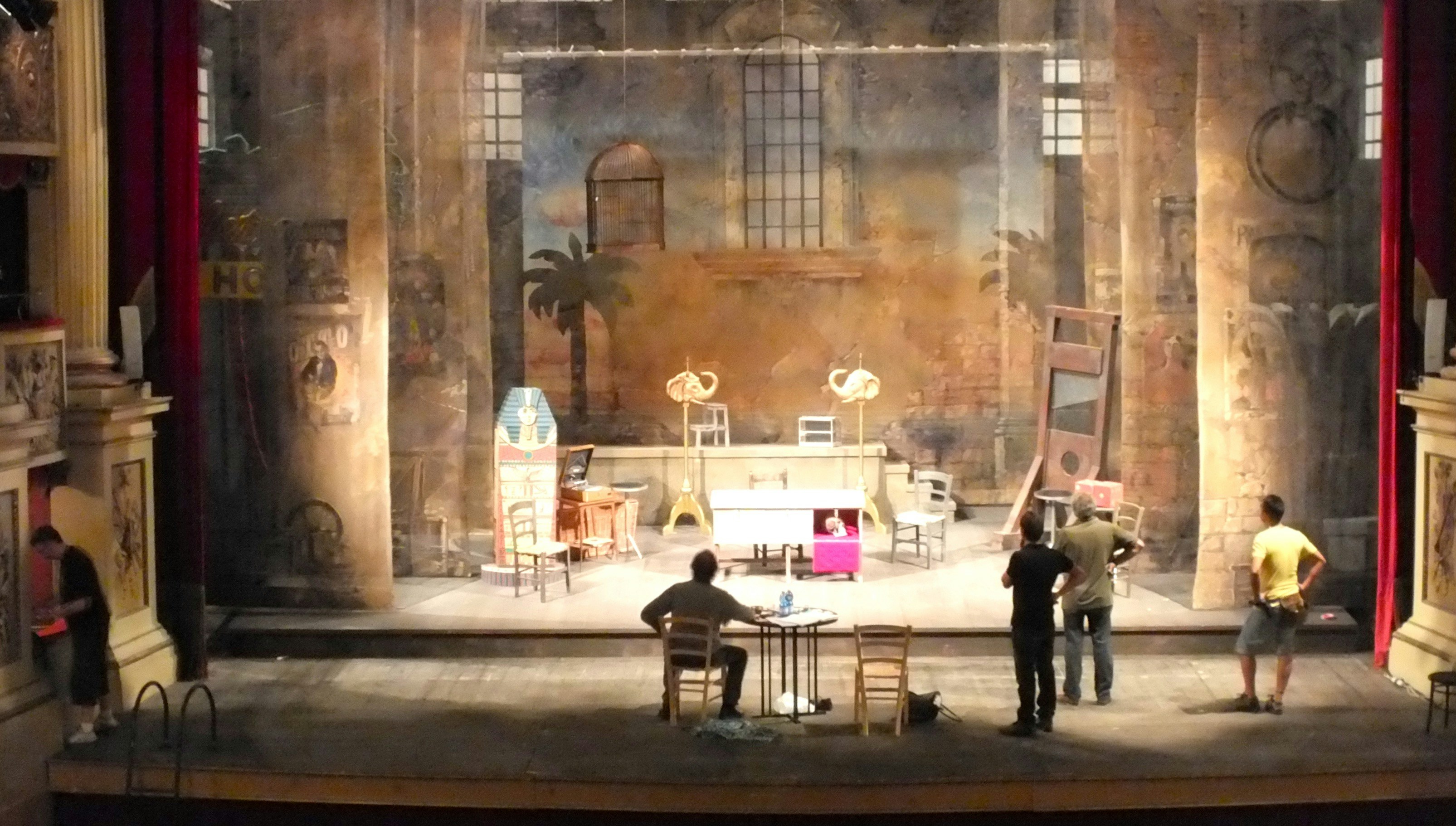
So, there you have it. From the dusty archives of the past to the digital frontiers of today, set design is a journey of creativity, collaboration, and courage. We started by asking how you can build a world on a shoestring budget, and now you know: it’s all about suggestion, modularity, and student engagement.
Remember, the best set isn’t the most expensive one; it’s the one that serves the story and empowers the actors. Whether you’re building a castle out of cardboard or a spaceship out of PVC pipes, the magic happens when the lights go down and the audience believes.
Our Top Recommendation: Start small. Pick one scene, design one element, and build it with your students. Celebrate the process, not just the product. And if you need a script that sparks that creativity, head over to our Educational Play Scripts section.
Now, go get those saws ready! The show must go on.
🔗 Recommended Links for Aspiring Scenic Artists
Ready to get your hands dirty? Here are some of our favorite resources to kickstart your next project.
👉 CHECK PRICE on:
- SketchUp Pro (Student License): SketchUp Official
- Oscillating Multi-Tool: Amazon | Home Depot
- Fire Retardant Spray: Amazon | Walmart
- Rit Dye: Amazon | Michaels
- Theatrecrafts.com: Theatrecrafts
- New York Public Library Archives: NYPL Digital Collections
Books to Add to Your Library:
- The Art of Scenic Design by John B. Smith: Amazon
- Stage Design: A Practical Guide by John G. Smith: Amazon
📚 Reference Links and Industry Standards
- New York Public Library: Billy Rose Theatre Collection
- University of Pennsylvania: Philip H. Ward Collection
- Theatrecrafts.com: Technical Theatre Archive
- Library of Congress: Federal Theatre Project
- Facebook Group: Scenic design scale in high school theatre competitions (Note: Login may be required to view full discussion)
- David Rockwell Interview: Theater: All the Moving Parts