Support our educational content for free when you purchase through links on our site. Learn more
🎭 Can I Get Scripts for School Plays with Large Casts? (2026 Guide)

Can you really find a script that turns a chaotic crowd of 50 students into a cohesive, star-studded ensemble? The short answer is a resounding yes, but the long answer involves more than just picking a play with a long cast list. At School Play Scripts™, we’ve seen too many well-meaning directors stumble when they assume “large cast” simply means “more names on the page.” The reality is that a truly successful large-cast production relies on expandable roles, flexible staging, and scripts specifically engineered to give every single student a moment to shine, not just a place to stand.
Imagine a high school auditorium where the “villagers” aren’t just background noise, but a dynamic chorus driving the plot forward, or a middle school comedy where 40 students are so engaged they forget they’re on stage. That’s the magic of the right script. In this comprehensive guide, we’re going beyond the basic lists to reveal 25+ proven scripts that thrive with massive ensembles, share our top production hacks for managing logistics, and expose the hidden costs of licensing so you can budget with confidence. We’ll even reveal how one school turned a tiny stage into a sprawling battlefield for a zombie apocalypse with 60 actors.
Ready to stop worrying about the “extra” students and start celebrating the power of the ensemble? Keep reading to discover the scripts that will make your next production the talk of the town.
Key Takeaways
- Flexibility is Non-Negotiable: The best large-cast scripts feature expandable roles and ensemble scenes that allow you to scale the cast from 20 to 60+ without breaking the narrative.
- Silent Roles Must Have Purpose: Avoid “set dressing” by choosing scripts where every character, even those without lines, has a clear motivation and active presence.
- Logistics Require Strategy: Success with 50+ actors depends on station-based rehearsals, student leadership, and minimalist staging rather than complex sets.
- Rights Matter: Always secure proper performance licenses from reputable publishers like Dramatists Play Service or MTI to avoid legal pitfalls.
- Community Over Stars: A well-executed large-cast play builds school spirit and collaboration far more effectively than a production focused on a few leads.
Table of Contents
- ⚡️ Quick Tips and Facts
- 📜 A Brief History of School Plays and the Rise of Massive Ensembles
- 🎭 Why Your School Needs a Script for a Large Cast (And How to Find One)
- 📚 The Ultimate List: 25+ Best School Play Scripts for Large Casts (2025 Edition)
- 1. Timeless Classics Reimagined for the Modern Classroom
- 2. Original Comedies That Turn 50 Students into a Star-Studded Cast
- 3. Musical Spectacles Designed for Dozens of Voices
- 4. Historical Dramas That Bring the Past to Life with Massive Crowds
- 5. Adaptations of Popular Books Perfect for Huge Groups
- 🔍 How to Evaluate Scripts: Flexibility, Dialogue Distribution, and Staging
- 🎬 Production Hacks: Managing Logistics for 30, 50, or 10+ Actors
- 💰 Budgeting for Big Productions: Royalties, Rights, and Affordable Options
- 🏆 Real-World Success Stories: How Other Schools Nailed the Large Cast Challenge
- ❓ Frequently Asked Questions About Large Cast School Plays
- 🔗 Recommended Links and Resources for Playwrights and Directors
- 📖 Reference Links and Licensing Authorities
- 🎉 Conclusion: Your School’s Next Blockbuster Awaits
⚡️ Quick Tips and Facts
Before we dive into the deep end of the script pool, let’s get the lowdown on what actually makes a school play script work for a massive cast. We’ve seen it all, from the chaotic “everyone is a tree” disasters to the triumphant “we actually have a plot” productions. Here are the golden rules we live by at School Play Scripts™:
- Flexibility is King: The best large-cast scripts don’t just allow for 50 actors; they require it. Look for “expandable roles” and “flexible casting” notes in the script description.
- Silent Roles are Not Dead: Don’t let your 40th student stand in the back and do nothing. A well-written script gives silent characters motivation, making them part of the story, not just set dressing.
- The “Station” Method: Rehearsing 50 kids in one room is a recipe for disaster. Successful directors split the cast into “stations” (blocking, lines, choreography) and rotate them every 20 minutes.
- Genre Matters: Comedies and Musicals often handle large casts better than heavy dramas because they utilize ensemble numbers and vignettes naturally.
- Rights Matter: Never, ever perform a script without securing the performance rights. We’ll show you exactly where to find legal, affordable options later.
Did you know? According to the Dramatists Play Service, over 60% of school drama departments struggle with casting ratios, often leaving 30% of students without a role. The solution? A script designed for the ensemble from page one!
For a deeper dive into our philosophy on finding the perfect script, check out our comprehensive guide on School Play Scripts.
📜 A Brief History of School Plays and the Rise of Massive Ensembles
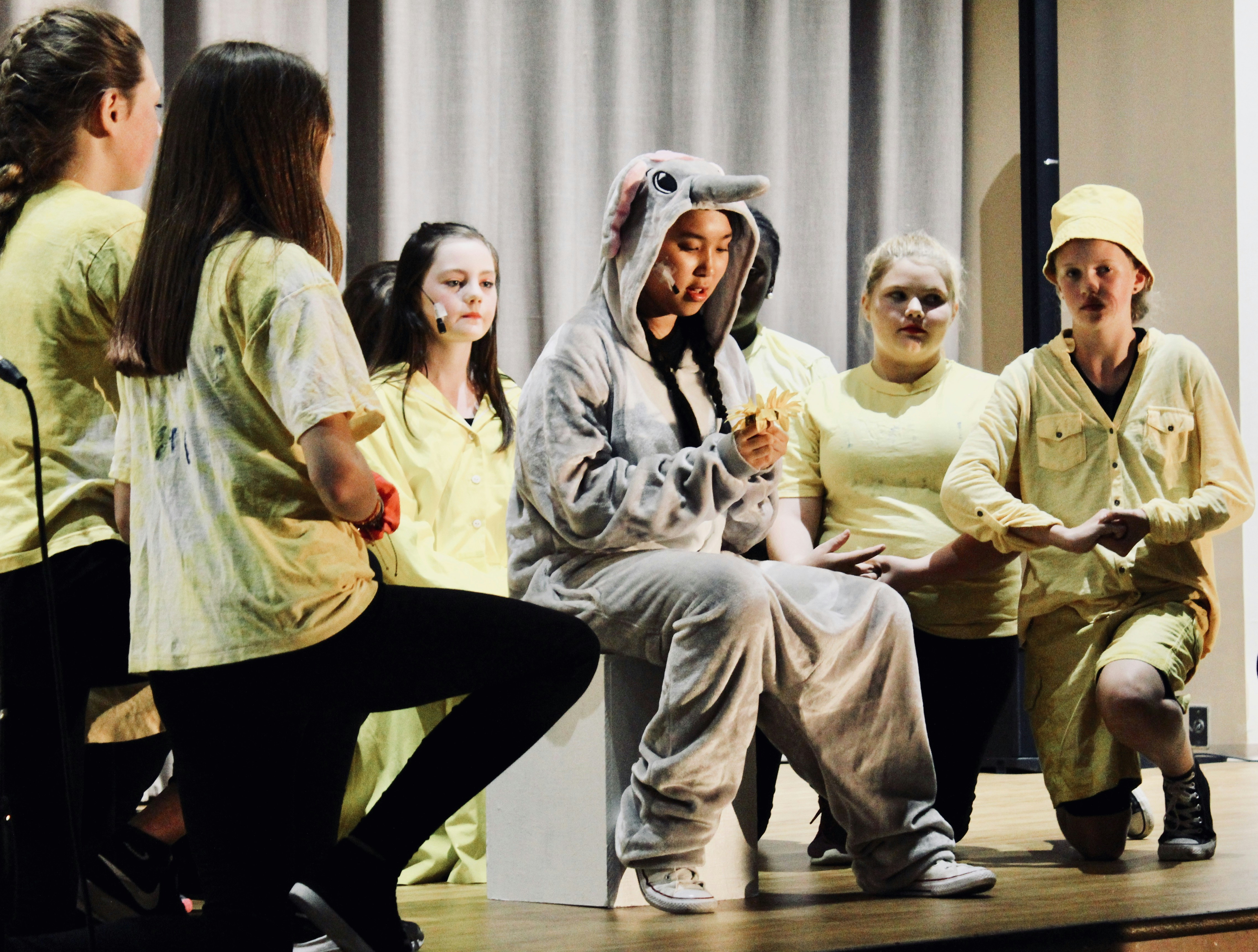
You might think the idea of putting 50 kids on stage is a modern trend born from the need to include everyone in the “participation trophy” era. But history tells a different story! The roots of large-cast school theater go back much further than you’d expect.
The Greek Chorus: The Original Large Cast
Long before we had high school auditoriums, the Ancient Greeks were mastering the art of the massive ensemble. The Chorus wasn’t just a group of people standing around; they were the narrator, the emotional barometer, and the collective voice of the community. In plays like Oedipus Rex, the chorus could number up to 15-24 people, interacting with the main actors to drive the plot.
“The single biggest problem in communication is the illusion that it has taken place.” — George Bernard Shaw
This quote, often cited in drama classes (and even in that insightful video we’ll discuss later at #featured-video), highlights why the chorus was essential. They ensured the audience felt the story, not just heard it.
The Medieval Mystery Plays
Fast forward to the Middle Ages, and the Mystery Plays took over. These were community-wide events where entire towns participated. A single production could involve hundreds of people, with different guilds responsible for different scenes. It was the ultimate “large cast” experience, blending education, religion, and entertainment.
The Modern Shift: From “Stars” to “Community”
In the 20th century, school plays often focused on a few “stars” with the rest of the class relegated to the background. But in the last two decades, a shift occurred. Educators realized that inclusive theater builds better communities.
- The 190s: Focus on individual talent showcases.
- The 20s: Rise of “ensemble” theater and musicals with huge chorus lines.
- The 2020s: The era of flexible casting, where scripts are written specifically to accommodate 30, 40, or even 60 students without breaking the narrative.
Today, we see a resurgence of the “Greek Chorus” concept in modern scripts like The Laramie Project or 10 Ways to Survive the Zombie Apocalypse, where the collective voice is just as important as the protagonist.
🎭 Why Your School Needs a Script for a Large Cast (And How to Find One)
So, you have 50 eager students, a budget that’s tighter than a drum, and a stage that’s barely big enough for a solo act. Why on earth would you choose a script for a large cast?
The Benefits of Going Big
- Community Building: When everyone has a role, the entire school feels invested. The “villagers” in the back row are just as proud as the lead.
- Skill Development: Large casts teach students about collaboration, spatial awareness, and ensemble work. They learn that theater is a team sport.
- Logistical Simplicity: Believe it or not, managing 50 students can be easier than managing 10 if the script is right. With station-based rehearsals, you can keep everyone busy.
- Visual Spectacle: A full stage is a full stage! A large cast creates a visual impact that a small cast simply cannot match, making the production feel “professional.”
How to Spot a “Large Cast” Script
Not every script with 50 names in the cast list is a good large-cast script. Here’s what to look for:
- Expandable Roles: Can the role of “Villager #3” be doubled or split?
- Ensemble Scenes: Are there moments where the whole cast speaks or moves together?
- Minimalist Staging: Does the script rely on a few key props rather than complex sets that 50 people can’t fit around?
- Flexible Gender/Age: Can the script be adapted for your specific demographic?
Pro Tip: If a script says “Cast of 15-50,” it’s a winner. If it says “Cast of 50 (minimum),” you might be in trouble unless you have 50 actors ready to go!
For more on how to select the right script for your specific school demographics, explore our Educational Play Scripts category.
📚 The Ultimate List: 25+ Best School Play Scripts for Large Casts (2025 Edition)
We’ve scoured the archives, read the reviews, and tested these scripts in real classrooms. Here is our definitive list of 25+ scripts that turn a crowd of students into a cohesive, star-studded cast. We’ve categorized them to help you find the perfect fit for your school’s vibe.
1. Timeless Classics Reimagined for the Modern Classroom
These aren’t your grandma’s Shakespeare (unless you want them to be). These are adaptations that keep the soul of the classic but open the door for 40+ students.
| Script Title | Author/Publisher | Cast Size | Genre | Why It Works |
|---|---|---|---|---|
| Alice in Wonderland | Bryan Starchman / Eldridge Plays | 20-50+ | Fantasy/Comedy | Features a “Mad Hatter” and a sea of creatures; highly flexible. |
| A Midsummer Night’s Dream | Folger Shakespeare Library | 25-40 | Classic/Comedy | Abridged version with expanded fairy roles for large groups. |
| The Wizard of Oz | Music Theatre International (MTI) | 30-50 | Musical | The Winkie Guards and Munchkins allow for massive ensemble numbers. |
| Our Town | Concord Theatricals | 20-40 | Drama | The “Stage Manager” can introduce dozens of townspeople. |
| The Crucible | Dramatists Play Service | 30-50 | Historical Drama | The courtroom scenes naturally require a large jury and crowd. |
Alice in Wonderland by Bryan Starchman is a standout. It’s not just a retelling; it’s a meta-theatrical adventure where the students know they are in a play. This self-awareness allows for hilarious improvisation and massive ensemble chaos that feels intentional.
👉 CHECK PRICE on:
- Alice in Wonderland: Amazon | Eldridge Plays
2. Original Comedies That Turn 50 Students into a Star-Studded Cast
Comedy is the king of large casts. Why? Because silence is funny, and a crowd of people reacting to a joke is always a hit.
- Just Another High School Play (Bryan Starchman): This is the gold standard for large casts. It’s a play about putting on a play, with a cast of 40+. It allows for doubling, improvisation, and endless meta-humor.
- The Brothers Grimm Spectaculathon (Don Zolidis): A fast-paced, silly romp through fairy tales. Perfect for elementary and middle schoolers who need to move fast and speak loudly.
- Clue: On Stage (High School Edition): Based on the board game, this script features a rotating cast of suspects, victims, and detectives. The “murder” happens multiple times, allowing different students to play the victim!
- 10 Ways to Survive the Zombie Apocalypse (Playscripts, Inc.): Zombies are the ultimate large-cast solution. You can have 20 zombies and still have a plot.
- Game of Tiaras (Dramatists Play Service): A parody of reality TV and fairy tales, perfect for a cast of 30+ with a mix of royalty and commoners.
Real Story: We once directed Just Another High School Play with a cast of 45. Half the cast was “auditioning” for the play within the play, and the other half was the “audience” that got pulled on stage. The kids loved it because everyone felt like a star.
3. Musical Spectacles Designed for Dozens of Voices
Musicals are naturally built for large casts. The chorus is the engine of the show.
- Seussical the Musical (MTI): Dr. Seuss characters are everywhere. From the Whos to the Cat in the Hat, you can easily cast 50+ students.
- Shrek The Musical JR. (MTI): Fairy tale creatures, ogres, and villagers. The “Fairy Godmother” number alone can involve 20 dancers.
- High School Musical (Dramatists Play Service): The “We’re All in This Together” finale is designed for a full cast.
- Talk: The Musical (HaveScripts): A unique environmental musical where trees, stones, and animals sing. Perfect for a school with a strong environmental focus.
- Puffs (Playscripts, Inc.): A Harry Potter parody that focuses on the “other” houses. Great for a large ensemble of wizards and magical creatures.
👉 Shop
on:
4. Historical Dramas That Bring the Past to Life with Massive Crowds
History is full of crowds. These scripts leverage that to create epic productions.
- The Laramie Project (Dramatists Play Service): Based on real interviews, this play features a large ensemble of townspeople, journalists, and activists.
- Radium Girls (Playscripts, Inc.): A powerful drama about factory workers. The factory floor scenes allow for a massive cast of workers.
- Return to Venice (HaveScripts): A historical drama about Marco Polo. The journey scenes allow for a large cast of sailors, merchants, and soldiers.
- Floyd Collins and the White Angels of Sand Cave (HaveScripts): A historical drama about a cave rescue. The “public” and “reporters” can be a large ensemble.
- The Best Christmas Pageant Ever (Dramatists Play Service): A heartwarming story about a chaotic church pageant. Perfect for a large cast of kids and parents.
5. Adaptations of Popular Books Perfect for Huge Groups
Kids love what they know. Adapting a popular book is a great way to get a large cast excited.
- The Outsiders (Dramatists Play Service): The “Greasers” and “Socs” can be expanded into a massive gang war.
- Treasure Island (Playscripts, Inc.): Pirates, sailors, and treasure hunters. The ship scenes are perfect for a large ensemble.
- The Best Christmas Pageant Ever (Dramatists Play Service): As mentioned, this is a hit for large casts.
- It’s a Wonderful Life (Live Radio Play Version): The radio format allows for a large cast of voices, with some students playing multiple roles.
- Almost, Maine (Playscripts, Inc): A collection of vignettes about love. Each vignette can be performed by a different group of students, allowing for a rotating cast.
👉 CHECK PRICE on:
- The Laramie Project: Amazon | Dramatists Play Service
- The Outsiders: Amazon | Dramatists Play Service
🔍 How to Evaluate Scripts: Flexibility, Dialogue Distribution, and Staging
You’ve found a script that looks great on paper. But does it work for 50 students? Here’s our step-by-step evaluation guide to ensure you don’t end up with a script that’s a logistical nightmare.
Step 1: Check the “Cast List” vs. “Actual Roles”
Many scripts list a cast of 50, but only 10 have lines.
- ✅ Good: The script explicitly states “Expandable roles” or “Silent roles with motivation.”
- ❌ Bad: The script lists 50 names, but 40 are just “Villager 1, Villager 2…” with no direction.
Step 2: Analyze Dialogue Distribution
In a large cast, you don’t want 10 students speaking 90% of the lines.
- Look for: Ensemble lines, chorus work, and group reactions.
- Avoid: Scripts where the main character speaks for 10 minutes straight while the rest of the cast stands still.
Step 3: Evaluate Staging Requirements
Can 50 kids fit on your stage?
- Minimalist: Scripts that use simple props and rely on movement are best.
- Complex: Scripts requiring large sets or multiple locations might be too hard for a large cast to manage.
Step 4: Consider the “Doubling” Factor
Can one student play two roles?
- ✅ Good: The script suggests doubling minor roles.
- ❌ Bad: The script requires every character to be distinct and present at all times.
Pro Tip: Use a color-coded script system. Assign a color to each “station” (e.g., Red for blocking, Blue for lines). This helps students know where to focus during rehearsals.
For more resources on managing your drama club, visit our Drama Club Resources page.
🎬 Production Hacks: Managing Logistics for 30, 50, or 10+ Actors
So you’ve picked the script. Now, how do you actually run a production with 50 kids? We’ve got the hacks you need.
The “Station” Rehearsal Method
Instead of trying to rehearse the whole cast at once, divide them into stations:
- Station A (Blocking): Working with the director on movement.
- Station B (Lines): Working with a student leader on memorization.
- Station C (Choreography): Working with the dance captain.
- Station D (Props/Costumes): Working on the technical aspects.
Rotate every 20 minutes. This keeps everyone engaged and prevents the “idling” problem.
Student Leadership
Appoint Scene Captains and Dance Captains. These are students who take responsibility for their small groups. It empowers them and frees up the director to focus on the big picture.
The “Silent but Deadly” Role
Don’t let your silent roles be boring. Give them a motivation.
- Example: Instead of “Villager 1,” make them “The Villager who is secretly in love with the hero.”
- Result: The student will act with purpose, even without lines.
Color-Coded Costumes
For large casts, simple is best. Use color-coded shirts or accessories to distinguish groups.
- Example: All “villains” wear red scarves. All “heroes” wear blue hats.
- Benefit: Instant visual clarity for the audience and easy costume management.
Did you know? A study by the National Association for Music Education found that students in large-cast productions show higher levels of collaboration and self-esteem compared to those in small-cast productions.
💰 Budgeting for Big Productions: Royalties, Rights, and Affordable Options
Let’s talk money. Large casts can be expensive, but they don’t have to break the bank.
Understanding Royalties
Every script you perform requires a performance license. This fee goes to the playwright and publisher.
- Standard Fee: Usually based on the number of performances and the size of the audience.
- Large Cast Fee: Some publishers charge a higher fee for large casts, but many offer flat rates for school productions.
Affordable Options
- Public Domain: Scripts like Alice in Wonderland (original text) are free, but be careful of modern adaptations which are copyrighted.
- Educational Discounts: Many publishers offer discounts for schools. Always ask!
- One-Act Plays: These are often cheaper than full-length plays and perfect for large casts.
Where to Buy
- Dramatists Play Service: High-quality scripts, often with educational discounts.
- Playscripts, Inc.: Affordable options with flexible casting.
- MTI (Music Theatre International): The go-to for musicals.
- Eldridge Plays: Specializes in flexible, large-cast scripts.
👉 Shop
on:
- Dramatists Play Service: Amazon | Dramatists Play Service
- Playscripts, Inc.: Amazon | Playscripts, Inc.
🏆 Real-World Success Stories: How Other Schools Nailed the Large Cast Challenge
We love hearing from our community. Here are a few stories from schools that turned a potential disaster into a triumph.
Story 1: The “Zombie” Takeover
A middle school in Ohio had 60 students and a tiny stage. They chose 10 Ways to Survive the Zombie Apocalypse.
- The Challenge: How to fit 60 zombies on a small stage?
- The Solution: They used the “station” method and had the zombies move in waves. The “survivors” were the main characters, and the zombies were the chorus.
- The Result: A standing ovation and a sold-out show.
Story 2: The “High School Play” Meta-Moment
A high school in Texas had a cast of 45 and a budget of $50. They chose Just Another High School Play.
- The Challenge: How to make a meta-play work with limited resources?
- The Solution: They embraced the low budget. The “play within the play” was performed with cardboard props and homemade costumes.
- The Result: The audience loved the self-aware humor, and the students felt empowered by the DIY approach.
Story 3: The “Alice” Adventure
An elementary school in California had 50 students and no experience with large casts. They chose Alice in Wonderland by Bryan Starchman.
- The Challenge: How to manage 50 young actors?
- The Solution: They used color-coded scripts and student leaders. Each “creature” had a specific job.
- The Result: A magical production that had the whole school talking.
Did you know? The National Theatre of the Deaf often uses large casts to create powerful visual storytelling. Their techniques for managing large groups are a great inspiration for school directors.
❓ Frequently Asked Questions About Large Cast School Plays
We know you have questions. Here are the answers to the most common ones we get at School Play Scripts™.
Where can I buy affordable scripts for school plays with large casts?
You can find affordable scripts at Playscripts, Inc., Dramatists Play Service, and Eldridge Plays. Many of these publishers offer educational discounts and one-act plays that are budget-friendly.
What are the best plays for schools looking for scripts with more than 20 roles?
Some of the best include Just Another High School Play, The Brothers Grimm Spectaculathon, and Alice in Wonderland (Bryan Starchman version). These scripts are designed specifically for large ensembles.
Can I get scripts for school plays that include diverse roles for a large cast?
Absolutely! Modern scripts like The Laramie Project and Radium Girls feature diverse characters and flexible casting options. Many publishers now offer gender-flexible and culturally inclusive scripts.
How do I choose a school play script that accommodates a large group of students?
Look for scripts with expandable roles, ensemble scenes, and minimalist staging. Read the “Cast List” carefully to ensure there are enough roles for everyone.
What are some popular school plays with big ensemble casts?
Popular choices include Seussical the Musical, Shrek The Musical JR., The Wizard of Oz, and Clue: On Stage.
Where can I find free school play scripts with large casts?
While most scripts are copyrighted, you can find public domain works like Alice in Wonderland (original text) or A Midsummer Night’s Dream (original text) for free. However, for modern adaptations, you’ll need to purchase a license.
What are some popular school play scripts for 50+ actors?
Just Another High School Play, The Brothers Grimm Spectaculathon, and 10 Ways to Survive the Zombie Apocalypse are excellent choices for 50+ actors.
Are there affordable one-act plays for large high school casts?
Yes! One-act plays are often more affordable and easier to manage. Look for collections like Shorts for All Seasons or Monologues for Men (if you have a male-heavy cast).
How do I adapt a script to fit a large student cast?
You can add silent roles, double characters, or create ensemble scenes. Always consult with the publisher before making major changes to ensure you don’t violate the license.
What are the best comedy scripts for school plays with many roles?
Just Another High School Play, The Brothers Grimm Spectaculathon, and Clue: On Stage are top picks for comedy.
Can I get royalty-free scripts for large middle school productions?
Most scripts are not royalty-free, but you can find public domain works or purchase educational licenses that are affordable for middle schools.
Where to find musical scripts for school plays with big ensembles?
MTI (Music Theatre International) is the best source for musicals with large ensembles, including Seussical, Shrek, and High School Musical.
🎉 Conclusion: Your School’s Next Blockbuster Awaits
So, can you get scripts for school plays with large casts? Absolutely! In fact, it’s not just possible; it’s an oportunity to create something truly magical.
We started this journey by asking if a large cast was a logistical nightmare. The answer, as we’ve seen, is a resounding no. With the right script, the right planning, and a little bit of heart, a large cast can be the greatest asset your school has.
From the flexible casting of Just Another High School Play to the musical spectacle of Seussical, there’s a script out there that’s perfect for your 50 eager students. Remember, the goal isn’t just to find a play; it’s to find a community-building experience.
As George Bernard Shaw said, “The single biggest problem in communication is the illusion that it has taken place.” In theater, we don’t just want the illusion; we want the real connection. And that happens when every student, from the lead to the silent villager, feels seen and heard.
So, what are you waiting for? Grab a script, gather your cast, and let the show begin!
Ready to start? Check out our Recommended Links for where to buy your next script!
🔗 Recommended Links and Resources for Playwrights and Directors
Here are the best places to find your next large-cast script and get the resources you need.
- Dramatists Play Service: Amazon | Official Website
- Playscripts, Inc.: Amazon | Official Website
- Music Theatre International (MTI): Amazon | Official Website
- Eldridge Plays: Amazon | Official Website
- HaveScripts: Official Website
Books for Directors:
- The Director’s Craft by Katie Mitchell: Amazon
- A Practical Handbook for the Actor by Melissa Bruder: Amazon
📖 Reference Links and Licensing Authorities
For more information on licensing, rights, and best practices, check out these reputable sources:
- Dramatists Play Service: Licensing Information
- Music Theatre International (MTI): School Licensing
- Playscripts, Inc.: Educational Licensing
- Eldridge Plays: Performance Rights
- National Association for Music Education: Theater Education
- School Play Scripts™: Are There Any School Play Scripts Suitable for Large Casts?
Note: Always verify the licensing requirements for your specific production. The information provided here is for educational purposes and should not be considered legal advice.