Support our educational content for free when you purchase through links on our site. Learn more
🎭 AI & AR in Theatre Education: 7 Ways to Revolutionize Drama Class (2026)

Imagine a high school drama class where the set isn’t built from plywood and paint, but from light and code, and where a shy student finds their voice not just through practice, but by rehearsing with an AI scene partner that never gets tired. This isn’t a scene from a sci-fi movie; it’s the new reality of theatre education in 2026. While traditional methods still hold value, the integration of Artificial Intelligence and Augmented Reality is shattering the fourth wall, offering students unprecedented tools for script analysis, set design, and performance enhancement.
At School Play Scripts™, we’ve watched students transform from hesitant readers into confident creators using these technologies. From using AI to decode the subtext of Shakespeare to visualizing entire worlds in the gymnasium with AR, the potential is limitless. However, navigating this digital landscape can be daunting. That’s why we’ve compiled the ultimate guide to AI and AR in theatre education, cutting through the hype to reveal practical, game-changing strategies for educators and students alike. Whether you’re looking to modernize your curriculum or simply find the perfect Educational Play Scripts to kickstart a tech-enhanced production, this article is your backstage pass.
Key Takeaways
- AI transforms script analysis by instantly generating character profiles and detecting subtext, allowing students to dive deeper into Children’s Theatre Scripts with greater speed and insight.
- Augmented Reality (AR) revolutionizes set design, enabling students to prototype 3D environments and visualize spatial relationships without the cost of physical materials.
- Hybrid learning models combining human creativity with digital tools foster inclusive classrooms where every student, regardless of ability, can find their role.
- Ethical considerations regarding data privacy and AI bias are paramount; educators must guide students to use these tools as collaborators, not replacements for human intuition.
- Practical implementation is possible for any budget, leveraging accessible tools like Adobe Aero and Meta Quest to bring immersive experiences to the drama room.
Table of Contents
- ⚡️ Quick Tips and Facts
- 🎭 From Stagecraft to Smart Stages: A Brief History of AI and AR in Theatre Education
- 🤖 The Digital Director: How Artificial Intelligence is Revolutionizing Script Analysis and Rehearsal
- 🕶️ Beyond the Fourth Wall: Transforming Set Design and Spatial Learning with Augmented Reality
- 🎓 7 Game-Changing Ways AI and AR are Reshaping Drama Curriculum and Student Engagement
- 🛠️ The Tech Toolkit: Essential Hardware, Software, and Platforms for the Modern Drama Classroom
- 🚧 Navigating the Pitfalls: Ethical Concerns, Cost Bariers, and Technical Hurdles in EdTech Theatre
- 🎬 Case Studies: Real-World Success Stories of AI-Driven Performances and AR-Enhanced Workshops
- 📊 Comparative Analysis: Traditional Methods vs. AI/AR Integration in Student Skill Acquisition
- 💡 Quick Tips and Facts: Maximizing Your ROI on Theatre Technology Investments
- 🏁 Conclusion: Stepping Into the Future of Performance Education
- 🔗 Recommended Links
- ❓ FAQ: Your Burning Questions About AI and AR in the Drama Room Answered
- 📚 Reference Links
⚡️ Quick Tips and Facts
Before we dive into the deep end of the digital pool, let’s splash around with some essential truths about the intersection of AI, AR, and the drama room. If you’re a teacher trying to justify a new tech budget to your principal, or a student wondering if your robot co-star is going to steal your thunder, these nugets are your golden tickets.
- The Empathy Machine: Contrary to the fear that screens isolate us, immersive tech like AR and VR is often called “The Empathy Machine.” It allows students to literally step into someone else’s shoes, a core tenet of acting, by simulating the perspective of a character in a historical or fictional setting.
- It’s Not Just for Techies: You don’t need a computer science degree to use these tools. Modern platforms are designed for creative educators, focusing on storytelling rather than coding.
- The “Uncanny Valley” is Real: When using AI-generated avatars or voices, be wary of the “Uncanny Valley”—that creepy feeling when something looks almost human but not quite. In theatre, this can break the audience’s suspension of disbelief instantly.
- Data Privacy is Paramount: As we collect data on student movements and voice patterns for AI analysis, student privacy becomes a non-negotiable priority.
- The Future is Hybrid: The most successful productions aren’t fully digital; they are hybrid experiences where physical actors interact seamlessly with digital overlays.
For a deeper dive into how we find the perfect script to kickstart these innovations, check out our guide on School Play Scripts. Whether you need Educational Play Scripts for high schoolers or Elementary School Plays that introduce these concepts gently, the right text is the foundation of any tech-enhanced production.
🎭 From Stagecraft to Smart Stages: A Brief History of AI and AR in Theatre Education
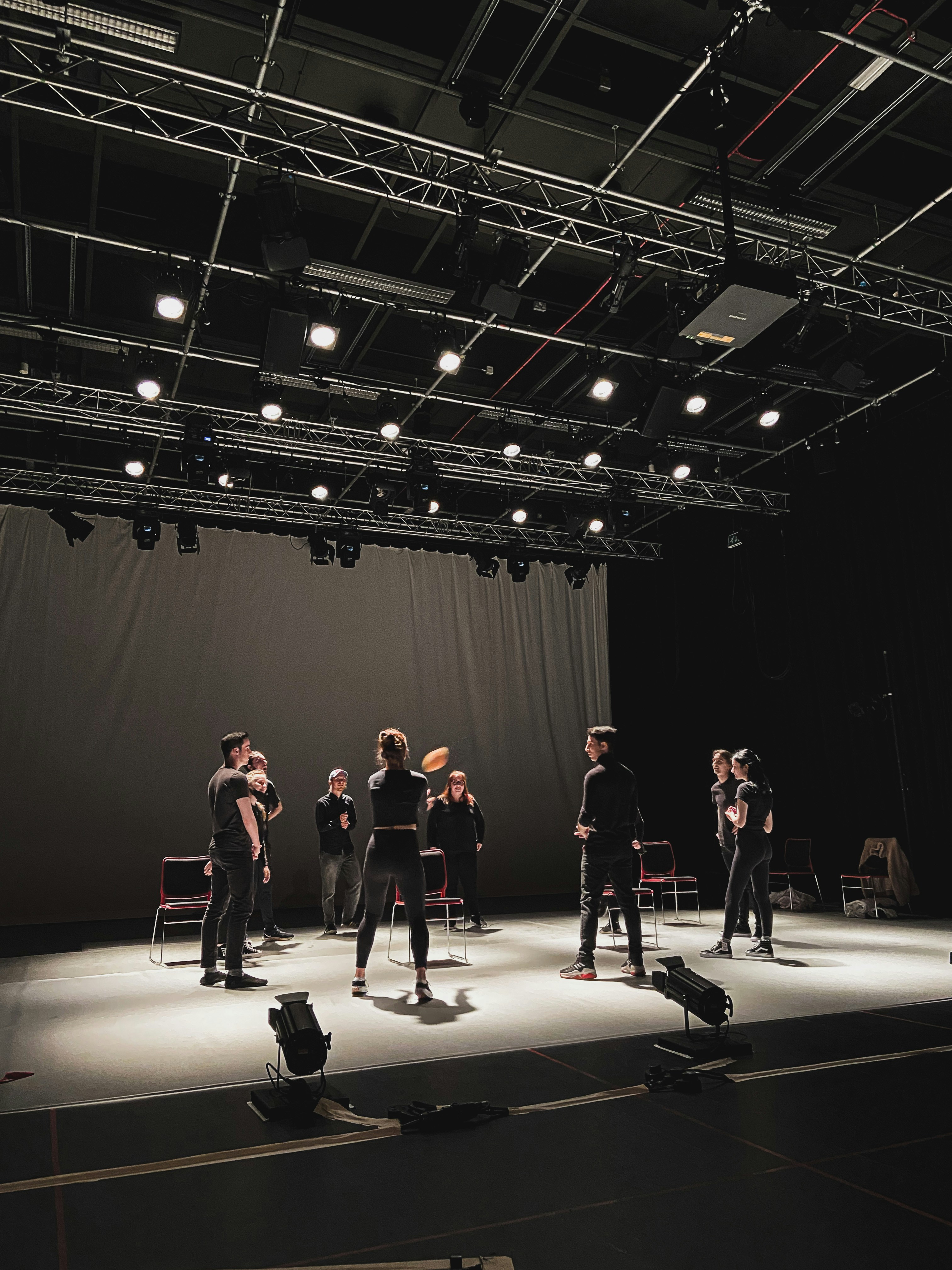
Theatre has always been the first to adopt new technology. From the deus ex machina of ancient Greece (a crane lowering a god onto the stage) to the electric lighting of the 19th century, we’ve always loved a good trick. But where did AI and AR fit into this lineage?
The Evolution of the Digital Stage
For decades, theatre technology was about projection and lighting. We used slides, then video projectors, to create backdrops. It was passive. The audience watched a screen; the actors performed in front of it.
Then came the interactive era. In the early 20s, we started seeing motion sensors and basic interactivity. But the real game-changer arrived with the smartphone revolution. Suddenly, every student had a powerful computer in their pocket capable of overlaying digital information on the real world.
“The book ‘investigates the cutting-edge application of evolving digital technologies within the creative industries, with a focus on theatre and the dramatic arts’.” — Shane Pike, PhD, AI, AR, and VR in Theatre and Performance
Global Pioners
As noted in Shane Pike’s comprehensive research, the adoption of these technologies has been a global phenomenon, though the focus varies by region:
- Australia: The production Alex: A Play with Holograms by The Underworld Downunder was a landmark, proving that holographic technology could coexist with live actors without feeling gimmicky.
- Europe: The Belgian group Crew has been instrumental in pushing VR boundaries, creating immersive narratives that challenge the very definition of “live.”
- Southeast Asia: Singapore’s “Arts/Tech Nexus” has seen Tamil language theatre groups using AR to preserve cultural heritage, making ancient stories accessible to modern youth.
- North America: While often slower to adopt due to funding fragmentation, US universities are now leading the charge in AI-driven script analysis and automated set design.
Why History Matters to You
Understanding this history helps us avoid the mistakes of the past. We’ve seen “tech for tech’s sake” fail time and again. The goal isn’t to replace the actor with a robot; it’s to augment the human experience. As we move forward, we must ask: Are we using these tools to tell better stories, or just to show off?
🤖 The Digital Director: How Artificial Intelligence is Revolutionizing Script Analysis and Rehearsal
Imagine a director who never sleeps, knows every line in every language, and can instantly generate a character biography based on a single sentence of dialogue. That’s the promise of AI in script analysis.
AI as the Ultimate Script Doctor
In the past, students spent hours underlining scripts, searching for themes, and analyzing subtext. Today, AI tools can do this in seconds.
- Character Profiling: Tools like ChatGPT or specialized drama AIs can analyze a script and generate detailed psychological profiles for every character, suggesting motivations, fears, and desires.
- Subtext Detection: AI can highlight lines where the spoken words contradict the intended meaning, helping students grasp the nuance of subtext faster.
- Language Learning: For English Learning Drama Scripts, AI can break down complex vocabulary, suggest pronunciation guides, and even generate simplified versions of Shakespeare for younger students.
Rehearsal Revolution: The Virtual Scene Partner
One of the biggest challenges in drama class is finding enough actors for a scene. Enter the AI Scene Partner.
- Voice Synthesis: Using tools like ElevenLabs, students can generate realistic voiceovers for missing characters, allowing a solo actor to rehearse a duet.
- Blocking Assistance: AI cameras can track student movement and suggest optimal blocking patterns to ensure visibility for the audience, acting as a virtual stage manager.
The Human Element: A Cautionary Tale
However, we must be careful. In a recent workshop, a student relied entirely on an AI’s suggestion for a character’s motivation, only to realize the AI missed the emotional core of the scene. The AI suggested a “rational” choice, but the scene required an “irrational” emotional outburst.
- The Lesson: AI is a tool for exploration, not a replacement for intuition. It should spark ideas, not dictate them.
“The transition to new immersive media necessitates a new set of skills, including photogrametry, 3D modeling, and AI, beyond traditional wordsmithing or acting.” — Future Hub, Kyoto University of Foreign Studies
🕶️ Beyond the Fourth Wall: Transforming Set Design and Spatial Learning with Augmented Reality
If AI is the brain of the new theatre, AR is the eyes. It allows us to see the impossible become possible, right in the middle of the gymnasium.
Visualizing the Unseen
Set design used to be a two-dimensional art. Students drew flats on paper, and the audience had to imagine the rest. With AR, students can hold a tablet or wear smart glasses and see a 3D model of the set overlaid on the empty stage.
- Scale and Perspective: Students can walk around a virtual set to understand scale and perspective in a way that 2D drawings never allow.
- Cost-Effective Protyping: Why build a full-scale castle when you can build a virtual one? AR allows for rapid protyping of set designs, saving schools thousands of dollars in materials.
Interactive Storytelling
AR isn’t just for the set; it’s for the story. Imagine a scene where a ghost appears only when viewed through a specific device, or where the background changes dynamically based on the actor’s dialogue.
- The “My Hometown Project”: At Kyoto University, students created virtual tours of their hometowns, blending physical locations with digital overlays. This concept can be adapted for school plays, where the audience uses their phones to see hidden layers of the story.
The Technical Hurdle
While the possibilities are endless, the technical barrier remains. Setting up a stable AR environment requires robust Wi-Fi and compatible devices. But as Apple’s Vision Pro and Meta Quest become more affordable, this barrier is lowering.
🎓 7 Game-Changing Ways AI and AR are Reshaping Drama Curriculum and Student Engagement
We’ve talked about the “what” and the “how,” but let’s get specific. Here are seven concrete ways these technologies are transforming the drama classroom, from the elementary level to high school productions.
- Instant Feedback Lops: AI tools can analyze a student’s vocal projection, pitch, and pacing in real-time, offering immediate feedback on vocal technique without waiting for the teacher’s critique.
- Inclusive Casting: AI can help adapt scripts to be more inclusive, suggesting gender-neutral pronouns or modifying dialogue to better reflect diverse backgrounds, ensuring every student feels seen.
- Virtual Field Trips: AR apps can transport students to the Globe Theatre in London or the Bolshoi in Moscow, providing historical context without leaving the classroom.
- Personalized Learning Paths: AI algorithms can track a student’s progress and suggest specific exercises or Children’s Theatre Scripts that match their skill level and interests.
- Collaborative World-Building: Using AR, students can co-create a virtual world for a play, fostering collaboration between actors, designers, and tech crews.
- Accessibility Enhancements: AI can generate real-time captions for the hearing impaired or audio descriptions for the visually impaired, making theatre accessible to all.
- Data-Driven Auditions: AI can analyze audition tapes to suggest cast lists based on vocal range, physical presence, and even emotional resonance, reducing bias in the casting process.
Why This Matters
These aren’t just cool tricks; they are pedagogical shifts. They move the classroom from a teacher-centered model to a student-centered, exploratory environment. But how do we actually get the gear to do this?
🛠️ The Tech Toolkit: Essential Hardware, Software, and Platforms for the Modern Drama Classroom
You can’t build a set without lumber, and you can’t build a digital theatre without the right tools. Here is our curated list of the best hardware and software for the drama room.
Hardware: The Physical Foundation
| Device Type | Recommended Brands | Best For | Pros | Cons |
|---|---|---|---|---|
| AR Headsets | Microsoft HoloLens 2, Magic Leap 2 | Professional set design, immersive acting | High fidelity, hands-free | Expensive, heavy for long sessions |
| Tablets | iPad Pro, Samsung Galaxy Tab S9 | Classroom AR apps, script analysis | Affordable, intuitive, portable | Battery life, screen glare |
| VR Headsets | Meta Quest 3, Pico 4 | Virtual rehearsals, audience immersion | Wireless, high resolution | Motion sickness for some users |
| Motion Capture | Roko Smartsuit, iPhone LiDAR | Character animation, blocking | Accurate, accessible | Setup time, learning curve |
Software: The Digital Magic
- Unity & Unreal Engine: The gold standards for creating custom AR/VR experiences. Step learning curve but unlimited potential.
- Adobe Aero: Perfect for educators. No coding required. Create AR experiences by simply scanning a QR code.
- Runway ML: An AI-powered video editing tool that can remove backgrounds, generate text-to-video, and enhance audio.
- ChatGPT / Claude: Essential for script analysis, character development, and generating Drama Club Resources.
Where to Buy
- 👉 CHECK PRICE on:
Meta Quest 3: Amazon | Best Buy | Meta Official
iPad Pro: Amazon | Apple
Roko Smartsuit: Amazon | Roko Official
🚧 Navigating the Pitfalls: Ethical Concerns, Cost Bariers, and Technical Hurdles in EdTech Theatre
It’s not all sunshine and standing ovations. As we integrate these technologies, we must address the elephant in the room.
The Ethical Quagmire
- Data Privacy: When students wear VR headsets, they are generating data on their eye movements, body language, and even biometric responses. Who owns this data? Schools must have strict data protection policies.
- AI Bias: AI models are trained on existing data, which often contains biases. If an AI suggests a cast list or a character interpretation, it might reinforce stereotypes. Teachers must critically evaluate AI outputs.
- The Human Touch: There is a risk that students might rely too heavily on AI, losing the ability to interpret text or connect emotionally with peers.
The Cost Barrier
Let’s be real: VR headsets are expensive. A classroom set of 30 Meta Quest 3s can cost thousands of dollars.
- Solution: Start small. Use BYOD (Bring Your Own Device) policies where students use their own tablets. Or, partner with local tech companies for donations.
- Open Source: Look for open-source alternatives like Blender for 3D modeling or Godot for game development to save on software costs.
Technical Hurdles
- Connectivity: AR and VR require stable, high-speed Wi-Fi. Many school networks are not equipped for this.
- Maintenance: Tech breaks. Who fixes the headsets? Schools need a tech support plan or a dedicated student tech crew.
🎬 Case Studies: Real-World Success Stories of AI-Driven Performances and AR-Enhanced Workshops
Theory is great, but let’s look at what’s actually happening in the real world.
Case Study 1: The “U Theatre” at Kyoto University
As mentioned in the video summary, the Future Hub at Kyoto University of Foreign Studies has created a 180-degree immersive space.
- The Project: Students created “KUFS Go,” an AR app for campus scavenger hunts, and “My Hometown Project,” where they built virtual tours.
- The Result: Students developed vocational skills in 3D modeling and AI, while engaging in cultural exchange. The space replaced traditional computer labs, fostering collaboration over isolation.
Case Study 2: High School Shakespeare with AI
A high school in California used AI voice synthesis to help a student with a speech impediment perform the role of Hamlet.
- The Approach: The student performed the physical actions and emotions, while the AI generated the voice in real-time.
- The Outcome: The student delivered a powerful performance, proving that technology can be an enabler, not a crutch.
Case Study 3: AR Set Design in a Rural School
A rural school with limited budget used iPad-based AR to design their set for A Midsummer Night’s Dream.
- The Approach: Students used Adobe Aero to place virtual trees and fairies in the gym.
- The Outcome: The audience used their phones to see the full magical forest, while the actors performed in a simple space. It was a hit and cost a fraction of a traditional set.
📊 Comparative Analysis: Traditional Methods vs. AI/AR Integration in Student Skill Acquisition
How do these new methods stack up against the old ways? Let’s break it down.
| Skill Area | Traditional Method | AI/AR Integrated Method | Impact |
|---|---|---|---|
| Script Analysis | Manual underlining, group discussion | AI-generated character profiles, subtext detection | Faster understanding, deeper initial insight |
| Set Design | 2D drawings, physical models | 3D AR models, virtual walkthroughs | Better spatial awareness, cost savings |
| Rehearsal | Waiting for scene partners, limited feedback | AI scene partners, real-time vocal analysis | More practice time, immediate correction |
| Auditioning | Subjective teacher judgment | Data-driven casting suggestions, bias reduction | More inclusive, objective metrics |
| Accessibility | Limited accommodations | Real-time captions, audio descriptions | Universal design, broader audience |
The Verdict
While traditional methods build a strong foundation, AI/AR integration accelerates skill acquisition and opens doors for students who might otherwise be left behind. However, the human element remains ireplaceable. The best approach is a hybrid model that leverages the strengths of both.
💡 Quick Tips and Facts: Maximizing Your ROI on Theatre Technology Investments
Before we wrap up, here are a few final pro-tips to get the most out of your tech investments.
- Start with the Story: Don’t buy a VR headset because it’s cool. Buy it because it solves a specific storytelling problem.
- Train Your Teachers: Technology is only as good as the person using it. Invest in professional development for your drama staff.
- Involve the Students: Let students be the tech experts. They often learn faster than adults and can help maintain the equipment.
- Pilot Programs: Test new tools on a small scale before rolling them out to the whole school.
- Community Partnerships: Reach out to local tech companies. They often have donated equipment or volunteers willing to help.
🏁 Conclusion: Stepping Into the Future of Performance Education
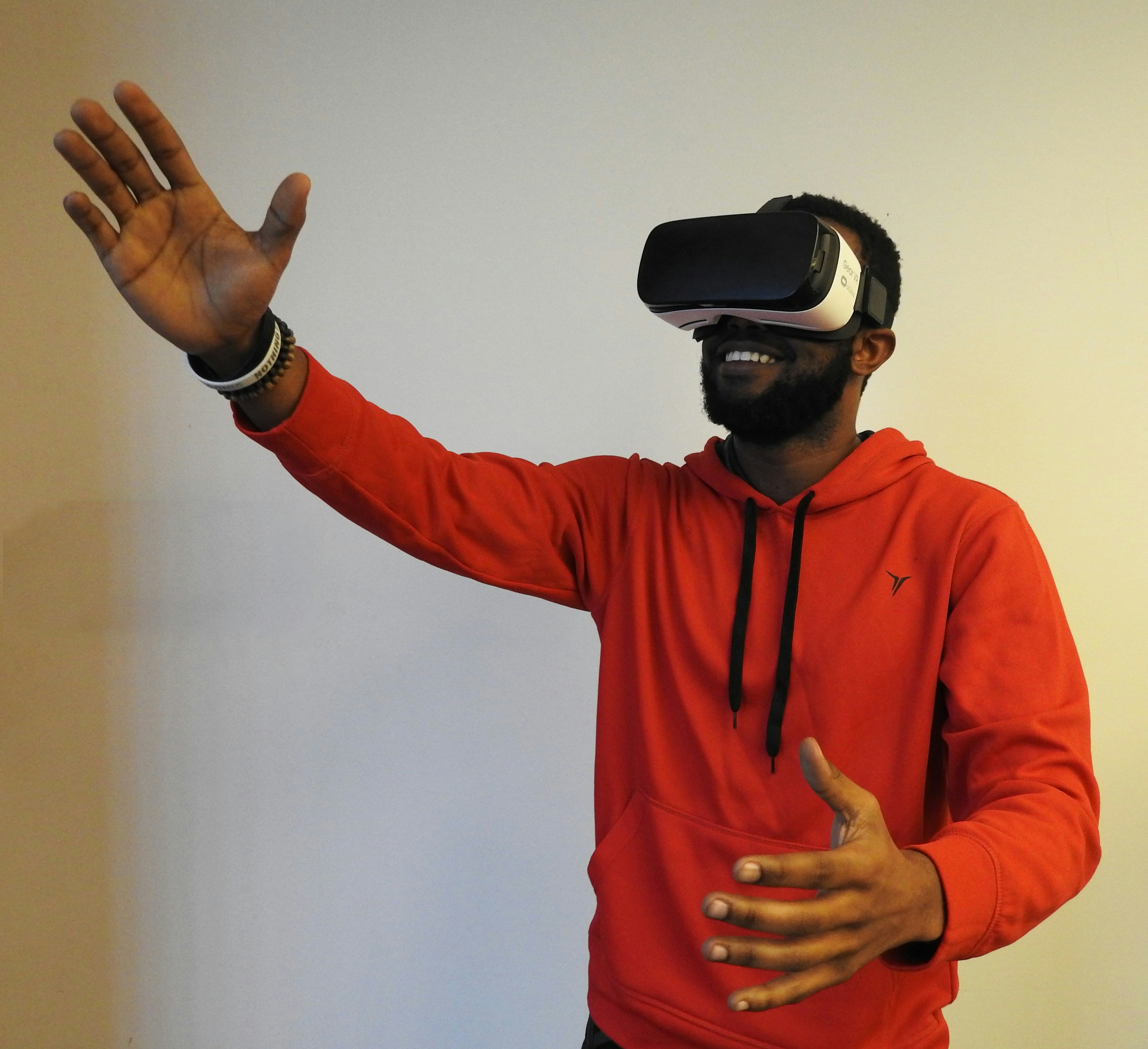
So, is the future of theatre education digital? Absolutely. But it’s not a future where robots replace actors. It’s a future where human creativity is amplified by technology.
We started this journey by asking if AI and AR could truly enhance the drama room. The answer is a resounding yes, but with a caveat: technology must serve the art, not the other way around.
From the U Theatre in Kyoto to the high school gymnasiums of America, we are seeing a new generation of storytellers who are fluent in both Shakespeare and Python. They are using AI to analyze scripts, AR to build worlds, and VR to step into the shoes of others.
The challenges are real—cost, ethics, and the fear of losing the “human touch.” But the rewards are even greater: inclusive classrooms, engaged students, and innovative productions that push the boundaries of what theatre can be.
As educators, our job is not to resist this change, but to guide it. We must ensure that our students are not just consumers of technology, but creators of it. We must teach them to use these tools with integrity, empathy, and artistic vision.
The curtain is rising on a new era of theatre education. Are you ready to take your place on stage?
🔗 Recommended Links
Ready to dive deeper? Here are some essential resources to get you started.
- Books:
AI, AR, and VR in Theatre and Performance by Shane Pike: Routledge
The Art of Immersive Storytelling: Amazon - Hardware:
Meta Quest 3: Amazon | Best Buy
iPad Pro: Apple
Roko Smartsuit: Roko Official - Software:
Unity: Unity Official
Adobe Aero: Adobe Official
Runway ML: Runway Official - Internal Resources:
- Educational Play Scripts
- Elementary School Plays
- Drama Club Resources
❓ FAQ: Your Burning Questions About AI and AR in the Drama Room Answered

How can AI help students write original scripts for school plays?
AI can act as a creative spark. Students can use tools like ChatGPT to generate plot ideas, develop character arcs, or overcome writer’s block. For example, a student can ask, “Give me three plot twists for a mystery play set in a school,” and the AI will provide options. However, the final script must be written by the student to ensure it reflects their unique voice and vision. AI is a collaborator, not a ghostwriter.
Read more about “🎭 15 Hilarious Comedy School Play Scripts for 2026”
What are the best AR tools for visualizing set designs in theatre class?
For educators, Adobe Aero is the top choice due to its ease of use and lack of coding requirements. It allows students to scan a QR code and see a 3D model in the real world. For more advanced users, Unity and Unreal Engine offer powerful AR capabilities, though they require a steeper learning curve. Blender is also excellent for creating the 3D models that will be used in AR.
Can AI generate dialogue for student-led school productions?
Yes, AI can generate dialogue, but it should be used with caution. AI can help brainstorm lines or suggest alternatives when a student is stuck. However, relying solely on AI can result in dialogue that lacks authenticity and emotional depth. The best approach is to use AI as a sounding board and then refine the dialogue through human collaboration and rehearsal.
Read more about “12 Game-Changing Ways to Integrate Technology in School Theatre 🎭 (2026)”
How does augmented reality enhance student understanding of stage directions?
AR transforms abstract stage directions into concrete visual experiences. Instead of reading “Enter from stage left,” students can use an AR app to see a virtual actor enter from that exact spot. This helps them understand spatial relationships, blocking, and perspective in a way that 2D scripts cannot. It makes the invisible visible.
What are examples of AI-assisted scriptwriting in high school drama?
One example is using AI to adapt classic plays for modern audiences. Students can input a Shakespearean scene and ask the AI to rewrite it in contemporary language while maintaining the original themes. Another example is using AI to generate character backstories that students then expand upon in their scripts. This helps students understand the context of their characters.
How can teachers use AR to teach historical contexts for school plays?
AR can bring history to life. Teachers can use AR apps to overlay historical images, videos, or 3D models onto the classroom. For a play set in ancient Rome, students can use AR to “walk” through a virtual Colosseum or see a 3D model of a Roman toga. This creates an immersive learning environment that deepens understanding of the historical context.
Read more about “10 Must-Have Curriculum-Aligned School Play Scripts 🎭 (2026)”
Is there an AI tool that suggests cast lists based on student auditions?
Yes, tools like Casting Networks and AI-driven audition platforms are emerging. These tools can analyze video auditions for vocal range, physical presence, and even emotional resonance. They can then suggest cast lists based on data-driven metrics. However, these tools should be used as a starting point, and the final casting decision should always rest with the human director who understands the nuances of the production.
📚 Reference Links
- Shane Pike, PhD: AI, AR, and VR in Theatre and Performance. Routledge. Routledge Link
- Future Hub, Kyoto University of Foreign Studies: Immersive Learning and the U Theatre. KUFS Future Hub
- Meta Quest: Official Product Page. Meta Quest
- Apple Vision Pro: Official Product Page. Apple Vision Pro
- Adobe Aero: Official Product Page. Adobe Aero
- Unity Technologies: Official Product Page. Unity
- Roko: Official Product Page. Roko
- ACM Symposium on Virtual Reality Software and Technology: Enhancing the Audience Experience for VR and AR Theatre with AI-generated Subtitles. ACM DL (Note: Access may require institutional login or verification).
- School Play Scripts: Home Page