Support our educational content for free when you purchase through links on our site. Learn more
🎭 18 Best Short Drama Scripts for Elementary Students

What are the best short drama scripts for elementary school students to perform? Choose a lively, age-appropriate play with a clear problem, flexible roles, and simple staging. Our top ideas include funny classroom mysteries, mixed-up fairy tales, animal talent shows, and teamwork stories that can fit a short school performance.
We’ve watched a simple prop—a missing lunchbox, a cardboard invention, even a suspicious hat—turn a hesitant group into eager performers. The secret wasn’t fancy scenery; it was giving every child a clear part to play and a story they wanted to tell.
Below, we share 18 short-play ideas, options by cast size and grade level, and practical tips for finding scripts, adapting roles, checking permissions, and rehearsing without turning your classroom into a production-control room. 🎬
Key Takeaways
- Choose a script with a clear story and manageable staging. A focused problem, short scenes, and a few simple props help young performers shine.
- Match the play to your class. Consider reading confidence, age, rehearsal time, interests, and cast size—not grade level alone.
- Make room for everyone. Narrators, choruses, movement, sound effects, and backstage roles can widen participation.
- Check permissions before copying, adapting, recording, or performing a script publicly. Online availability doesn’t automatically grant performance rights.
- Start with 18 flexible ideas. Try a classroom time-travel adventure, a missing-lunchbox mystery, a kindness story, or a mixed-up fairy tale.
Table of Contents
- ⚡️ Quick Tips and Facts
- 🎭 What Makes a Great Short Drama Script for Elementary Students?
- Ideal Script Length, Reading Level, and Performance Time
- Choosing Age-Appropriate Themes and Humor
- 📚 A Brief History of Classroom Plays and Children’s Theater
- 🏆 18 Best Short Drama Scripts and Skit Ideas for Elementary School
- 1. The Classroom That Traveled Through Time
- 2. The Great Recycling Rescue
- 3. A Friendship Mix-Up
- 4. The Case of the Missing Lunchbox
- 5. The Kindness Chain Reaction
- 6. The Library After Dark
- 7. The Weather Report Goes Wild
- 8. The New Kid’s First Day
- 9. The Animal Talent Show
- 10. The Wizard Who Lost a Spell
- 11. A Day Without Screens
- 12. The Invention Fair Surprise
- 13. The Great Playground Debate
- 14. The Tiny Hero’s Big Adventure
- 15. The School Garden Mystery
- 16. The Mixed-Up Fairy Tale
- 17. The Museum Comes to Life
- 18. The Lost-and-Found Fashion Show
- 👥 Short Plays by Cast Size: Find the Right Script for Your Class
- Large-Cast Plays for 20 or More Elementary Students
- Short Plays for 10–19 Student Actors
- Flexible Scripts for 5–9 Performers
- Four-Person Plays and Mini-Skits
- Three-Character Scenes for Small Groups
- Two-Person Dialogues and Partner Scenes
- One-Actor Monologues and Narrator-Friendly Scripts
- 🧒 Choosing Scripts by Grade Level and Reading Ability
- Kindergarten and Grade 1: Simple Lines and Lots of Action
- Grades 2–3: Building Confidence and Character
- Grades 4–5: Longer Scenes and Deper Themes
- Inclusive Scripts for English Learners and Diverse Readers
- 🔎 How to Find Free, Printable, and Classroom-Friendly Play Scripts
- Reliable Script Libraries and Educational Theater Resources
- Checking Copyright, Performance Rights, and Permissions
- ✍️ How to Adapt a Short Drama Script for Your Class
- Adding Parts, Narrators, and Ensemble Roles
- Simplifying Dialogue Without Losing the Story
- Making Scripts Accessible for Students with Different Needs
- 🎬 Rehearsal and Performance Tips for Elementary School Plays
- A Simple Rehearsal Plan for Busy Teachers
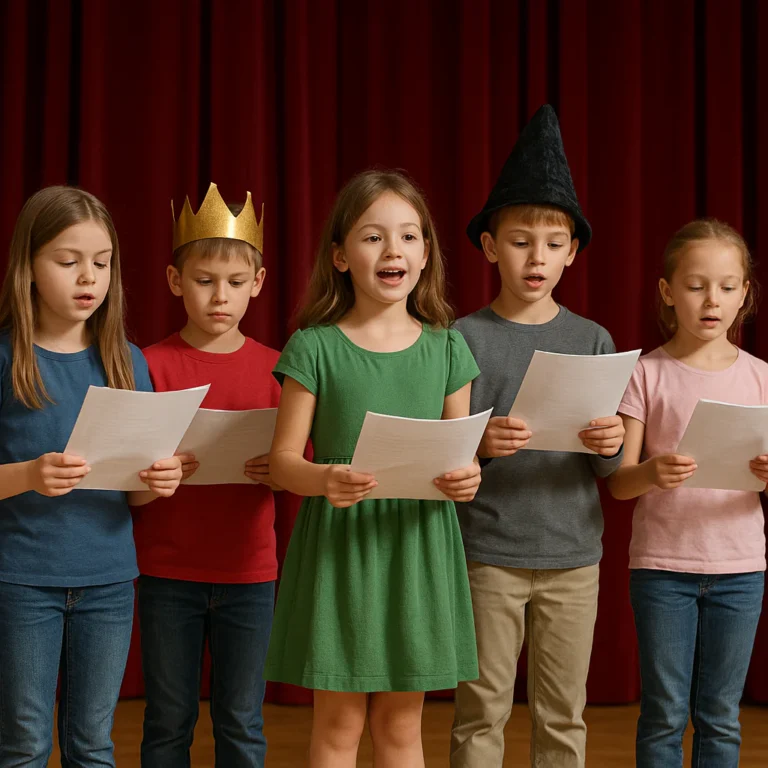
- Easy Costumes, Props, and Classroom Staging
- Helping Shy Students Speak Clearly and Confidently
- Low-Stress Performance Ideas for Families and School Events
- ✅ Drama Activities That Build Literacy and Social-Emotional Skills
- Conclusion
- Recommended Links
- FAQ
- Reference Links
⚡️ Quick Tips and Facts
Looking for short drama scripts for students? Start with our short drama scripts for students guide, then match the script to your pupils, performance time, and rehearsal resources—not the other way around.
At School Play Scripts™, our teachers have learned that a successful elementary play rarely needs a castle, a fog machine, or a stage crew with a secret budget. It needs a clear problem, lively roles, dialogue children can comfortably say aloud, and a satisfying ending.
| Quick decision | A useful starting point | Why it helps |
|---|---|---|
| Performance length | About 5–15 minutes | Manageable for assemblies, classroom performances, and young performers |
| Story structure | One central problem and a clear resolution | Children can follow the plot and rehearse it efficiently |
| Staging | One setting and a few easy props | Keeps transitions simple and avoids prop chaos |
| Cast size | Match speaking roles to your students; add ensemble roles as needed | More children can participate without giving everyone a long speech |
| Script check | Read it aloud and time the run-through | Page count alone won’t predict the performance length |
| Permissions | Check the script’s terms before copying, adapting, recording, or charging admission | Copyright and performance permissions vary by script |
A short script can still give a class plenty to do. Narrators, chorus lines, mime, sound effects, and backstage jobs help widen participation without turning every scene into a crowd around one lunchbox.
- ✅ Do: choose scripts with flexible casting, short scenes, and clear stage directions.
- ✅ Do: offer students different ways to contribute, including speaking, movement, props, and sound.
- ❌ Don’t: assume a script is free to perform just because you can read a sample online.
- ❌ Don’t: force a child into a speaking role when a different contribution suits them better.
For more teacher-friendly options, browse our Elementary School Plays, Educational Play Scripts, and Children’s Theatre Scripts.
🎭 What Makes a Great Short Drama Script for Elementary Students?
The best script is not necessarily the funniest, shortest, or most familiar. It is the one your students can understand, enjoy performing, and bring to life with the time and resources you have.
A useful script has a beginning that sets up a situation, a problem that gives characters something to do, attempts to solve it, and a resolution that feels earned. That pattern gives children a sturdy dramatic path to follow. A lecture in costume, by contrast, is still a lecture—just with more hats.
The National Core Arts Standards for Theatre emphasize creating, performing, responding, and connecting. A well-chosen classroom play can support all four: students create characters and choices, perform for an audience, reflect on what they see, and connect stories to their own lives.
Ideal Script Length, Reading Level, and Performance Time
For many elementary presentations, 5–15 minutes is a practical target, not a hard rule. Younger groups may benefit from a three-to-five-minute scene; older pupils, or a group performing a longer assembly piece, may be ready for more. The primary-school short drama guide on School Play Scripts™ likewise recommends a focused story and encourages teachers to time a read-through.
| Script feature | What to look for | Teacher check |
|---|---|---|
| Dialogue | Natural, speakable sentences | Can students say the lines without stumbling over unfamiliar phrasing? |
| Vocabulary | A manageable mix of familiar and new words | Can context, rehearsal, or a simple glossary support new terms? |
| Scene length | Short sections with clear entrances and exits | Can the group rehearse one scene at a time? |
| Performance time | A realistic estimate, not just a page count | Time a read-through, then allow for movement, laughter, pauses, and transitions |
| Character demands | Clear objectives and playable actions | Does each role have something to do, not just something to explain? |
Read the script aloud before assigning roles. A sentence that looks short on the page can be a tongue-twister in a child’s mouth. Conversely, a narrator can make a complicated transition feel effortless.
Choosing Age-Appropriate Themes and Humor
Choose themes children can explore without asking them to disclose private experiences. Friendship, teamwork, curiosity, environmental care, honesty, and welcoming a new classmate can all work well when handled with care. For sensitive subjects such as bullying, focus on safe choices—getting help from a trusted adult, including someone, or setting a respectful boundary—rather than placing the burden of solving harm on the child experiencing it.
Humor is most reliable when it comes from surprise, repetition, misunderstanding, or a character’s funny goal. A weather report that keeps getting interrupted by a “very serious” cloud can be funier—and kinder—than jokes aimed at a student’s appearance, accent, disability, or background.
For an overview of what makes a play work onstage, see the article’s featured video. Its explanation of scripts, characters, stage action, and audience is a useful reminder: the script is a plan for performance, not merely a page of dialogue.
📚 A Brief History of Classroom Plays and Children’s Theater

School performances have long combined storytelling with practice in speaking, listening, collaboration, and imaginative play. Classroom drama can take many forms: a scripted play, a short skit, a readers’ theater performance, a movement piece, or an improvised scene. The Drama Teacher Guides and Drama Club Resources on School Play Scripts™ can help teachers choose a format that fits their setting.
A modern school play does not have to imitate a professional production. A few chairs can become a bus, a forest, or a spaceship if the performers make the story clear. Simple staging also gives the audience more room to imagine.
🏆 18 Best Short Drama Scripts and Skit Ideas for Elementary School
The ideas below are script concepts, not claims that a particular published script with that exact title is freely available. Use them as prompts for a class-created play, or as a checklist when searching a reputable script library. For ready-made options, Drama Notebook’s children’s play scripts organize plays by age and cast size; check each script’s current details and terms before use.
| # | Script idea | Best for | Possible cast |
|---|---|---|---|
| 1 | The Classroom That Traveled Through Time | History and imagination | 6–20 |
| 2 | The Great Recycling Rescue | Environmental learning | 5–20 |
| 3 | A Friendship Mix-Up | Communication and empathy | 3–8 |
| 4 | The Case of the Missing Lunchbox | Mystery and sequencing | 4–8 |
| 5 | The Kindness Chain Reaction | Cooperation and positive choices | 5–20 |
| 6 | The Library After Dark | Reading and comic character work | 5–15 |
| 7 | The Weather Report Goes Wild | Science and ensemble comedy | 6–20 |
| 8 | The New Kid’s First Day | Belonging and inclusion | 4–10 |
| 9 | The Animal Talent Show | Movement and playful voices | 6–20 |
| 10 | The Wizard Who Lost a Spell | Fantasy and problem-solving | 4–12 |
| 11 | A Day Without Screens | Discussion and teamwork | 4–12 |
| 12 | The Invention Fair Surprise | Science and creative thinking | 5–15 |
| 13 | The Great Playground Debate | Listening and negotiation | 4–10 |
| 14 | The Tiny Hero’s Big Adventure | Confidence and imagination | 3–12 |
| 15 | The School Garden Mystery | Nature and observation | 5–20 |
| 16 | The Mixed-Up Fairy Tale | Familiar stories and comedy | 6–20 |
| 17 | The Museum Comes to Life | History and movement | 6–20 |
| 18 | The Lost-and-Found Fashion Show | Character comedy and recycling | 5–15 |
1. The Classroom That Traveled Through Time
A classroom’s “history box” sends students to different eras, where they discover that every period has its own problems—and its own surprising solutions. Give each time period one clear scene and a narrator to guide the jumps. Keep historical facts accurate and verify details with a trusted source such as the Smithsonian Learning Lab.
2. The Great Recycling Rescue
A group of students discovers that the school’s recycling bins have become confused. Paper, plastic, and cans plead their cases while the children investigate what belongs where. Recycling rules vary by location, so check local guidance before presenting sorting instructions; the U.S. Environmental Protection Agency’s recycling resources are a useful starting point.
3. A Friendship Mix-Up
A missed invitation or misunderstood message grows into a small, believable conflict. Let characters ask questions, listen, and clarify rather than solve everything with a magical apology. The payoff is strongest when the characters show what they learned through action.
4. The Case of the Missing Lunchbox
A mystery provides natural reasons for characters to observe, describe, and compare clues. Keep the stakes light: the lunchbox was moved, not stolen. A narrator can repeat clues for younger audiences, while the audience gets a chance to guess before the reveal.
5. The Kindness Chain Reaction
One helpful act inspires another, until an entire group contributes. This works especially well with an ensemble: students can take turns showing a brief action, adding a line, or creating a repeated group response. Avoid making kindness feel like a competition; the point is noticing and helping, not collecting points.
6. The Library After Dark
Books “wake up” after closing, and their characters argue over who has the best story. A librarian or narrator can keep the scenes moving. To bring more pupils in, use a chorus of readers, book covers, or characters who enter for one quick joke.
7. The Weather Report Goes Wild
A student reporter tries to deliver a forecast while clouds, wind, sunshine, and rain have very different opinions. It is a natural fit for movement and group sound effects. For science accuracy, align the script’s weather vocabulary with resources from the National Oceanic and Atmospheric Administration.
8. The New Kid’s First Day
A new pupil arrives and finds that joining in takes more than a cheerful welcome sign. The existing group notices a game or routine that leaves someone out and makes a practical change. Our primary-school drama guide includes a short “New Pupil” scene concept, with a narrator, classmates, a teacher, and a simple prop or mime.
9. The Animal Talent Show
Animals prepare for a talent show and discover that their most useful talent may not be the flashiest one. The format can include short acts, judges, announcer, and a cheerful finale. Offer movement, sound, or ensemble roles for students who prefer not to memorize a solo.
10. The Wizard Who Lost a Spell
A wizard’s spellbook is missing its most important page, so the characters must solve clues using what they already know. Keep the magic visible with gestures and sound effects rather than complicated scenery. A repeated “spell” phrase gives younger performers a comfortable cue.
11. A Day Without Screens
A group loses access to its usual devices and has to invent ways to collaborate. Keep the story balanced: the humor can come from characters’ exaggerated expectations, while the resolution recognizes that technology can be useful when used thoughtfully.
12. The Invention Fair Surprise
Student inventors present imaginative creations, only to discover that teamwork makes the best invention possible. Each invention can be represented with a cardboard sign, mime, or one simple prop. The story suits science learning and provides lots of brief speaking turns.
13. The Great Playground Debate
Two groups want to use the same space in different ways. The play models taking turns, listening, and proposing a fair plan. Let both sides have reasonable ideas; otherwise, the “debate” is just one character being obviously wrong while everyone waits for the ending.
14. The Tiny Hero’s Big Adventure
A small character takes on a challenge that larger characters cannot solve. The story celebrates observation, courage, and asking for help—not the idea that a child must handle every problem alone. A narrator and ensemble can help the journey feel expansive without changing the set.
15. The School Garden Mystery
Students investigate why the garden is struggling and discover that different plants need different kinds of care. Characters can represent plants, soil, sunlight, water, and helpful pollinators. Verify any gardening or wildlife facts with a reliable resource such as the U.S. Botanic Garden.
16. The Mixed-Up Fairy Tale
Characters from familiar tales accidentally enter the wrong stories. This invites quick costume cues and comic entrances. Familiar plots make it easier for young audiences to follow along, but check permissions before performing a copyrighted adaptation.
17. The Museum Comes to Life
Historical figures or exhibits begin speaking after hours, and a student guide must help everyone find their way back to their displays. Give each character one clear fact and one playable action. The Smithsonian Learning Lab offers reliable museum-based learning material to help with research.
18. The Lost-and-Found Fashion Show
A collection of misplaced hats, scarves, and jackets parades down an imaginary runway, each item telling a short story about its owner. Keep the jokes affectionate, never at the expense of a child or family. A narrator, “announcer,” and ensemble of models make the cast easy to expand.
👥 Short Plays by Cast Size: Find the Right Script for Your Class
Cast size is a starting point, not a rulebook. A script with five speaking roles can include a chorus, silent characters, movement performers, and student stage helpers. Conversely, a large class may perform a set of short scenes rather than squeeze into one overcrowded plot.
| Group size | Useful format | Casting tip |
|---|---|---|
| 20+ | Flexible ensemble play, pageant, or linked scenes | Give groups repeated lines, tableaux, or brief entrances |
| 10–19 | Multi-scene play or mystery | Split narration and give supporting characters clear tasks |
| 5–9 | Compact comedy, fable, or adventure | Double roles only when costume and scene changes are easy |
| 4 | Focused mini-play | Use a narrator or offstage voice to clarify transitions |
| 3 | Short conflict-and-resolution scene | Make each character’s goal distinct |
| 2 | Dialogue scene or paired improvisation | Use status, surprise, or a concrete shared problem |
| 1 | Monologue, storyteller, or puppet performance | Add audience cues, objects, or projected character voices |
Large-Cast Plays for 20 or More Elementary Students
Look for flexible casting, narration, and ensemble scenes. In the selections summarized by Drama Notebook, examples include Stone Soup (listed for 20+ performers), It Could Be Worse (20 characters), and Alice in Wonderland—The Queen’s Point of View (a flexible cast of 20–31). Check the linked script pages for current cast information and permissions.
Large-cast plays work best when participation is active rather than decorative:
- Divide a chorus into groups that speak at different moments.
- Give ensemble members purposeful movement or sound cues.
- Use narrators to connect short scenes.
- Make every entrance and exit part of the story.
Short Plays for 10–19 Student Actors
This range suits a story with a core group of characters and a few supporting roles. Examples listed in the Drama Notebook roundup include Talent Show Troubles (about 15 minutes and 15+ performers), The Real Deal (18 characters), and Doctor Mercury (16 characters).
For a class with mixed reading confidence, divide longer lines between two characters or assign a narrator. That preserves the story while reducing the pressure on any one performer.
Flexible Scripts for 5–9 Performers
Small ensembles have room for stronger character relationships and more focused rehearsal. Potential options listed by Drama Notebook include Peter Rabbit, The Pirates and the Monster, and Go Go Green Machine. The roundup lists different cast sizes and performance estimates; confirm them on each current script page.
A practical test: can each performer name what their character wants in the scene? If not, the role may need a clearer action or a shorter, more focused script.
Four-Person Plays and Mini-Skits
Four actors can handle a complete mini-story without a crowd scene. Drama Notebook lists Calypso, the Royal Dragon and Birds of a Feather as four-role options.
A simple four-character structure:
- One character wants something.
- A second character creates a complication.
- A third character offers a different idea.
- The fourth character helps the group reach a resolution.
Three-Character Scenes for Small Groups
Three performers can tell a tidy story with a protagonist, a partner, and a character who changes the situation. Drama Notebook lists The Best Birthday Ever and Pirate Treasure as three-actor choices.
For an original scene, give each character a different point of view. If all three agree from the beginning, the scene may have nowhere to go.
Two-Person Dialogues and Partner Scenes
A two-person scene is ideal for a short rehearsal, a warm-up, or a speaking-confidence activity. Drama Notebook lists The Magic Hat as a two-role script.
Keep the exchange active: the characters might negotiate, investigate, prepare, or misunderstand something. A conversation in which two people merely explain the same background information can feel longer than the actual performance.
One-Actor Monologues and Narrator-Friendly Scripts
A monologue can work for a student who enjoys solo performance, but it should not be the only meaningful option. A narrator can also connect ensemble scenes, help an early reader, or give a student a clear role without requiring rapid dialogue exchanges.
The featured video’s overview of scripts, characters, and stage action is a helpful starting point for explaining dramatic storytelling; see the video section. Pair that with a short practice scene from our Drama Teacher Guides.
🧒 Choosing Scripts by Grade Level and Reading Ability
Age is only one part of the casting decision. Consider confidence, language experience, rehearsal time, accessibility needs, and whether students want to act, narrate, move, or help backstage. A student who needs support with reading may still be an inventive character actor; a fluent reader may prefer movement to memorizing lines.
Kindergarten and Grade 1: Simple Lines and Lots of Action
For younger performers, look for repetition, familiar situations, short lines, and visible action. A call-and-response, a chorus phrase, or a narrator can make the story easier to follow.
- Use concrete actions: find, carry, invite, build, or share.
- Keep transitions obvious and rehearsed.
- Add mime and movement to make meaning visible.
- Avoid long speeches that ask children to stand still while explaining the whole plot.
Grades 2–3: Building Confidence and Character
Students in these grades can often handle clearer character goals and a few more lines, especially when scenes remain short. A mystery, classroom comedy, or teamwork challenge gives performers something active to pursue.
Try giving each character a simple cue: “You are trying to find the clue,” or “You want the group to hear your idea.” The cue can be easier to remember than an abstract instruction such as “show more emotion.”
Grades 4–5: Longer Scenes and Deper Themes
Older elementary students may enjoy more layered conflicts and different points of view. They can also help with adapting dialogue, researching a topic, or making simple staging decisions. Keep the story age-appropriate, and do not assume that older children want only serious material. A clever comic scene remains a powerful rehearsal tool.
Inclusive Scripts for English Learners and Diverse Readers
An inclusive production offers more than one route to participation. Consider:
- Providing scripts in accessible formats or using larger print.
- Rehearsing new vocabulary with movement, examples, and visuals.
- Splitting a long line between two performers.
- Using a narrator, a partner cue, or a chorus to support a student’s timing.
- Making sure the story does not treat a student’s language, culture, disability, or family background as the joke.
The National Arts Standards support theatre learning through creating, performing, responding, and connecting. In practice, that means students can contribute to a production in varied ways and still take part in meaningful theatre learning.
🔎 How to Find Free, Printable, and Classroom-Friendly Play Scripts
Search by age range, cast size, running time, theme, and usage terms. A script can be available to read online without being licensed for a public performance, recording, or adaptation.
The Drama Notebook roundup highlights options such as It Could Be Worse, Stone Soup, A Fly in the Eye, Weird World of Weather, and flexible-cast adaptations. Its listed running times and cast sizes can help narrow a search, but confirm the details on the individual script pages.
Reliable Script Libraries and Educational Theater Resources
Start with script providers and education resources that clearly identify the work, age suitability, cast information, and permitted uses.
- Browse Drama Notebook’s scripts based on children’s books.
- Explore our Elementary School Plays and Children’s Theatre Scripts.
- Use the National Core Arts Standards to connect theatre activities to learning goals.
- For an additional list-style perspective, see The Experiment’s article on 15 short drama scripts. Its current availability and recommendations should be checked directly; we cannot verify its full contents from the accessible page.
Checking Copyright, Performance Rights, and Permissions
Before copying or adapting a script, check the provider’s terms. In the United States, the U.S. Copyright Office’s education guidance explains that educational context alone does not automatically make every use permissible. The U.S. Copyright Office’s fair use information also explains that fair use is evaluated case by case.
Ask these questions before rehearsal:
- Is classroom performance allowed, or only classroom reading?
- Is a public performance permitted?
- May the script be edited, shortened, or expanded?
- Can the performance be recorded or shared online?
- Are there requirements for attribution, licensing, or royalties?
When the terms are unclear, contact the rights holder or choose a script with explicit permissions. “Found it online” is not the same as “cleared for every use.”
✍️ How to Adapt a Short Drama Script for Your Class
Adapting a script can make it fit your students—but it can also change the meaning, length, or licensing status. First check permission. Then keep the story’s essential conflict intact while adjusting the cast, dialogue, and staging.
Adding Parts, Narrators, and Ensemble Roles
If you have more performers than speaking roles, expand participation in ways that support the story:
- Add a narrator who introduces scenes or summarizes a transition.
- Create a chorus with a recurring line or sound effect.
- Use ensemble performers as a crowd, forest, classroom, or audience within the play.
- Assign roles for props, scene changes, or sound cues.
- Split a character’s lines across two performers if that suits the group.
Avoid adding roles that only stand in the background. A small action—a repeated gesture, a cue, or a brief line—can make an ensemble part feel purposeful.
Simplifying Dialogue Without Losing the Story
Use this step-by-step method:
- Identify the scene’s purpose. What changes by the end?
- Keep the essential information. Remove repeated explanations, not the clues or decisions the audience needs.
- Shorten long sentences. Break a speech into smaller, natural phrases.
- Replace unfamiliar words carefully. Preserve important vocabulary when it supports learning.
- Read the revised lines aloud. Ask whether a child can say them naturally.
- Check the performance permission again. Some licenses restrict changes.
A script should sound like people speaking, not like a worksheet that has learned to stand upright.
Making Scripts Accessible for Students with Different Needs
Accessibility starts with asking what helps each student participate. Offer advance scripts, clear rehearsal routines, visible cues, flexible role choices, and options to perform seated or with assistive support where appropriate. The National Arts Standards frame theatre as a process of creating and performing, which leaves room for varied forms of contribution.
Talk privately with the student and, when appropriate, their family or support team. Avoid assuming that one adaptation suits everyone. The goal is meaningful participation, not identical performance demands.
🎬 Rehearsal and Performance Tips for Elementary School Plays
A calm rehearsal plan makes a short play feel achievable. It also gives students space to learn the story before worrying about perfect delivery.
A Simple Rehearsal Plan for Busy Teachers
Use a short, repeatable sequence:
- Read the whole play once. Let students hear the story before assigning every detail.
- Talk through the plot. Ask what the characters want, what goes wrong, and how it ends.
- Assign roles with flexibility. Consider interest, confidence, reading needs, and student choice where practical.
- Rehearse in small chunks. Work on entrances, cues, and scene goals rather than repeating the entire play each time.
- Add movement and props. Make sure physical actions help tell the story.
- Run the play from beginning to end. Time it and identify unclear transitions.
- Reflect and refine. Ask performers what feels clear, what feels difficult, and what the audience needs to understand.
The Drama Teacher Guides offer more classroom-focused support. For a short assembly, one well-rehearsed run-through may be more useful than polishing every gesture until the children forget they are having fun.
Easy Costumes, Props, and Classroom Staging
Simple staging keeps attention on the story and reduces rehearsal demands.
| Production element | Low-preparation option | Watch for |
|---|---|---|
| Set | Chairs, a classroom board, or a sign | Keep walkways clear |
| Costumes | One simple accessory per character | Avoid costume changes that interrupt the action |
| Props | A book, hat, cardboard sign, or mimed object | Label and store props consistently |
| Sound | Student-made effects or a small number of cues | Rehearse cues so they do not cover dialogue |
| Scene changes | Narration, movement, or a brief group freeze | Don’t make the audience wait through silent furniture moving |
If you use recorded music or sound, check the relevant permissions before sharing or publishing the performance.
Helping Shy Students Speak Clearly and Confidently
Confidence grows through preparation, not pressure. Let students rehearse with a partner, try a chorus role, perform with a narrator, or contribute through movement and backstage tasks. For spoken delivery, coach breath, clear words, and an intentional pause rather than simply asking children to shout.
A useful question is, “What is your character trying to help the audience understand?” That gives the line a purpose and often helps the performer speak more clearly.
Low-Stress Performance Ideas for Families and School Events
A performance can be a classroom sharing, a short assembly, a small-group rotation, or a filmed piece for a school community—provided the script and any music or media permissions allow it.
- Give the audience a brief introduction to the story.
- Keep the performance space and exits clear.
- Offer students a choice about taking a speaking role.
- Let performers know what to expect before families arrive.
- Plan an alternative role for a student who needs a quieter way to participate.
🎭 Featured Video: How a Script Becomes a Play
The video linked in this article introduces the basic parts of a play: script, characters, stage, scenes, audience, and stage directions. Its perspective is helpful for younger learners because it connects the words on the page to choices performers make in a space.
One practical classroom point is worth emphasizing: scripts use dialogue and stage directions to show what characters say and do. Before rehearsal, explain those conventions with a short sample. Then let students try the scene with different gestures or vocal choices and notice how the meaning changes.
✅ Drama Activities That Build Literacy and Social-Emotional Skills
Short plays can support reading fluency, vocabulary, listening, turn-taking, perspective-taking, and collaboration. The benefits depend on how students work with the script: reading a line once is not the same as discussing a character’s choices or rehearsing an expressive delivery.
Try these activities before or after a performance:
- Character hot seat: One student answers questions in character.
- Freeze-frame: Groups create a still image of the story’s problem or resolution.
- Change the choice: Replay a scene with a different decision and discuss what changes.
- Audience detectives: List the clues that helped explain the plot.
- Kindness rewrite: Revise a scene so characters respond respectfully without making the ending preachy.
- Vocabulary in action: Use gesture or mime to explore key words.
- Two endings: Perform a realistic ending and a comic alternative, then compare how each feels.
Drama Notebook’s roundup includes scripts and activities connected to themes such as kindness, acceptance, science, history, and environmental care. Our own Educational Play Scripts can help you browse by learning purpose, while the Drama Club Resources offer ideas for extending performance work beyond a single classroom scene.