Support our educational content for free when you purchase through links on our site. Learn more
How to Find Free Short School Play Scripts 🎭

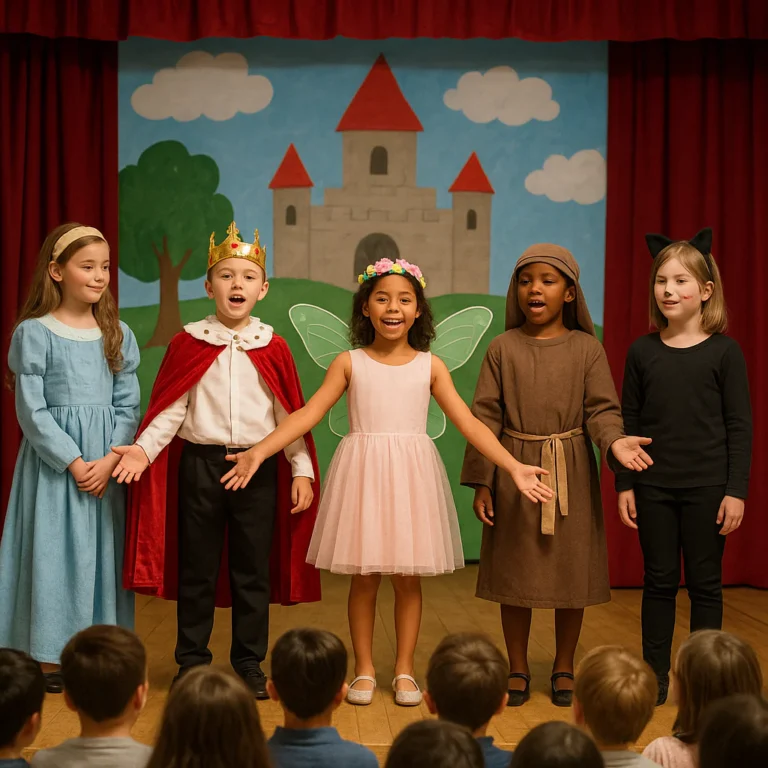
To answer “How can I find free short drama scripts for my school play?”, start with reputable drama-education sites such as Drama Notebook’s free-play library, then check each script’s cast, age fit, staging needs, and performance rights. A free download isn’t automatically free to perform—especially if you’re charging admission, recording the show, or sharing it online.
We’ve seen teachers find a promising script only to discover it needs more actors, props, or rehearsal time than the school can spare. The best pick is the one your students can perform confidently and your school is permitted to use.
Key Takeaways
- Search trusted script libraries first, then verify the play on its original publisher or author page.
- Check performance permissions separately from download access. Look for conditions covering admission, copying, adaptations, and recordings.
- Match the script to your students: consider age, cast size, running time, themes, accessibility, and staging demands.
- Choose flexible roles and simple staging to make rehearsals easier and give more students a chance to participate.
- Save the script’s permission terms before rehearsals begin; a quick record now can prevent a last-minute opening-night headache.
Table of Contents
- ⚡ Quick Tips and Facts
- 🎭 What Counts as a Free Short Drama Script?
- Short plays, skits, vignetes, and readers’ theater
- Free to read versus free to perform
- 📚 Background: Finding Short Plays for School and Classroom Theater
- 🔎 Where to Find Free Short Drama Scripts for a School Play
- School theater and drama education websites
- Public-domain play collections and digital libraries
- Teacher resource sites and lesson-plan libraries
- Community theater groups, libraries, and drama networks
- Search engines and social media: how to check what you find
- 🏆 12 Smart Places to Search for Free School Play Scripts
- 🎯 How to Choose the Right Short Play for Your Students
- Match the script to grade level and reading ability
- Choose a cast size and flexible roles
- Check running time, themes, and content
- Look for simple staging, props, and costumes
- Make space for inclusive and accessible casting
- ⚖️ Copyright, Public Domain, and Performance Rights
- Can you perform a script labeled “free”?
- How to read a script’s license and permissions
- Recording, livestreaming, adapting, and sharing copies
- Why public-domain status can vary by country
- 📝 How to Verify a Script Before Rehearsal
- 🎬 How to Adapt a Short Script for Your School
- Adjusting cast size without losing the story
- Making language and scenes classroom-friendly
- When to ask permission before editing
- 🎤 Rehearsal and Production Tips for a Short School Play
- A simple rehearsal plan for busy teachers
- Low-cost staging, props, and sound
- Helping shy students feel ready to perform
- ❓ Frequently Asked Questions About Free School Play Scripts
- Where can I download short plays for students?
- Are free scripts free to perform at a school event?
- Can I use a free script for a fundraiser or public performance?
- What are the best scripts for a small cast or short class period?
- Can students write their own short drama script?
- ✅ Quick Checklist: Before You Choose or Perform a Script
- Conclusion
- Recommended Links
- Reference Links
⚡ Quick Tips and Facts
The fastest route to a school-ready script is to find one that is free to access, permitted for your specific performance, suitable for your students, and practical to stage. Those are four separate checks—not one cheerful “FREE DOWNLOAD” button.
If you want more student-friendly options, start with our guide to short drama scripts for students, then compare scripts with the checklist below.
| Quick check | What to look for | Why it matters |
|---|---|---|
| Permission | Clear terms for classroom use and live performances | “Free to download” does not always mean “free to perform.” |
| Cast | Number of speaking roles, doubling options, and ensemble parts | A flexible cast can make one script work for a whole class. |
| Length | Estimated running time, not just page count | Stage directions, pauses, and student pacing change performance length. |
| Fit | Age-appropriate language, themes, and reading level | A script should challenge students without leaving them stranded. |
| Production needs | Props, set, sound, costumes, and scene changes | Simple staging is a kindness to teachers, custodians, and the school budget. |
| Adaptations | Whether edits, role changes, recordings, or livestreams are allowed | Some licenses permit live performance but restrict changes or online sharing. |
Our teacher-tested rule: save a copy of the script page and its permission terms before rehearsals begin. Links move; permission questions have a way of appearing right before opening night. The U.S. Copyright Office explains that copyright owners generally control public performance and adaptations, so check the actual license rather than relying on a search-result label (U.S. Copyright Office).
✅ Good first places to browse: Drama Notebook’s free plays and its copyright guidelines. Its free-play page says scripts are royalty-free when no admission is charged; verify the current terms for your planned event.
❌ Don’t assume: a script is free to perform because it appears in a PDF, is shared in a teacher group, or is based on a familiar fairy tale. A new adaptation can still be copyrighted even when the source story is public domain.
🎭 What Counts as a Free Short Drama Script?
A “free short drama script” might be a ten-minute play, a classroom scene, a skit, a readers’ theater piece, or a short one-act. The label alone tells you very little about what you can do with it. Before you choose, work out what free and short mean for your school.
Short plays, skits, vignetes, and readers’ theater
| Format | What it usually offers | Best suited to |
|---|---|---|
| Short play | A complete story with characters, conflict, and an ending | Class performances, assemblies, and drama-club showcases |
| One-act play | One continuous dramatic work, often longer or more developed than a skit | A school production with rehearsal time and a defined audience |
| Skits | Brief comic or topical scenes, sometimes with a simple message | Warm-ups, school events, and quick presentations |
| Vignetes | Short, self-contained moments that can be performed individually or as a collection | Large groups, flexible casting, and scene-by-scene rehearsal |
| Readers’ theater | Script-in-hand performance that emphasizes voices and interpretation over scenery | Literacy work, limited rehearsal time, and low-tech presentations |
| Monologues or duologues | A solo speech or a scene for two performers | Auditions, classroom assessment, and small casts |
A set of vignetes can be especially useful when the cast is large or rehearsal time is tight. For example, the listing for Theatrefolk’s Deck the Stage! describes six short holiday plays that can be selected and rehearsed scene by scene. That flexibility is a useful production feature, but the page does not describe the collection as free; check its current license and terms before planning a performance.
The distinction also matters for rehearsal. Readers’ theater can reduce set and memorization demands, while a fully staged play needs more attention to movement, props, and scene transitions. The National Council of Teachers of English and Reading Rockets discuss performance-based reading approaches that can support fluency and expressive reading.
Free to read versus free to perform
A script may be free to download but restricted in how it can be used. Think of permission as a small checklist:
- Reading: May students read or study the script in class?
- Performance: May they perform it for an audience?
- Admission: Does charging admission change the terms?
- Copies: May you print or share copies with the cast?
- Editing: May you change names, pronouns, scenes, or language?
- Recording: May you film, livestream, or post the performance?
- Location: Do the terms cover school, community, or online performances?
Drama Notebook, for example, says its free scripts are royalty-free when no admission is charged, while directing users to its copyright guidance for more details (free-play collection, copyright guidelines). If your event has a fundraiser, ticket, or online recording, read the terms closely and ask the rights holder if anything is unclear.
📚 Background: Finding Short Plays for School and Classroom Theater
Teachers often need a script that fits a real timetable: the class has 25 students, the assembly is next month, the stage is a multipurpose room, and the “special effects budget” is one flashlight. That is why school-friendly short plays are often searched by cast size, age group, theme, and running time, not simply by title.
Our educators recommend starting with the learning or performance goal:
- For a literacy lesson: prioritize readable dialogue, clear roles, and opportunities to interpret character.
- For an assembly: look for an easy-to-follow story, short transitions, and a running time that fits the schedule.
- For a drama club: consider a stronger challenge in characterization, staging, or ensemble work.
- For a large class: seek flexible casting, narrators, chorus roles, or a collection of short scenes.
- For a first production: choose a script with simple locations and clear stage directions.
Browse our educational play scripts, elementary school plays, and children’s theatre scripts for more school-focused options. For planning support, our drama teacher guides and drama club resources can help turn a script into a workable classroom production.
A small but useful discovery: the script that looks easiest to print may not be easiest to produce. A slightly longer play with flexible roles and minimal scene changes can be far more manageable than a shorter script with a dozen elaborate locations. We’ll put that idea to the test in the selection checklist.
🔎 Where to Find Free Short Drama Scripts for a School Play
School theater and drama education websites
Dedicated drama education sites often organize scripts by age, genre, cast size, or classroom purpose. That saves time compared with searching the open web one vague phrase at a time.
Drama Notebook is a practical starting point. Its free-play library includes children’s and teen scripts in genres such as comedy, mystery, fairy tale, and holiday plays. The site lists examples such as:
- The Pied Piper
- Toy Store
- A Weekend Mystery
- Tasty Vegetables
- Middle School Brain
- Macbeth in 30 Minutes
- The Little Match Girl
- BUGS
The site also organizes additional material into short plays, mystery scripts, funy plays, and plays for middle and high school. Read the permission terms alongside the script, especially if you plan to charge admission or share a recording.
Theatrefolk is another well-known school-theater publisher. Its Deck the Stage! listing describes a collection of six short Christmas plays. The listing includes teacher feedback praising the option to “pick and choose how many you wanted to use,” as well as the flexibility of rehearsing shorter scenes. That is useful evidence about the collection’s format—not evidence that it is free. Treat publisher catalogs as places to assess fit and rights, not as free-script libraries unless the page explicitly says so.
Public-domain play collections and digital libraries
Public-domain works can be a strong source for school performances, but the source text, edition, and adaptation all matter. A classic story may be free to use in its original form while a modern translation, edited edition, or newly written adaptation remains protected.
Try reputable digital collections such as:
- Project Gutenberg, which provides public-domain texts under the terms described on its site.
- Internet Archive, where you should check the rights and use information for each item.
- Library of Congress, which offers cultural and historical materials with item-specific rights guidance.
For U.S. copyright basics, the Copyright Office explains the difference between copyright protection and the public domain (Copyright Office: What Is Copyright?). Public-domain status is not a universal passport: the rules and term lengths can differ by country. The U.S. Copyright Office’s duration guidance is a starting point, not a substitute for checking the work’s status where you will perform.
Teacher tip: if you find a public-domain story, consider creating your own short adaptation rather than copying a modern script. Keep a note of the source text and document your original changes.
Teacher resource sites and lesson-plan libraries
Teacher-focused sites can supply both scripts and useful classroom context: discussion questions, character notes, warm-ups, or guidance for adapting roles. Those extras can be valuable when a performance is also part of a lesson.
Search by a precise phrase and a practical filter:
"free short play script" middle school cast"short readers' theater script" elementary students"free classroom drama script" no admission"public domain one-act play" school cast size"short play script" flexible roles students
Then check the site’s author, publication date, license, and permission page. A search result is a pointer, not a rights clearance. For curated school material, explore our educational play scripts and drama teacher guides.
Community theater groups, libraries, and drama networks
Local arts organizations, public libraries, and teacher communities can help you discover scripts and learn what has worked for schools like yours. Ask specific questions:
- Does the group lend scripts or recommend public-domain sources?
- Has anyone used the play with your age group?
- Were the roles easy to cast?
- Did the performance require permission or a license?
- Could the audience hear the dialogue in a school hall?
Teacher networks are excellent for experience-based recommendations, but a post or comment is not the same as official permission from the playwright or publisher. A Facebook post titled “Free Middle School Play Scripts for Download” may sound promising, yet the linked group post requires Facebook access and does not show the actual scripts or rights terms publicly (Facebook post). Use community tips to find a lead; confirm the terms with the source.
Search engines and social media: how to check what you find
Use search tools to discover scripts, then verify them at the source.
- Search with constraints. Add grade level, cast size, genre, and “performance rights” or “license.”
- Open the original page. Avoid relying on a reposted PDF without its author or terms.
- Find the permissions language. Look for words such as perform, adapt, print, record, admission, and royalty-free.
- Check whether the page is current. Old downloads can outlive their license pages.
- Save evidence. Keep the original URL and a dated copy or screenshot of the terms.
- Ask when uncertain. A brief email to the rights holder is easier than changing a production at the last minute.
✅ Trust an official script page more than a social post.
❌ Don’t mistake “available to download” for “licensed for public performance.”
🏆 12 Smart Places to Search for Free School Play Scripts
These are search destinations and resource types, not a promise that every script on every site is free for every use. Always read the individual script’s terms.
| # | Place to look | Why it can help | What to verify |
|---|---|---|---|
| 1 | Drama Notebook Free Plays | A broad selection of children’s and teen scripts | Its no-admission condition and current copyright guidance |
| 2 | Drama Notebook Short Plays | Scripts presented specifically as short plays | Cast, age range, and performance permissions |
| 3 | Drama Notebook Middle- and High-School Plays | Teen-oriented choices and themes | Whether a specific title suits your students |
| 4 | Project Gutenberg | Public-domain books and dramatic texts | Rights and terms for your country and the specific edition |
| 5 | Internet Archive | Digitized historical texts and books | Item-level rights information; not every upload has the same status |
| 6 | Library of Congress | Primary-source and historical collections | Rights statements attached to each item |
| 7 | Your public library | Librarians can help locate play anthologies and licensed materials | Whether copying or performing is allowed |
| 8 | Your school or district library | May already hold scripts or drama collections | Local lending, copying, and performance policies |
| 9 | Local community theater | Can point you to playwrights, script libraries, or youth-theater options | Confirm rights with the actual rights holder |
| 10 | University theater departments | May share public outreach resources or local playwright contacts | Availability and permissions are not guaranteed |
| 11 | Drama-teacher associations and communities | Useful for peer recommendations and practical feedback | Verify every script’s source and license independently |
| 12 | Student-written original plays | Lets you shape roles, themes, and length to fit your class | Get permission from student writers and clarify recording and sharing |
Best first move: start with #1 or #2 if you need a ready-to-read children’s or teen script; start with #4–#6 if you want to explore public-domain material; try #12 when your students need roles tailored to the class.
If you are writing your own piece, the featured video gives a useful playwriting perspective: build a clear script structure, read dialogue aloud, revise with feedback, and make sure the story has conflict. As the video puts it, “Drama requires conflict. Without it, you just have people talking.” That is a tidy way to rescue a script from becoming a very polite meeting.
🎯 How to Choose the Right Short Play for Your Students
Before downloading, imagine the play on your actual stage—not the imaginary theater with a trapdoor, fog machine, and a suspiciously generous lighting budget.
Match the script to grade level and reading ability
A script’s age label is only a starting point. Read a few pages and check:
- Vocabulary: Are unfamiliar words manageable with a quick explanation?
- Sentence length: Can students follow the dialogue while speaking it aloud?
- Theme: Does the subject suit your class, community, and event?
- Humor: Does the comedy rely on timing students can learn, or on references they will not recognize?
- Emotional demands: Are the characters’ conflicts appropriate for the performers and audience?
For early readers, short lines, repetition, narrators, and clear character motivations can help. Older students may enjoy ambiguity, satire, or more complex relationships. Browse our elementary school plays and children’s theatre scripts for age-focused options.
Choose a cast size and flexible roles
Count the roles, not just the students. A script with six named characters may also include a chorus, townspeople, narrators, or non-speaking roles that can be adapted.
| Casting question | Helpful script feature |
|---|---|
| Do you have many students? | Ensemble, chorus, narrators, or multiple scenes |
| Do you have a tiny group? | Two- to four-character script or easy doubling |
| Are students sharing roles? | Clear scene breaks and limited costume changes |
| Do performers have different confidence levels? | A mix of substantial speaking parts and lower-pressure ensemble roles |
| Does the class need inclusive casting? | Flexible character descriptions and adaptable pronouns |
Teacher feedback on Theatrefolk’s Deck the Stage! offers one useful perspective: one school reviewer praised short vignetes for giving students across grade levels and social groups opportunities to participate. Another said the scenes could be selected to suit rehearsal time. That feedback is specific to that licensed collection, but the production principle—flexible scenes can widen participation—is broadly useful (Theatrefolk listing).
Check running time, themes, and content
Ask for an estimated performance length, then read the script aloud with students. Page count is a poor stopwatch: dialogue speed, pauses, movement, and audience response all affect timing.
Check for:
- Sensitive or frightening themes
- Stereotypes or outdated language
- Religious, political, or cultural references
- Physical comedy that could be unsafe
- Any content that might need discussion or adaptation
If a script’s description is too vague, ask the publisher or author before assigning roles. You know your school community better than a blurb does.
Look for simple staging, props, and costumes
A short play can still be technically demanding. Scan the stage directions for:
- Multiple locations or scene changes
- Special sound or lighting cues
- Breakable, sharp, or difficult-to-source props
- Costumes that require quick changes
- Large furniture or scenery
- Effects that need adult supervision
✅ A chair, a scarf, and a confident narrator can solve a surprising number of staging problems.
❌ A dozen scene changes may not be the best fit for a 20-minute assembly slot.
For more classroom-ready performance ideas, see our drama club resources.
Make space for inclusive and accessible casting
Choose scripts that let students participate without forcing them into narrow assumptions about gender, identity, mobility, voice, or experience. Check whether:
- Character genders can be changed without affecting the story.
- Roles can be doubled or divided.
- Students can perform from a seated position or with adapted movement.
- The script supports multiple communication styles.
- The content treats characters with dignity.
Some publishers explicitly describe flexible casting. Theatrefolk’s Deck the Stage! listing, for instance, says directors may assign characters any gender, including non-binary, and adjust pronouns (publisher listing). That does not make the script free; it does show why a casting note is worth checking before rehearsal.
⚖️ Copyright, Public Domain, and Performance Rights
This is the part that can feel less theatrical than a dramatic entrance—but it protects students, schools, and the people who wrote the play.
Can you perform a script labeled “free”?
Sometimes, but the answer depends on the license. A free script may permit classroom reading but not a public performance. Another may allow a live performance under certain conditions, such as no admission charge. A third may be a public-domain text, while an accompanying adaptation or translation is protected.
The U.S. Copyright Office explains that copyright includes exclusive rights such as public performance and the creation of derivative works (What Is Copyright?). Check the script’s license, not just the download button.
| Wording you may see | What it might mean | Your next step |
|---|---|---|
| “Free to download” | A file can be downloaded without payment | Look for separate performance and copying terms |
| “Free for classroom use” | Educational reading or study may be permitted | Confirm whether an audience performance is included |
| “Royalty-free” | Some uses may not require a royalty | Read the specific conditions and restrictions |
| “No admission charged” | Permission may depend on a free event | Ask what applies to donations, fundraisers, or required fees |
| “Public domain” | Copyright restrictions may no longer apply to that text | Verify the specific version and local law |
| “Creative Commons” | Reuse depends on the exact CC license | Check attribution, commercial-use, and adaptation rules |
How to read a script’s license and permissions
Use this six-step check before you print a cast set:
- Find the rights holder. Is the script by a named playwright, publisher, educational site, or collection?
- Locate the license page. Do not rely only on a note copied into a search result.
- Match the permission to the event. Is the performance in class, at an assembly, open to the public, or a fundraiser?
- Check audience and admission conditions. A no-admission permission may not cover every event with donations or fees.
- Check copying, editing, and recording. Printing scripts, changing lines, and posting video are different uses.
- Keep written confirmation. Save the license page or the rights holder’s reply with your production records.
If the terms are unclear, contact the rights holder. A short message with the title, school, performance date, audience, admission plan, and recording plan gives them what they need to answer.
Recording, livestreaming, adapting, and sharing copies
A license for a live performance may not include online distribution. Recording, livestreaming, posting a video, translating, cutting scenes, changing characters, or sharing a script file may require separate permission.
Before you publish a student performance:
- Review the script’s recording and streaming terms.
- Check school policies and family consent procedures.
- Avoid posting the full script or an unlicensed recording.
- Ask permission for substantial edits or adaptations.
- Confirm whether a private family link still counts as online distribution under the license.
The U.S. Copyright Office’s guidance on copyright rights is a useful starting point, but the rights holder’s specific license controls the details of a particular work (Copyright Office).
Why public-domain status can vary by country
Copyright duration and public-domain rules differ between jurisdictions. A text that is out of copyright in one country may still be protected in another. In addition, a modern translation, edited version, introduction, or adaptation can have its own rights.
For international school communities or online performances, verify the status where the work will be used and distributed. Consult the U.S. Copyright Office for U.S. guidance and your local copyright authority for rules elsewhere.
📝 How to Verify a Script Before Rehearsal
Here’s a practical workflow we recommend. It keeps the drama onstage, where it belongs.
A six-step script check
- Open the original source. Confirm the script comes from the playwright, publisher, or a reputable library.
- Read the whole script. Check age fit, story, roles, language, and production needs.
- Find performance terms. Search the page for license, royalty, admission, performance, adaptation, and recording.
- Match terms to your event. Be specific about the venue, audience, admission, and online sharing.
- Contact the rights holder if needed. Ask about any unclear condition before casting.
- Save a permission record. Keep the source link, license, and any written approval together.
Questions to ask before you commit
- Is this script free only to read, or free to perform?
- Does permission cover the whole school or just classroom use?
- Can we print copies for the cast?
- May we cut or adapt lines?
- Can we use a student narrator or double roles?
- Are donations, tickets, or fundraising allowed?
- May we record or livestream the production?
- Is the permission valid in our country?
If your answer is “I’m not sure,” pause before rehearsal. A publisher’s official Deck the Stage! page, for example, provides a description and school reviews, but does not identify the collection as a free script. That is exactly the kind of distinction your verification check should catch.
🎬 How to Adapt a Short Script for Your School
Adapting can make a script fit your students beautifully—provided the license allows it. Start by separating production choices from changes to the text.
Adjusting cast size without losing the story
If the script allows flexible casting:
- Combine small roles when characters appear in separate scenes.
- Add a chorus or group response where it supports the story.
- Share narration among several students.
- Let students double roles with clear costume or prop changes.
- Keep each character’s purpose intact so the plot still makes sense.
Theatrefolk’s listing for Deck the Stage! explicitly notes gender-flexible casting and pronoun changes, while teacher feedback highlights the benefit of choosing selected vignetes. Those are examples of publisher- and collection-specific flexibility, not general permission to rewrite any script (listing).
Making language and scenes classroom-friendly
For a classroom performance, you may want to adjust unfamiliar vocabulary, clarify a transition, or remove material unsuitable for your students. First, check whether the license permits edits. If it does:
- Keep the main conflict and character goals.
- Change only what you need.
- Read the revision aloud.
- Check that the new wording still sounds natural.
- Save the original and adapted versions separately.
The featured video emphasizes a “read aloud” test because spoken dialogue often reveals awkward phrasing and pacing that look fine on a page. It also recommends feedback from actors, directors, or writing groups—a wise way to catch the line that makes every student sound like they swallowed a textbook.
When to ask permission before editing
Ask the author or publisher before:
- Rewriting significant dialogue or scenes
- Changing the ending
- Translating the script
- Combining it with another work
- Changing the title or credit
- Recording or sharing an adapted version
A school project still needs to follow the work’s license. For copyright basics, consult the U.S. Copyright Office and the rights holder’s own terms.
🎤 Rehearsal and Production Tips for a Short School Play
Once you have a suitable script and clear permission, keep the production plan as simple as the story allows.
A simple rehearsal plan for busy teachers
| Rehearsal stage | Main goal | Teacher move |
|---|---|---|
| First read | Understand the story | Read for meaning before correcting every line |
| Role exploration | Find character intentions | Ask: “What does your character want here?” |
| Blocking | Make movement clear and safe | Mark entrances, exits, and key stage positions |
| Cue practice | Improve listening and timing | Rehearse entrances and transitions separately |
| Full run | Test pace and duration | Time the play and note slow or confusing moments |
| Final check | Confirm the event is ready | Review permissions, props, accessibility, and audience logistics |
Short plays benefit from focused rehearsals. Work scene by scene, then connect the scenes with entrances and exits. If the script is a collection of vignetes, rehearse each piece independently before running the full program.
Low-cost staging, props, and sound
Use what the story truly needs:
- One flexible playing area instead of several full sets.
- A narrator or title card to clarify time and location.
- Handheld props that are safe and easy to store.
- Simple costume signals such as a hat or scarf to identify doubled roles.
- Recorded sound only when necessary, with permission for any music or audio you use.
Teachers who choose short scripts often value fewer scene changes and simpler rehearsal demands. A reviewer of Deck the Stage! described the collection’s shorter vignetes as useful for brief rehearsals; another praised the ability to select how many scenes to perform (Theatrefolk teacher reviews). Those comments illustrate a practical point: modular structure can help a production fit real school schedules.
Helping shy students feel ready to perform
Not every student wants the loudest role—and that is fine. Offer meaningful ways to contribute:
- Narration, chorus, or paired lines
- Props, stage management, or sound cues
- A small role with a clear objective
- Rehearsal in pairs before speaking to the whole group
- A choice of roles where possible
Build confidence gradually. Celebrate clear listening and committed choices, not just volume. For additional classroom planning ideas, browse our drama teacher guides and drama club resources.
Writing a short script when the right one doesn’t exist
Sometimes every script is almost right—but the cast size is wrong, theme misses, or your class has precisely one table and an enthusiastic cardboard dragon. A student-written play can solve that problem.
The featured video recommends a clear play structure, a synopsis that reveals the full story, readable character and stage directions, and a read-aloud revision. Its core reminder is worth keeping: “Drama requires conflict.” Give characters something they want, something in the way, and a reason the audience should care.
A practical classroom writing sequence:
- Agree on a simple premise.
- Decide who wants what.
- Identify the obstacle.
- Create a beginning, turning point, and ending.
- Draft short scenes and clear stage directions.
- Read aloud, revise, and get feedback.
- Decide how student authors will be credited and how the script may be shared.
For more teaching support, visit our educational play scripts and drama teacher guides.
❓ Frequently Asked Questions About Free School Play Scripts
Where can I download free short plays for middle school students?
Start with Drama Notebook’s free plays and its middle- and high-school play collection. The free collection includes teen-oriented titles such as Middle School Brain and a shortened Macbeth in 30 Minutes.
Read the age, cast, content, and performance terms on the original page. Drama Notebook says its free scripts are royalty-free when no admission is charged, so check that condition against your event, particularly if you plan a fundraiser, ticketed performance, or online recording (copyright guidelines).
What websites offer free one-act scripts for school performances?
Drama Notebook is a useful place to begin because it has a dedicated free-play collection and categories for short plays, mysteries, comedy, and teen scripts. For public-domain texts, search Project Gutenberg, the Internet Archive, and the Library of Congress, then verify the rights status of the exact text or edition.
Do not assume a catalog page makes every listed play free for performance. Theatrefolk’s Deck the Stage!, for example, describes six short plays and includes school reviews, but the page does not state that the scripts are free. Use publishers’ pages to assess the play and confirm its license before casting.
How do I find royalty-free short drama scripts for a school play?
Search for scripts with explicit performance terms, not only “free PDF.” On the script or publisher page, look for the conditions around admission, copying, adaptation, recording, and audience size. Drama Notebook’s free-play page states that its scripts are royalty-free when no admission is charged; its copyright guidance is the next place to check.
If you need to use a script with a different kind of event, contact the rights holder and describe exactly what you plan. For general U.S. copyright guidance, see the U.S. Copyright Office. “Royalty-free” does not automatically mean “no conditions,” so read the license rather than guessing.
What are the best short plays for students with small casts?
Look for scripts written for two to five performers, or plays with clear role-doubling options. Drama Notebook’s A Weekend Mystery and other short scripts may be worth reviewing, but check the actual cast list and terms before deciding. For a particularly small cast, a duologue, readers’ theater piece, or monologue collection can be easier to stage than a conventional play.
We recommend comparing number of speaking roles, doubling opportunities, length, and scene changes—not relying on “small cast” in a title or search snippet. Our short drama scripts for students guide is a useful companion.
Can I perform a free script at a fundraiser or charge admission?
Only if the script’s permission terms allow it or you obtain additional permission. Some free educational scripts allow a performance only when no admission is charged. A fundraiser, donation request, ticket, or required contribution may affect whether those terms apply. Ask the rights holder rather than assuming a school event is automatically exempt.
Can I record or livestream a school play if the script is free?
Not automatically. Recording and online distribution may be separate rights from live performance. Review the license for video, livestreaming, and posting, then check your school’s media-consent procedures. If the terms do not address recording, ask the rights holder before filming or sharing.
Can students write their own short drama script?
Yes. Original student scripts can be tailored to your exact class size, theme, and rehearsal schedule. Help students build a clear conflict, characters with specific wants, and a performable ending. Read the script aloud and revise for natural dialogue and practical staging—the featured video offers a useful framework for script structure and revision.
Before sharing or recording a student-written play, agree on authorship, credit, and permissions with the student writers and follow your school’s policies. A student’s work deserves the same thoughtful respect as a published playwright’s.