Support our educational content for free when you purchase through links on our site. Learn more
15 Short Skits for High School Students 🎭

The best short skits for high school students have a clear premise, roles everyone can play, and an ending that earns a laugh—or a thoughtful pause. Start with one simple situation, such as a group project spiraling out of control, then let your students build the scene around it.
We’ve seen a small idea do more for a classroom than an armful of props. A few chairs, a sharp misunderstanding, and students who listen to one another can turn a quick skit into the performance everyone remembers.
Below, you’ll find 15 original skit ideas, plus practical guidance on choosing a script, casting a group, rehearsing, and checking performance permissions. The goal: make your next school performance fun to stage, easy to follow, and welcoming for the whole cast.
Key Takeaways
- Choose a simple premise with a clear payoff. One location, one central problem, and a satisfying ending are a strong starting point.
- Match the skit to your cast and event. Consider run time, role distribution, audience, rehearsal time, and staging needs.
- Keep humor kind and inclusive. Let the situation be the joke—not a student’s identity or vulnerability.
- Make simple staging work for you. Chairs, signs, and a few essential props can tell the story without complicated scenery.
- Rehearse for listening and recovery. Clear cues, good pacing, and knowing how to continue after a missed line matter more than perfection.
- Check performance rights before using a published script. School use does not automatically mean every public performance or recording is permitted.
Table of Contents
- ⚡️ Quick Tips and Facts for Short Skits for High School Students
- 🎭 Why Short Skits Work So Well for High School
- 📚 A Brief History of Skits in Schools and Youth Theatre
- 🎬 15 Short Skit Ideas for High School Students
- 1. The Group Project That Goes Off the Rails
- 2. A Very Unusual Substitute Teacher
- 3. The Cafeteria Table Debate
- 4. The School Talent Show Audition
- 5. When the School Wi-Fi Goes Down
- 6. A Time Traveler Visits High School
- 7. The Mystery of the Missing Mascot
- 8. The First Day at a New School
- 9. The Student Council Campaign
- 10. A Debate Between Different Study Styles
- 11. The School Announcements Take a Strange Turn
- 12. The Misunderstood Text Message
- 13. The Cafeteria Food Courtroom Trial
- 14. The Future Graduates’ Reunion
- 15. The Last-Minute Class Presentation
- 😂 Funny, Dramatic, and Educational Skit Genres
- Comedy and Improv Skits
- Drama, Friendship, and Coming-of-Age Scenes
- Anti-Bulying and Social-Emotional Learning Skits
- Classroom, History, and Science Skits
- ⏱️ How to Choose the Right Skit Length and Difficulty
- One-Minute, Five-Minute, and Ten-Minute Skits
- Matching a Skit to Your Class or Event
- 👥 Casting Short Plays for Teens
- Flexible Roles for Large or Small Groups
- Inclusive Casting and Adaptable Characters
- ✍️ How to Write a Short Skit for High School
- Build a Clear Premise, Conflict, and Punchline
- Create Natural Dialogue for Teen Actors
- Use Simple Props, Costumes, and Stage Directions
- 🎤 Rehearsing and Performing a Short Skit
- A Simple Rehearsal Plan for Student Actors
- Voice, Movement, Timing, and Stage Presence
- Managing Nerves Before a School Performance
- 🏫 Skits for Classrooms, Assemblies, and Drama Clubs
- Quick Classroom Activities and Warm-Ups
- School Assembly and Spirit-Week Performances
- Drama Club Showcases and Theatre Festivals
- ✅ Choosing a Skit Script That Fits Your Students
- Check the Cast Size, Run Time, and Reading Level
- Review Humor, Themes, and Audience Appropriateness
- When to Use a Published Script or Write Your Own
- 📄 Copyright, Script Permissions, and Performance Rights
- 🔧 Common Short-Skit Problems and How to Fix Them
- Conclusion
- 🔗 Recommended Links
- ❓ FAQ About Short Skits for High School Students
- What makes a good short skit for high school students?
- How long should a high school skit be?
- What are easy skit ideas for a large group?
- Can students perform a skit without props or costumes?
- How do you make a school skit funny without embarrassing anyone?
- Do schools need permission to perform a published skit?
- 📖 Reference Links
⚡️ Quick Tips and Facts for Short Skits for High School Students
Need a fast, funny classroom performance—or a piece with a little more heart? Our guide to short drama scripts for students is a useful companion as you choose a short skit, scene, or one-act play.
| Quick fact | Practical takeaway |
|---|---|
| “Short” can mean anything from a quick warm-up to a 10–15-minute performance. | Set a time limit before choosing a script; page count alone is a poor predictor of performance time. |
| Cast size matters as much as the idea. | Look for flexible casting, doubling options, or ensemble roles if your group is large. |
| A bare stage can work beautifully. | Chairs, boxes, signs, and mime often communicate a setting without a complicated set. |
| A skit needs a clear turn. | Give the scene a simple setup, a problem, and a surprising or satisfying payoff. |
| “Funny” should not mean “someone gets humiliated.” | Aim the joke at a situation, misunderstanding, or character choice—not a student’s identity or vulnerability. |
| Published scripts may require performance permission. | Read the publisher’s current licensing terms before presenting a script to an audience. |
Our teacher-tested starting formula
For a first draft, try three to six speaking roles, one location, one clear problem, and one reveal. The reveal could be a punchline, a change of heart, or a piece of new information. That small structure gives student actors something to play without requiring a truckload of scenery.
Quick checklist before you pick:
- ✅ Can students explain the premise in one sentence?
- ✅ Does every performer have a meaningful job?
- ✅ Can the scene be staged safely with available props?
- ✅ Does the humor work for the intended audience?
- ✅ Have you checked the script’s performance permissions?
The best short skit is not necessarily the shortest one. It’s the one your students can perform clearly, confidently, and with a little sparkle.
🎭 Why Short Skits Work So Well for High School
Short skits give students a manageable way to practise acting, collaboration, listening, and stagecraft without building an entire theatrical production. They can fit into a drama lesson, school assembly, club showcase, or festival slot.
For teachers, the format is wonderfully adaptable. One skit can become a quick scene study, an improvisation exercise, a public-speaking challenge, or a performance project. Browse our Drama Teacher Guides for more classroom-focused ideas, or explore Drama Club Resources for activities beyond the stage.
| Benefit | What students practise | Teacher’s planning advantage |
|---|---|---|
| Short rehearsal cycle | Memorization, cues, focus | Easier to fit into a unit or event schedule |
| Small-scale storytelling | Character objectives and conflict | A scene can work with minimal scenery |
| Ensemble opportunities | Cooperation and shared attention | Flexible cast sizes can include more students |
| Repeated performance | Timing, projection, and adjustment | Students can refine a piece after audience feedback |
| Room for experimentation | Improv, physical comedy, and interpretation | The same premise can support several approaches |
Drama is not only about delivering lines. The National Core Arts Standards for Theatre describe theatre learning through creating, performing, responding, and connecting. A short skit can touch all four: students invent or interpret a scene, rehearse and perform it, discuss what worked, and connect the story to their experience.
One useful caution: a short script is not automatically an easy script. A three-minute scene with rapid overlapping dialogue may be tougher than a calm six-minute piece with clear beats. Match the challenge to the group, not just the stopwatch.
📚 A Brief History of Skits in Schools and Youth Theatre
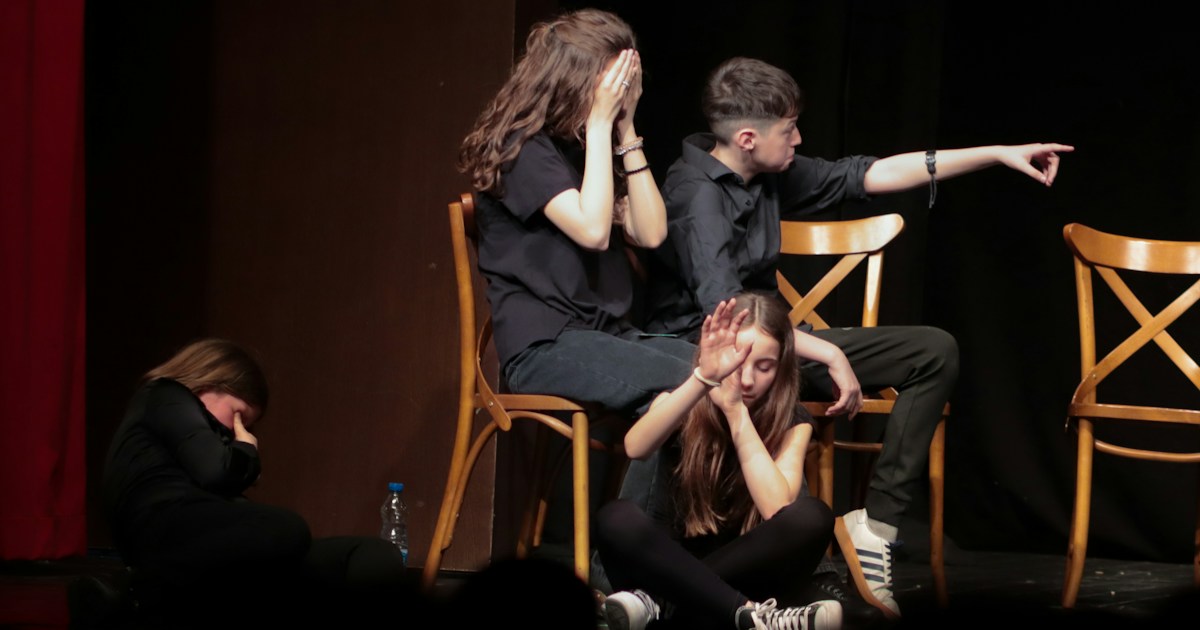
The word “skit” often suggests a compact comic scene, but school performance has long included many short forms: dramatic readings, sketches, classroom scenes, pageants, improvisations, and excerpts from longer plays. These forms share a useful feature: they make performance possible without requiring a full evening production.
Today, educators can choose between student-created work and published scripts. Collections such as Drama Notebook’s school plays and scenes organize material by format and performance length, while its funy skits collection emphasizes short, adaptable pieces. Those are different kinds of resources: one is useful for finding a particular age-appropriate script, while the other offers classic comic setups that may need thoughtful updating for older students.
That distinction matters. A traditional gag might rely on a dated stereotype or a joke that no longer feels kind. A high-school group can keep the quick setup and punchline while revising the target of the humor. Good adaptation preserves the comic mechanism, not harmful assumptions.
🎬 15 Short Skit Ideas for High School Students
The ideas below are original prompts, not scripts to copy line for line. Use them as starting points for improv, a classroom writing exercise, or a student-created performance. For a ready-made script, check the publisher’s full description, age guidance, cast details, and performance terms.
| # | Skit premise | Cast | Style | Simple staging |
|---|---|---|---|---|
| 1 | The group project goes off the rails | 4–6 | Comedy | Desks or chairs |
| 2 | A very unusual substitute teacher | 3–7 | Absurd comedy | Classroom sign |
| 3 | The cafeteria table debate | 4–8 | Comedy or drama | One table |
| 4 | The school talent show audition | 4–10 | Ensemble comedy | “Audition” sign |
| 5 | When the school Wi-Fi goes down | 3–8 | Physical comedy | Phones optional |
| 6 | A time traveler visits high school | 3–6 | Comedy or sci-fi | One prop from another era |
| 7 | The mystery of the missing mascot | 4–8 | Mystery comedy | Mascot clue |
| 8 | The first day at a new school | 3–6 | Drama or comedy | Hallway sign |
| 9 | The student council campaign | 4–8 | Satire | Podium or chair |
| 10 | A debate between study styles | 3–6 | Comedy | Books or notebooks |
| 11 | The announcements take a strange turn | 3–7 | Comedy | “Microphone” mime |
| 12 | The misunderstood text message | 3–5 | Comedy or drama | Phones optional |
| 13 | The cafeteria food courtroom trial | 5–8 | Mock trial comedy | Table as bench |
| 14 | The future graduates’ reunion | 4–8 | Comedy or reflective drama | A “reunion” sign |
| 15 | The last-minute class presentation | 3–6 | Comedy | Poster board |
1. The Group Project That Goes Off the Rails
Premise: A team gathers to finish a presentation, but everyone believes someone else has done the research.
Give each character a different tactic: the organizer makes a color-coded plan, the improviser suggests “speaking from the heart,” and the quiet student has actually completed the assignment. The turn comes when the student with the least screen time saves the group with one precise question.
Teacher tip: Let students play recognizable habits without copying classmates. The joke is the group’s chaotic process, not one student’s personality.
2. A Very Unusual Substitute Teacher
Premise: The substitute follows the lesson plan so literally that ordinary classroom instructions become absurd.
For example, “work in pairs” might lead to two students trying to become one person. Keep the humor in wordplay and physical choices, not in making a real teacher the punchline.
Staging idea: A chair and a handwritten “Today’s Lesson” sign are enough.
3. The Cafeteria Table Debate
Premise: Friends debate a surprisingly serious question: is the last seat at the table saved, or simply available?
A small disagreement grows into a mock parliamentary session, complete with formal speeches and increasingly silly “evidence.” The scene can finish with a newcomer asking whether anyone has seen the empty chair.
Flexible casting: Add students as debate spectators, commentators, or a chorus of “points of order.”
4. The School Talent Show Audition
Premise: A panel expects singing and dancing but receives a parade of unusual talents: perfect pencil spinning, dramatic locker opening, or expert silent-movie snezing.
Each audition should reveal a different character. Give every performer a distinct beginning, escalation, and finish so the piece feels like a sequence rather than a queue of unrelated jokes.
Keep it kind: Invite voluntary, fictionalized talents. Don’t spring a surprise performance on a student who has not agreed to participate.
5. When the School Wi-Fi Goes Down
Premise: A group must complete a task after the internet disappears. One student treats the outage like a disaster movie; another remembers that people once used books.
This setup works especially well with physical comedy. Students can mime loading screens, frantic reconnecting, and a dramatic search for a paper dictionary.
Ending idea: The group finally solves the problem, then discovers the assignment was due tomorrow.
6. A Time Traveler Visits High School
Premise: A visitor from the past or future arrives and misunderstands school routines.
The visitor might assume a “group chat” is a room full of talking students, or mistake a spirit week for a supernatural event. Let the modern students be equally baffled by the visitor’s habits.
Make it thoughtful: Avoid turning historical people or cultures into costumes. Build the comedy around unfamiliar technology and assumptions.
7. The Mystery of the Missing Mascot
Premise: A student detective interviews witnesses after the school mascot disappears just before an event.
Each witness remembers a different clue, and every clue seems to point somewhere else. The detective’s final discovery can be silly, sweet, or both: the mascot is helping a nervous student backstage.
Classroom extension: Ask groups to plant three clues and one red herring, then see whether another group can solve the mystery.
8. The First Day at a New School
Premise: A new student gets conflicting directions from well-meaning classmates.
One student offers a map, another gives directions by landmarks that no longer exist, and a third quietly walks the newcomer to class. This can play as light comedy or a warmer story about belonging.
For a more reflective version, browse our Educational Play Scripts for material that explores school life and social themes.
9. The Student Council Campaign
Premise: Candidates promise increasingly impractical improvements: a second lunch, homework that does itself, or a school mascot for every hallway.
The scene becomes more interesting when one candidate offers a realistic idea and must persuade the group that small improvements count. Satire works best when it critiques a situation, not a student’s real identity or role.
10. A Debate Between Different Study Styles
Premise: A planner, a flash-card enthusiast, a study-group organizer, and a last-minute crammer argue about the “one true” way to prepare.
Each style gets a moment of success and a comic limitation. End with the characters realizing that different methods suit different people—or that the test is on a topic none of them reviewed.
11. The School Announcements Take a Strange Turn
Premise: A routine announcement becomes increasingly surreal as the speakers try to remain professional.
Start with ordinary notices, then introduce an unexpected item: “The lost-and-found contains one mysterious crown.” Keep the pacing brisk, with a clear escalation and a final announcement that neatly loops back to the opening.
Performance note: A real microphone is optional. A pretend one may be safer, simpler, and more reliable.
12. The Misunderstood Text Message
Premise: A short message is interpreted in several wildly different ways.
The actors can speak the interpretations aloud while a narrator reads the original message. Build toward the moment when the sender explains what they actually meant.
Digital-literacy angle: The skit can start a discussion about tone, context, and why text messages sometimes create confusion. For guidance online safety and media literacy, see Common Sense Education.
13. The Cafeteria Food Courtroom Trial
Premise: A mock court debates whether a mysterious lunch item is a sandwich, a casserole, or an entirely new category.
Give the judge, witnesses, and “food expert” different comic points of view. Avoid jokes about allergies, food insecurity, or students’ bodies; those topics can quickly turn a playful courtroom into an uncomfortable one.
Props: Paper labels and a desk can establish the courtroom.
14. The Future Graduates’ Reunion
Premise: Former classmates meet years later and remember the same school event in completely different ways.
This premise can be funny, touching, or both. One graduate remembers the big performance; another remembers who stayed behind to help clean up. The audience sees how a small moment can matter differently to each person.
15. The Last-Minute Class Presentation
Premise: Students discover their group presentation is due sooner than they thought.
Instead of making one character the “problem,” give everyone a different obstacle: missing notes, a confusing topic, an overly ambitious visual aid, or nerves. The climax is a presentation that succeeds because the group listens to one another.
From idea to a playable scene
- Choose one premise. If it needs a paragraph to explain, simplify it.
- Assign a clear want to each character. What does each person hope will happen?
- Create a problem. The characters’ wants should collide or become complicated.
- Build three beats. Establish the situation, raise the stakes, then deliver a turn or resolution.
- Read it aloud. Any line that feels awkward on the tongue needs a rewrite.
- Trim the extras. Keep the strongest jokes and the clearest emotional moments.
- Rehearse the ending. A well-timed final beat makes a short scene feel complete.
😂 Funny, Dramatic, and Educational Skit Genres
A high-school skit can be a comedy, but that is only one option. Choose a genre that suits your students, learning goal, and audience.
Comedy and Improv Skits
Comedy thrives on surprise, contrast, repetition, and timing. A character may misunderstand a phrase, take a small problem much too seriously, or repeat a harmless action until it becomes ridiculous.
Drama Notebook describes its collection as “50+ royalty-free classic skits for students” and notes that many use improvisation or ad-libed lines. That can be helpful for groups who want room to play, but “royalty-free” should not be treated as a blanket permission for every use. Read the specific site’s current performance guidelines before using a published script.
Useful comic tools include:
- Rule of three: repeat a pattern twice, then break it on the third try.
- Escalation: let a small problem grow in a logical but increasingly ridiculous way.
- Comic contrast: pair a very serious character with a very silly situation.
- Physical business: use clear, safe movement to make an idea visible.
- Callback: bring back an earlier joke with a new meaning.
For a ready-made warm-up, Drama Notebook’s funy skits for kids page includes short pieces grouped by cast size. Teachers can adapt the format for teens, but should check that each joke and reference suits their students.
Drama, Friendship, and Coming-of-Age Scenes
A short dramatic scene does not need a grand tragedy. It needs a character who wants something and a reason it is difficult to say so.
Try stories about welcoming a new student, deciding whether to speak up, repairing a friendship, or handling a change in a group. Give the scene space for silence and listening; not every emotional beat needs a speech.
Benefits: These scenes can support empathy and character work.
Challenge: Personal themes may touch close to home. Let students choose roles thoughtfully, avoid pressuring anyone to share personal experiences, and offer an alternative role or task when appropriate.
Anti-Bulying and Social-Emotional Learning Skits
A skit can explore exclusion, rumor-spreading, peer pressure, and bystander choices. The goal should be to make the audience think about what someone can do next, not merely watch a painful scene unfold.
The StopBulying.gov prevention resources and CDC youth violence prevention information can help teachers ground discussions in reliable guidance. For a classroom performance:
- Keep the conflict clear but avoid graphic details.
- Show more than one possible response.
- Avoid asking students to reenact real incidents or identify real classmates.
- Consider a brief facilitated discussion after the performance.
- Follow school safeguarding policies if a student raises a real concern.
A script should support a caring classroom conversation, not serve as a substitute for professional help or school procedures.
Classroom, History, and Science Skits
Educational skits turn facts into action. Students can dramatize a scientific process, stage a historical debate, or personify competing ideas—provided the creative choices remain factually sound.
Use reliable materials such as NASA’s educational resources for space topics and the Smithsonian Learning Lab for collections and teaching materials. For a broader range of classroom-ready performance scripts, browse Educational Play Scripts.
Teacher check: Ask students to identify which parts are documented facts and which are fictionalized for the scene. That one question helps keep a lively performance from accidentally becoming a very confident history error.
⏱️ How to Choose the Right Skit Length and Difficulty
The right run time depends on the occasion, the cast, and the students’ rehearsal experience. A quick classroom performance and an assembly feature need different pacing.
One-Minute, Five-Minute, and Ten-Minute Skits
These ranges are planning estimates, not guarantees. Acting pace, audience response, pauses, transitions, and staging all affect the final runtime.
| Target length | Best use | Typical structure | Watch out for |
|---|---|---|---|
| About 1 minute | Warm-up or quick classroom share | One setup, one comic or dramatic turn | Too little context |
| About 3–5 minutes | Class performance or short showcase | A clear problem, a few beats, a resolution | Extra characters crowding the scene |
| About 6–10 minutes | Assembly feature or festival slot | More developed relationships and escalation | Repetitive dialogue or slow transitions |
| About 10–15 minutes | Short-play block or club performance | Multiple scenes or a fuller story arc | Greater memorization and rehearsal needs |
The competing Drama Notebook listings group options by approximate duration—from very short pieces to scenes around 10–15 minutes. That is a useful way to narrow choices, but use a timed read-through to confirm how long your students’ version takes.
Matching a Skit to Your Class or Event
Ask four questions:
- Who is performing? Beginners often benefit from clear cues and a simple scene structure.
- Who is watching? An assembly audience may need broader, more visual humor than a small drama class.
- How much rehearsal time is available? A short, simple piece can still need practice for timing and blocking.
- What resources do you have? Choose a script that fits your space, sound, props, and cast.
A useful teacher trick is to rehearse the skit once in the actual space, even if the “stage” is just a classroom corner. A line that carries across a rehearsal room may disappear into an assembly hall.
👥 Casting Short Plays for Teens
A good casting plan makes students feel included without forcing every scene to have the same number of lines for everyone. Start with the story’s needs, then look for ways to create meaningful ensemble roles.
Flexible Roles for Large or Small Groups
Published scripts may specify a cast size, but some offer doubling, flexible casting, or ensemble characters. Drama Notebook’s school-play listings include examples described as flexible cast or gender-flexible. Always confirm the script’s actual specifications before assigning roles.
| Group size | Casting approach | Helpful device |
|---|---|---|
| 2–3 students | Focus on a clear relationship | One location and a strong central conflict |
| 4–8 students | Give each character a distinct objective | Shared scene with several points of view |
| 9–15 students | Use a panel, crowd, chorus, or scene sequence | Short lines and clear entrances |
| Large ensemble | Divide into teams or linked vignetes | Narrators, repeated refrains, or rotating roles |
For a big class, an ensemble should not mean “everyone stands in a row and says one word.” Give group members an active task: creating sound, reacting as a crowd, changing the setting, or representing an idea through movement.
Inclusive Casting and Adaptable Characters
Use the character’s function in the story, rather than assumptions about gender, appearance, disability, or background, to guide casting. If a script’s language or roles are fixed by the publisher, ask what adaptations are permitted before changing it.
Thoughtful options include:
- Casting roles without gender restrictions when appropriate.
- Offering students a choice between speaking, movement, design, and backstage roles.
- Rewriting stereotypes only when the script’s license allows it.
- Keeping disability representation respectful and avoiding disability as a punchline.
- Providing accessible rehearsal materials and reasonable opportunities to participate.
Inclusive casting is not a special effect. It is part of helping the whole group do meaningful work.
✍️ How to Write a Short Skit for High School
Student-written skits can feel fresh because the writers understand the rhythms, pressures, and surprises of school life. The trick is turning a relatable idea into a playable scene.
Build a Clear Premise, Conflict, and Punchline
Use this simple framework:
- Premise: What is the unusual situation?
Example: The school Wi-Fi fails just before a group presentation. - Character wants: What does each person need?
One student wants to improvise; another wants to find a printed copy. - Obstacle: What makes that difficult?
The presentation is due now, and no one agrees on the topic. - Escalation: How does the situation get more complicated?
Each proposed solution creates a new problem. - Turn: What changes the scene?
The quietest student has the only complete notes. - Ending: What is the final image, decision, or joke?
The group succeeds—then the teacher announces the presentation was next week.
For a dramatic rather than comic scene, the turn might be a realization instead of a punchline. The audience still needs a clear change.
Create Natural Dialogue for Teen Actors
Read every draft aloud. Natural dialogue is not a transcript of real conversation; real conversation includes pauses, repetition, and unfinished thoughts that can become tedious onstage.
Try these editing checks:
- Can the actor say the line comfortably in one breath?
- Does each character sound distinct?
- Can the audience understand the key information on the first hearing?
- Is there a reason for the line beyond explaining the plot?
- Can a reaction or action replace a long explanation?
Teachers can invite students to mark the script with pauses, emphasis, and physical actions. That turns a flat page into playable behavior.
Use Simple Props, Costumes, and Stage Directions
A strong short scene usually needs fewer objects than students expect. Drama Notebook’s production advice favors a bare stage and simple items such as chairs, benches, counters, or boxes—an approach that makes practical sense for classrooms.
| Stage element | Low-complexity option | Why it helps |
|---|---|---|
| Set | Chairs or a table | Suggests a location quickly |
| Costume | Everyday clothing with one clear accessory | Keeps focus on character |
| Props | One or two essential objects | Reduces lost-prop surprises |
| Sound | Student-created sound or simple cues | Adds atmosphere without elaborate equipment |
| Location changes | Signs, lighting, or actor movement | Keeps transitions fast |
Safety first: Avoid real weapons, dangerous stunts, food risks, or improvised props that could cause injury. The Occupational Safety and Health Administration’s school resources offer relevant workplace-safety context, while schools should follow their own safety rules for student performances.
🎤 Rehearsing and Performing a Short Skit
Short does not mean “rehearse once in the hallway and hope for magic.” A focused process helps students learn cues, discover comic timing, and make the performance feel intentional.
A Simple Rehearsal Plan for Student Actors
Step 1: Read and understand
Read the scene aloud together. Ask students to explain the situation and what changes by the end.
Step 2: Clarify objectives
For every character, answer: What do I want right now? An actor who wants something can make choices; an actor who is only waiting for a line tends to look like they’re waiting for a bus.
Step 3: Block the scene
Decide where actors stand, move, enter, and exit. Keep movement motivated and visible to the audience.
Step 4: Practise cues and listening
Students should listen for the thought that prompts their next line, not merely wait for a memorized word. This improves timing and makes mistakes easier to recover from.
Step 5: Run it without stopping
Let the whole scene continue, even if a line is missed. Afterwards, note the two or three most useful fixes rather than overwhelming the cast with twenty notes.
Step 6: Time and refine
Use a stopwatch, then adjust pacing, transitions, and pauses. Keep a little space for audience laughter if the piece is comic.
Voice, Movement, Timing, and Stage Presence
Remind performers to:
- Face the audience when delivering key information.
- Speak clearly, especially in large rooms.
- Use stillness when a moment needs focus.
- Make gestures specific rather than constant.
- Hold for the laugh instead of rushing past a punchline.
- Stay in character if a small mistake happens.
For vocal health and safe performance habits, the National Association of Teachers of Singing provides professional resources; teachers should also follow their school’s guidance for voice use and amplification.
Managing Nerves Before a School Performance
A little nervousness is normal. Give students a predictable pre-show routine:
- Take a quiet breath and release tension in the shoulders.
- Review the opening cue and the first entrance.
- Remind the cast that listening matters more than perfection.
- Check props and exits.
- Begin with a simple group focus exercise.
A supportive teacher does not promise that nobody will ever forget a line. Instead, students learn how to recover: pause, listen, use a cue, and keep the story moving.
🏫 Skits for Classrooms, Assemblies, and Drama Clubs
The same scene can serve different purposes depending on where and why it is performed. Choose the format first, then choose the skit.
Quick Classroom Activities and Warm-Ups
For a short class activity, use a premise that students can understand quickly. A teacher might give each group a location, a problem, and a final line, then allow ten minutes to build a scene.
Useful variations:
- Freeze-frame: Show the beginning, middle, and end as still images.
- One-line scene: Each performer may speak only one sentence.
- Genre switch: Repeat the same premise as comedy, mystery, and drama.
- Silent scene: Tell the story using movement and facial expression.
- Audience prompt: Let the audience suggest a harmless location or object.
These exercises are useful for building confidence, but give students clear boundaries and choices. Improvisation should not require anyone to disclose personal information.
School Assembly and Spirit-Week Performances
Assembly skits need to be visually clear, audible, and quick to understand. Avoid subtle jokes that depend on the audience hearing a quiet aside or knowing an obscure reference.
Before performance day:
- Check sightlines from the back of the room.
- Test microphones and sound cues.
- Keep entrances and exits simple.
- Use a narrator or title sign if the premise needs quick context.
- Rehearse transitions between acts.
The first YouTube video referenced for this article, “High School Theatre Show with Emma Stone – SNL”, can be a helpful example of a comedy sketch built around a high-school theatre performance. Watch how the premise is established through the students’ performance choices, and discuss how satire changes when the topic is serious. Teachers should preview the video for audience suitability and connect it to a clear discussion goal.
Drama Club Showcases and Theatre Festivals
A showcase can combine several short pieces into one program. Alternate tone and pace: a fast comedy, a quieter scene, then a lively ensemble piece. A host or narrator can make transitions feel deliberate.
For more school-performance ideas, explore our Children’s Theatre Scripts and Elementary School Plays categories when planning for mixed-age audiences. For teen casts, verify age suitability and role requirements rather than assuming that every “school” script is aimed at high school.
✅ Choosing a Skit Script That Fits Your Students
A script can sound perfect in a description and still be a poor fit for your group. Check the practical details before you commit.
Check the Cast Size, Run Time, and Reading Level
Before choosing, confirm:
- Cast size: Does the script include the number of roles you need?
- Run time: Is the duration an estimate, or based on a specific performance?
- Role distribution: Do all students have an appropriate part?
- Reading and language demands: Can your cast work with the script as written?
- Materials: Are there required props, music, or special staging?
- Content: Does theme fit the group and audience?
Drama Notebook’s school-play listings include descriptions of cast size and estimated length for many scripts. Those details are useful screening tools, but the publisher’s current script page is the authority for its specific requirements.
Review Humor, Themes, and Audience Appropriateness
Teachers see the performance from several angles: a joke that feels harmless to the cast may land differently with younger students, families, or an assembly audience. Read the full script and ask:
- Who is the target of the joke?
- Does the piece rely on stereotypes?
- Could a scene embarrass a real student or group?
- Are sensitive themes handled with care?
- Does the humor depend on a cultural reference the audience may not know?
A good rule: If the punchline requires the audience to laugh at someone’s identity, vulnerability, or real hardship, choose another punchline.
When to Use a Published Script or Write Your Own
| Option | Advantages | Drawbacks |
|---|---|---|
| Published script | Polished structure, established characters, and clear source details | May have licensing conditions or cast needs that do not match |
| Student-written skit | Tailored to the class, event, and available performers | Needs editing, rehearsal, and attention to sensitive content |
| Adapted classic scene | Familiar story and room for interpretation | Adaptation and performance rights may be limited |
| Improvised scene | Fast to prepare and useful for skills practice | Less predictable and may need tighter boundaries |
For a classroom exercise, improvisation or student writing can be a smart choice. For a public performance, a published script may provide more reliable structure—but only if you secure the necessary permissions.
📄 Copyright, Script Permissions, and Performance Rights
Reading or rehearsing a script is not always the same as performing it publicly. Copyright rules and licensing terms vary by work, publisher, country, and type of performance.
Before using a published script:
- Identify the copyright holder or licensing publisher.
- Read the current performance terms for the specific script.
- Check whether school, classroom, livestream, recording, or ticketed use is covered.
- Request permission when the terms require it.
- Keep written confirmation with your production materials.
The U.S. Copyright Office’s educational-use guidance explains that copyright questions depend on the work and use; “it’s for school” does not automatically answer every licensing question. The U.S. Copyright Office fair-use overview is also useful background, but it is not a substitute for checking a script publisher’s terms or getting legal advice when needed.
Drama Notebook describes some of its material as royalty-free and directs users to performance guidelines. Follow the guidance attached to the particular script, rather than assuming the same terms apply to every title on a site.
🔧 Common Short-Skit Problems and How to Fix Them
| Problem | Why it happens | Practical fix |
|---|---|---|
| The scene feels too long | Repeated jokes or explanations | Cut lines that do not reveal character or change the situation |
| The audience misses the premise | The scene starts too abruptly | Add a clear opening image, title, or first line |
| Actors talk over one another | Cues and reactions are unclear | Rehearse cue words and choose intentional overlap |
| One student dominates | Roles are unevenly written | Add meaningful reactions, tasks, or ensemble beats |
| Props become distracting | Too many objects or complicated business | Keep only props that affect the story |
| The ending feels weak | The final beat does not change anything | End on a decision, reveal, image, or callback |
| The comedy feels unkind | The joke targets a person rather than a situation | Redirect the joke toward a misunderstanding or shared predicament |
| Students freeze after a missed line | They rely on exact memorization | Rehearse recovery cues and practise continuing the scene |
A quick rescue for a scene that is not working
- Ask the cast what the audience should understand.
- Identify the moment where that idea first becomes clear.
- Cut or rewrite everything that delays it.
- Strengthen the central problem.
- Give the final moment a clear payoff.
- Run it again without stopping.
Sometimes the fix is not a bigger joke or more elaborate staging. It is simply making the story easier to follow.