Support our educational content for free when you purchase through links on our site. Learn more
🎭 7 Steps to Master Devised Theatre for Schools (2026)

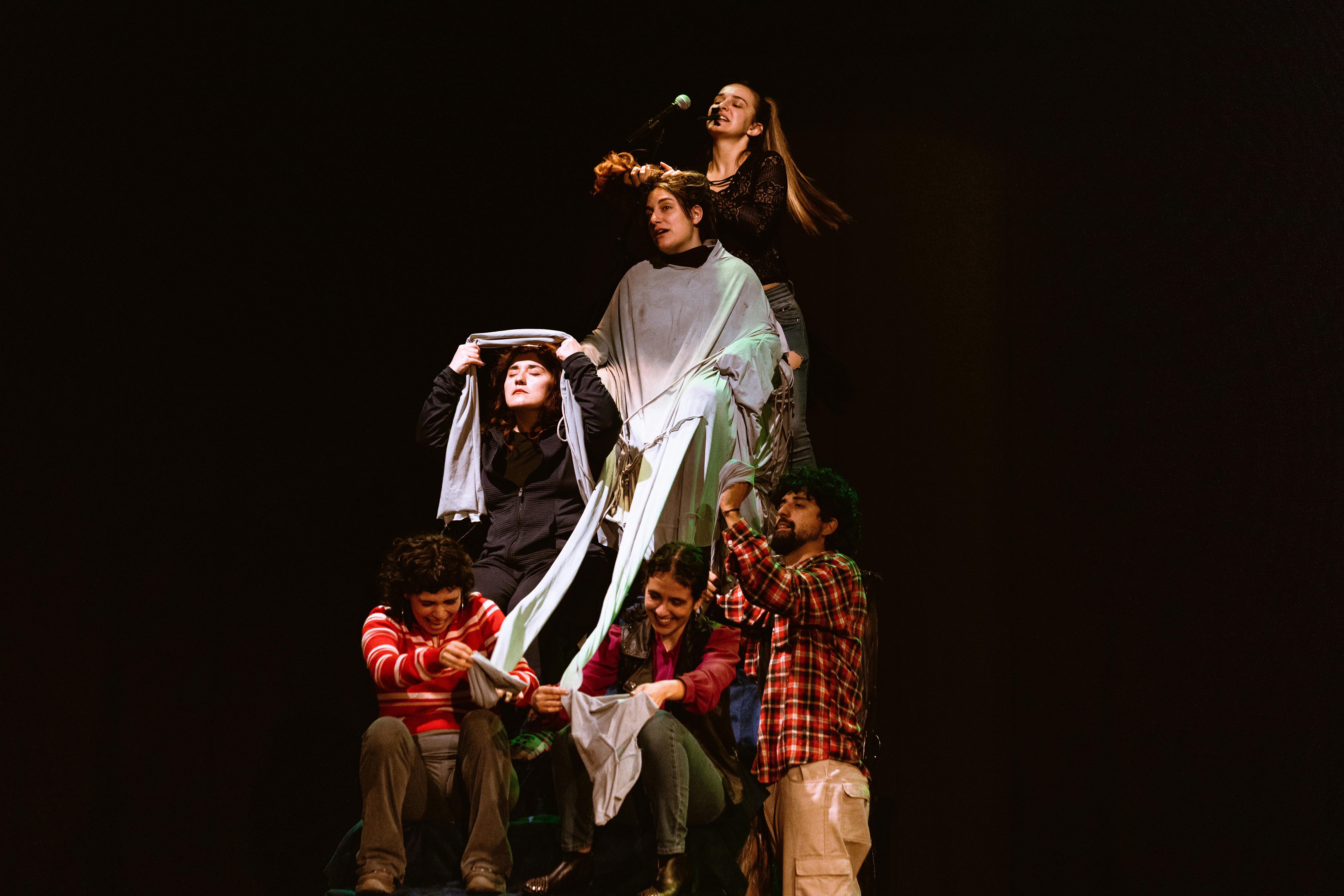
Ever walked into a drama room only to find students staring blankly at a script, waiting for permission to speak? We’ve all been there. But what if the most powerful play your school ever produces wasn’t written by a famous playwright, but by the students themselves? Devised theatre flips the script entirely, transforming your classroom from a place of passive memorization into a vibrant laboratory of collaborative creation.
In this guide, we’ll walk you through the exact 7-step process we use at School Play Scripts™ to turn chaos into a cohesive, student-led masterpiece. You’ll discover how to spark imagination with simple prompts, navigate the tricky waters of group dynamics, and build a performance that resonates with your entire school community. From the ancient roots of communal storytelling to modern classroom success stories, we’re uncovering the secrets to making theatre that truly belongs to your students.
Key Takeaways
- Empower Student Voices: Devised theatre shifts the power from the director to the ensemble, fostering ownership and confidence in every student.
- Structure Over Chaos: Success relies on 7 essential steps, from establishing clear constraints to curating raw material into a narrative arc.
- Inclusive by Design: This method naturally accommodates diverse learning styles, allowing students to shine through physicality, sound, and visual storytelling rather than just dialogue.
- Skill Transfer: Beyond acting, students master critical thinking, negotiation, and problem-solving skills that extend far beyond the stage.
Table of Contents
- ⚡️ Quick Tips and Facts
- 📜 The Origins of Devised Theatre: From Ancient Rituals to Modern Classrooms
- 🤔 What Exactly is Devised Theatre in a School Setting?
- 🚀 7 Essential Steps to Launching a Successful Devised Theatre Unit
- 1. Establishing the Core Theme and Constraints
- 2. Building Trust and Ensemble Dynamics
- 3. Generating Raw Material Through Improv and Prompts
- 4. Selecting and Filtering Student Ideas
- 5. Structuring the Narrative Arc
- 6. Rehearsing with a Focus on Physicality and Voice
- 7. Polishing, Reflecting, and Presenting
- 🎭 5 Creative Devised Theatre Prompts That Will Ignite Student Imagination
- 🛠️ The Teacher’s Toolkit: Essential Props, Tech, and Resources for Devised Work
- 🧩 Overcoming Common Challenges in Student-Led Devised Projects
- 📊 Devised Theatre vs. Traditional Scripted Plays: A Comparative Guide
- 🌟 Real-World Success Stories: How Schools Are Transforming Learning Through Devised Theatre
- 📚 Recommended Links for Further Exploration
- ❓ Frequently Asked Questions About Devised Theatre in Education
- 📖 Reference Links and Credible Sources
- 🏁 Conclusion
⚡️ Quick Tips and Facts
Before we dive into the deep end of the creative pool, let’s splash around with some essential truths about devised theatre that every educator needs to know. If you think this is just “making stuff up on the fly,” think again! It’s a rigorous, structured, and incredibly rewarding process.
- It’s Not Chaos, It’s Collaboration: Devised theatre isn’t a free-for-all; it’s a structured improvisation where every student’s voice matters. According to the Educational Theatre Association (EdTA), this method fosters a sense of ownership that scripted plays often struggle to achieve EdTA on Devised Theatre.
- The “No Script” Myth: You don’t start with a blank page; you start with a prompt. Whether it’s an object, a news article, or a personal story, the material is generated by the students, for the students.
- Inclusivity is Built-In: Unlike traditional casting where a few stars shine and the rest are background, devised theatre often utilizes ensemble work, allowing students who might be shy about memorizing lines to shine through physical theatre, soundscapes, or visual storytelling.
- Skill Transfer: Students aren’t just learning drama; they are mastering critical thinking, negotiation, and problem-solving. A study by the National Endowment for the Arts highlights how arts integration boosts academic performance in other subjects.
- The “Magic” Moment: As Elizabeth Dunn-Ruiz, a leading voice in theatre education, puts it, “That narrowing down process is where the magic happens.” It’s the moment a chaotic brainstorm transforms into a cohesive narrative.
Ready to turn your classroom into a creative incubator? Let’s explore the roots of this powerful art form.
📜 The Origins of Devised Theatre: From Ancient Rituals to Modern Classrooms
You might be wondering, “Did someone just invent this yesterday?” Far from it! The roots of devised theatre stretch back to the dawn of human storytelling.
Ancient Roots: The First “Devisers”
Long before Shakespeare or Miller picked up a quill, ancient Greeks and Romans engaged in forms of communal performance. Think of the Dionysian festivals where the chorus and actors improvised based on mythic themes, or the medieval mystery plays where local guilds created performances based on biblical stories, often adapting them to their specific community context. These weren’t just plays; they were community rituals where the story belonged to everyone in the room.
The 20th Century Revolution
The modern concept of devised theatre really took off in the 20th century as a reaction against the rigid, text-heavy dominance of naturalism.
- Jacques Copeau and Vsevolod Meyerhold in Europe began experimenting with physical theatre and the actor’s body as the primary text.
- Peter Brook famously stated, “I can take any empty space and call it a bare stage.” This philosophy liberated theatre from the page.
- In the 1960s and 70s, groups like The Living Theatre and Theatre of the Oppressed (Augusto Boal) used devised methods to address social justice, proving that theatre could be a tool for social change.
Why It Matters in Schools Today
In the modern classroom, we’ve moved away from the “director-as-god” model. We are now seeing a shift toward student-led creation. As Dr. Jimmy Chrismon from Illinois State University notes, this approach transforms school theatre programs into “vibrant, inclusive, and empowering spaces.” It’s not just about putting on a show; it’s about honoring personal stories and capturing the “human condition” right here, right now.
Pro Tip: If you’re looking for traditional scripts to contrast with devised work, check out our collection of Educational Play Scripts to see how structured narratives differ from the organic flow of devised pieces.
🤔 What Exactly is Devised Theatre in a School Setting?
Let’s cut through the jargon. Devised theatre (sometimes called “derived theatre” or “collaborative creation”) is a process where the script is created collectively by the cast, rather than being handed down by a playwright.
The Core Philosophy
In a traditional school play, the teacher (or director) has the script, the students memorize lines, and the goal is to replicate a pre-existing vision. In devised theatre:
- The Students are the Playwrights: They generate the dialogue, the action, and the structure.
- The Teacher is the Facilitator: Your job isn’t to dictate, but to guide, curate, and shape the raw material.
- The Content is Personal: The stories often stem from the students’ own lives, interests, and the specific culture of your school.
How It Differs from Traditional Theatre
| Feature | Traditional Scripted Play | Devised Theatre |
|---|---|---|
| Source Material | Pre-written script by a playwright | Generated by the ensemble |
| Role of Teacher | Director/Interpreter | Facilitator/Collaborator |
| Student Role | Interpreter of text | Creator of text and action |
| Focus | Faithful reproduction | Original expression |
| Casting | Auditions for specific roles | Ensemble-based, often flexible roles |
| Outcome | Predictable (same play every time) | Unique (never performed exactly the same way twice) |
Why It’s a Game-Changer for Schools
Imagine a student who has never spoken in class suddenly leading a scene because they have a story about their immigrant experience that needs to be told. That’s the power of student agency. It levels the playing field. It’s not about who has the biggest voice in the room, but who has the most compelling story to share.
As Sobha Kavanakudiyil, an expert in the field, says, “It’s a unique opportunity to really get to know the collaborators to create something and capture the human condition.”
🚀 7 Essential Steps to Launching a Successful Devised Theatre Unit
Ready to dive in? Don’t panic! We’ve broken down the process into seven manageable steps. This framework is adapted from the best practices of EdTA and leading theatre educators.
1. Establishing the Core Theme and Constraints
You can’t just say, “Make a play.” That’s too vague! You need a lens through which the students will view the world.
- Choose a Theme: Is it “Identity,” “Conflict,” “The Future,” or “Community”?
- Set Constraints: Constraints breed creativity. Limit the number of actors per scene, forbid the use of spoken words, or require the use of a specific prop.
- Example: “Create a 3-minute piece about ‘Change’ using only three objects and no dialogue.”
2. Building Trust and Ensemble Dynamics
This is the most critical step. If your students don’t trust each other, they won’t take risks.
- Community Agreements: Instead of imposing rules, ask the class: “What do we need to feel safe to create?” Write these down together.
- Icebreakers: Use exercises that require physical touch (with consent) or shared vulnerability.
- The “Yes, And” Rule: Teach students to accept every idea and build upon it. No “No, but…” allowed!
Teacher Story: We once had a class where a student refused to participate. We spent two weeks just doing trust games and building agreements. By week three, that same student was leading a scene about their fear of failure. The trust was the key.
3. Generating Raw Material Through Improv and Prompts
Now the fun begins! It’s time to gather the “clay” you’ll sculpt later.
- Prop Prompts: Hand out random objects (a shoe, a map, a feather) and ask students to create a scene.
- Multimedia: Show a short video clip, a news article, or a piece of music and ask, “What story does this tell?”
- Personal Narratives: Have students write a short paragraph about a time they felt brave. Share them anonymously.
4. Selecting and Filtering Student Ideas
This is where the teacher steps in as the curator. You will have 50 ideas; you can only use 10.
- The Funel: Ask the class to vote on the ideas that resonated most.
- Identify Patterns: Look for recurring themes. If three groups created scenes about “being misunderstood,” that’s your central theme!
- Discard with Care: Explain why an idea isn’t being used. “This is a great idea, but it doesn’t fit our theme of ‘Resilience’.”
5. Structuring the Narrative Arc
Now, take those selected scenes and arrange them into a story.
- Beginning, Middle, End: Does the story have a clear progression?
- Transitions: How do we get from Scene A to Scene B? Use music, lighting, or physical movement.
- Pacing: Ensure there’s a mix of high energy and quiet moments.
6. Rehearsing with a Focus on Physicality and Voice
Devised theatre relies heavily on physical theatre and vocal variety.
- Tableaux: Create frozen images to show relationships.
- Soundscapes: Use voices and body percussion to create the environment.
- Refinement: Polish the timing and clarity of the performance.
7. Polishing, Reflecting, and Presenting
The show isn’t over when the curtain falls.
- Feedback Lops: Use structured feedback protocols (e.g., “I liked…”, “I wonder…”).
- Reflection: Ask students, “What did you learn about yourself?”
- Performance: Share the work with the school or community.
For more detailed guides on structuring your drama curriculum, check out our Drama Teacher Guides.
🎭 5 Creative Devised Theatre Prompts That Will Ignite Student Imagination
Stuck on what to ask your students to create? Here are five proven prompts that work like magic in the classroom. These are inspired by resources from Digital Theatre+ and our own classroom trials.
1. The “Object Story”
The Prompt: Give each group a random object (e.g., a broken umbrella, a vintage key, a plastic dinosaur).
The Task: Create a 2-minute scene where the object is the most important character. It cannot be used for its intended purpose.
Why it works: It forces students to think metaphorically and creatively. A key isn’t just for a door; it’s a symbol of freedom, a weapon, or a memory.
2. The “News Headline”
The Prompt: Provide a list of current or historical news headlines (e.g., “Local Hero Saves Cat,” “Mars Colony Established”).
The Task: Create a scene that explores the human side of the headline. What happened before? What happened after?
Why it works: It connects the classroom to the real world and encourages critical thinking about media and society.
3. The “Silent Argument”
The Prompt: Two characters are having a heated argument, but they cannot speak.
The Task: Use only body language, facial expressions, and sound effects (no words) to convey the conflict and resolution.
Why it works: It strips away the crutch of dialogue and forces students to master physicality and emotional expression.
4. The “Time Traveler”
The Prompt: A character from the future arrives in your classroom today.
The Task: Create a scene where the time traveler tries to explain a future technology or social norm to a confused student.
Why it works: It sparks imagination and allows students to explore themes of progress, culture, and identity.
5. The “Change the Scene”
The Prompt: Start with a simple activity (e.g., waiting for a bus).
The Task: One by one, students enter the scene and change the context completely (e.g., the bus becomes a spaceship, then a prison, then a wedding).
Why it works: It teaches adaptability and active listening, as students must instantly react to the new reality.
Want more inspiration? Explore our Drama Club Resources for hundreds of exercises and activities.
🛠️ The Teacher’s Toolkit: Essential Props, Tech, and Resources for Devised Work
You don’t need a million-dollar budget to create great devised theatre. In fact, limitations often spark the best creativity. However, having the right tools can make the process smoother.
Essential Props (The “Low-Tech” Essentials)
- Fabric Scraps: A staple of any theatre teacher. Use them for costumes, set pieces, or abstract symbols.
- Cardboard Boxes: The ultimate prop. They can be cars, houses, robots, or mountains.
- Chairs and Tables: Versatile furniture that can be rearranged instantly to create new environments.
- Random Household Items: Old keys, hats, books, and toys.
Tech Tools (The “High-Tech” Boosters)
- Smartphones/Tablets: For recording rehearsals, capturing images, or playing soundscapes.
- Projectors: To create dynamic backdrops or show video prompts.
- Sound Apps: Apps like GarageBand or Audacity allow students to create their own sound effects and music.
Recommended Brands and Resources
- Digital Theatre+: A fantastic online resource for lesson plans and video examples of devised work. They offer specific “Kickstart Worksheets” for students.
👉 Shop Digital Theatre+ on: Digital Theatre+ Official Website - Amazon Basics: For affordable storage bins, fabric, and basic craft supplies.
👉 Shop Fabric on: Amazon Fabric Search - EdTA (Educational Theatre Association): Offers professional development and curriculum guides.
Visit EdTA: EdTA Official Site
Teacher Tip: Don’t underestimate the power of a simple whiteboard. Use it to map out the structure of the play as you build it.
🧩 Overcoming Common Challenges in Student-Led Devised Projects
Let’s be real: devised theatre isn’t always smooth sailing. Here are the common pitfalls and how to navigate them.
Challenge 1: “I Don’t Have Any Ideas!”
The Fix: This is common for students used to following instructions.
- Strategy: Provide structured constraints. Instead of “Make a scene,” say “Make a scene where two people are arguing over a sandwich.”
- Strategy: Use brainstorming techniques like mind mapping or “crazy 8s” (sketching 8 ideas in 8 minutes).
Challenge 2: The “Dominant Student” Problem
The Fix: One student takes over, and the rest shut down.
- Strategy: Use rotating roles. Assign a “director” for each scene who changes every time.
- Strategy: Implement a “talking stick” rule where only the person holding the object can speak.
Challenge 3: The “Messy Middle”
The Fix: The process feels chaotic and directionless.
- Strategy: Pause and Reflect. Stop the action every 15 minutes. Ask, “What are we trying to say?”
- Strategy: Document everything. Take photos and notes. This helps you see the patterns and make decisions.
Challenge 4: Fear of Failure
The Fix: Students are afraid their ideas aren’t “good enough.”
- Strategy: Normalize failure. Tell them, “The worst idea is the one that gets us to the best idea.”
- Strategy: Celebrate process over product. Praise the risk-taking, not just the final performance.
📊 Devised Theatre vs. Traditional Scripted Plays: A Comparative Guide
Still on the fence? Let’s break it down with a clear comparison.
| Aspect | Traditional Scripted Play | Devised Theatre |
|---|---|---|
| Preparation Time | High (memorization, blocking) | Variable (depends on group dynamics) |
| Student Engagement | High for lead roles, lower for ensemble | High for all (everyone creates) |
| Skill Development | Memorization, interpretation, discipline | Creativity, collaboration, problem-solving |
| Flexibility | Low (must stick to the script) | High (can change anytime) |
| Teacher Role | Director, authority figure | Facilitator, guide, co-creator |
| Outcome | Reproducible, consistent | Unique, ephemeral |
| Best For | Teaching classic literature, performance technique | Exploring personal themes, building community |
Which should you choose?
- Choose Traditional if you want to teach a specific play, focus on acting technique, or prepare for a competition.
- Choose Devised if you want to build community, explore student voices, or tackle complex social issues.
Insider Secret: Many schools do a hybrid! Start with a devised piece to build trust, then move into a scripted play. The skills transfer beautifully.
🌟 Real-World Success Stories: How Schools Are Transforming Learning Through Devised Theatre
Don’t just take our word for it. Let’s look at how schools are making this work.
Case Study 1: The “Identity” Project
At a high school in Chicago, a teacher noticed her students were struggling with identity issues. She assigned a devised project on “Who am I?”
- The Process: Students shared personal stories, created tableaux, and built a soundscape of their lives.
- The Result: The final performance was a powerful, moving piece that resonated with the entire school. Students reported feeling heard and understood for the first time.
Case Study 2: The “Environmental” Play
A middle school drama club used devised theatre to address climate change.
- The Process: They researched local environmental issues, interviewed community members, and created a play based on their findings.
- The Result: The play was performed at a city council meeting, leading to real-world action. The students learned that theatre can change the world.
Case Study 3: The “Jane Eyre” Inspiration
Inspired by the National Theatre’s production of Jane Eyre, a drama teacher led her class in a devised exploration of the novel.
- The Process: Instead of reading the book, they acted out scenes, explored the physicality of the characters, and created their own version of the story.
- The Result: Students who usually hated reading Jane Eyre became obsessed with the story because they lived it.
Want to see more? Check out our Children’s Theatre Scripts for inspiration on how to adapt classic stories for young performers.
Conclusion

Devised theatre is more than just a teaching method; it’s a philosophy of empowerment. It transforms the classroom from a place of passive learning into a dynamic laboratory of creativity. By giving students the tools to tell their own stories, we aren’t just teaching them how to act; we’re teaching them how to think, collaborate, and lead.
As we’ve seen, the journey from a blank page to a full performance is filled with challenges, but the rewards are immeasurable. Whether you’re a seasoned drama teacher or a novice looking to try something new, devised theatre offers a path to a more inclusive, engaging, and meaningful educational experience.
So, what are you waiting for? Grab a prop, gather your students, and let the devising begin!
Recommended Links
Ready to get started? Here are some essential resources to support your journey.
- Digital Theatre+: Access hundreds of lesson plans, video examples, and student workbooks.
👉 Shop Digital Theatre+ on: Digital Theatre+ Official Website - Educational Theatre Association (EdTA): Professional development, curriculum guides, and community support.
Visit EdTA: EdTA Official Site - Amazon Basics: Affordable props and supplies for your classroom.
👉 Shop Fabric on: Amazon Fabric Search
👉 Shop Cardboard on: Amazon Cardboard Search - Books on Devised Theatre:
The Devised Theatre Handbook by John O’Tole
Creating Devised Theatre by David Farmer
👉 Shop on Amazon: Devised Theatre Books
FAQ
What are some easy devised theatre ideas for school productions?
Start with simple prompts like “The Object Story” (using a random object to create a scene) or “The Silent Argument” (conflict without words). These require minimal preparation and encourage creativity.
Read more about “15 School Play Script Ideas to Spark Creativity in 2026 🎭”
How does devised theatre differ from traditional scripted plays in schools?
In traditional plays, students interpret a pre-written script. In devised theatre, students create the script, dialogue, and action collaboratively. The focus shifts from replication to original expression.
Where can I find examples of devised theatre scripts for schools?
Since devised theatre is created in the moment, there are no “scripts” to buy. However, you can find lesson plans and exercise guides from resources like Digital Theatre+ or the Educational Theatre Association.
Can students participate in writing a devised theatre performance?
Absolutely! In fact, they are the primary writers. The teacher facilitates the process, but the students generate the content, structure, and dialogue.
What are the benefits of devised theatre in educational settings?
It fosters collaboration, critical thinking, empathy, and self-expression. It also creates a more inclusive environment where every student has a voice.
How do you create a devised theatre script for a school play?
You don’t “create” a script in the traditional sense. You generate material through improvisation, select the best ideas, and structure them into a narrative arc. The “script” emerges from the process.
Read more about “15 Best Short Drama Scripts for Students 🎭 (2026 Edition)”
What is devised theatre and how can it be used in schools?
Devised theatre is a collaborative form of performance creation. It can be used to explore personal stories, social issues, or literary themes, making it a versatile tool for any curriculum.
Are there resources for buying scripts suitable for different grade levels?
While devised theatre doesn’t use pre-written scripts, you can find traditional scripts for different grade levels on our Educational Play Scripts page.
Read more about “🎭 Where to Find Themed School Play Scripts (2026)”
How do I start a devised theatre project in my school?
Start small! Choose a theme, build trust with your students, and use simple prompts to generate material. Focus on the process, not the product.
What are some simple devised theatre exercises for students?
Try “Tableaux” (frozen images), “Change the Scene” (adapting to new contexts), or “Warm Up with Dialogue” (rapid-fire conversations).
Read more about “🎭 10+ School Plays for Social-Emotional Learning (2026)”
How long does it take to create a devised play for a school production?
It varies! A simple piece can be created in a few weeks, while a more complex production might take a semester. The key is to pace the process and allow time for reflection.
What are the benefits of using devised theatre instead of a traditional script?
Devised theatre offers greater student engagement, personal relevance, and skill development in collaboration and problem-solving. It also allows for more inclusive casting and storytelling.
How can teachers facilitate devised theatre without a pre-written script?
Act as a guide and curator. Provide prompts, set constraints, and help students structure their ideas. Trust the process and let the students lead.
What age groups are best suited for devised theatre in schools?
Devised theatre can be adapted for any age group. Younger students might focus on simple prompts and physical play, while older students can tackle complex themes and narratives.
How do I structure a devised theatre workshop for a school play?
Follow the 7-step process: Establish theme, build trust, generate material, select ideas, structure the narrative, rehearse, and reflect. Keep it flexible and responsive to the group’s needs.
Reference Links
- Educational Theatre Association (EdTA): Exploring Student Stories with Devised Theatre
- Digital Theatre+: 5 Devising Exercises to Spark Creativity
- The D Talks: Unleashing Creativity: The Power of Devised Theatre in School Theatre Programs
- National Theatre: Devising “Jane Eyre” – Behind the Scenes (Video resource)
- American Alliance for Theatre and Education (ATE): Research on Arts Integration