Support our educational content for free when you purchase through links on our site. Learn more
How to Write a Playscript for Kids: 7 Expert Tips (2025) 🎭


Did you know that writing a play for kids isn’t just about putting words on a page—it’s about crafting a magical experience that sparks imagination, builds confidence, and brings young actors to life? Whether you’re a teacher, parent, or aspiring playwright, mastering the art of kids’ playwriting can transform a simple story into a stage sensation. In this guide, we’ll walk you through 7 expert tips to write engaging, fun, and easy-to-produce playscripts perfect for children. Plus, we’ll share a sample script, common pitfalls to avoid, and insider secrets on formatting and dialogue that make your script shine.
Stick around to discover how to turn your ideas into a script that kids will love to perform and audiences will adore—because the best plays start with a spark, but they become unforgettable through thoughtful writing and a dash of creativity!
Key Takeaways
- Start with simple, relatable stories and characters that kids can connect with and enjoy.
- Structure your play with a clear beginning, middle, and end to keep young audiences engaged.
- Write natural, concise dialogue that reflects how kids actually speak.
- Use clear stage directions to guide young actors without overwhelming them.
- Keep scenes short and manageable for easy production in schools or drama clubs.
- Avoid common pitfalls like overly complex plots or preachy messages.
- Polish your script with table reads and revisions to ensure it flows smoothly on stage.
Ready to bring your play to life? Check out these top scriptwriting tools to get started:
- Final Draft Screenwriting Software: Amazon | Official Site
- Celtx Free Scriptwriting Tool: Official Site
- Scrivener Writing Software: Official Site
Table of Contents
- ⚡️ Quick Tips and Facts for Kid Playwrights
- 🎭 The Magic Behind the Curtain: A Brief History of Children’s Theatre and Playwriting
- 🌟 Why Bother Writing Plays for Kids? The Benefits Unveiled!
- ✍️ Before the Pen Hits Paper: Pre-Writing Essentials for Young Playwrights
- 🎬 The Playwriting Process: From Concept to Curtain Call for Kids’ Scripts
- 1. Understanding the Anatomy of a Kids’ Play Script: What Goes Where?
- 2. Crafting Engaging Dialogue: Making Kids Talk (and Listen!) in Your School Play
- 3. Weaving in Stage Directions: Guiding the Action for Young Performers
- 4. Structuring Your Scenes: Pacing for Pint-Sized Audiences in Children’s Theatre
- 5. The Art of the Grand Finale: Crafting a Memorable Ending for Your Kids’ Play
- 📝 Play Script Example: A Glimpse into a Kid-Friendly Masterpiece
- 🚧 Common Pitfalls to Avoid When Writing a Play for Kids: Don’t Let Your Play Fall Flat!
- ✨ Polishing Your Gem: Editing and Revising Your Kids’ Play Script
- 🌟 Bringing Your Script to Life: From Page to Stage with Young Actors!
- 🚀 Quick Tips for Aspiring Young Playwrights: Your Creative Journey
- 🎉 Conclusion: Your Journey to Becoming a Kids’ Playwriting Pro!
- 🔗 Recommended Links for Budding Playwrights and Educators
- ❓ FAQ: Your Burning Questions About Writing Children’s Plays Answered!
- 📚 Reference Links: Our Trusted Sources for Playwriting Wisdom
Body
⚡️ Quick Tips and Facts for Kid Playwrights
Welcome, future Shakespeares and budding playwrights! Here at School Play Scripts™, we’ve seen firsthand how a simple idea can blossom into a stage-filling spectacle. Before we dive deep into the magical world of scriptwriting, let’s get you started with some quick-fire tips and fascinating facts. If you’re looking for inspiration, check out our list of the 15 Best One Act Play Scripts for Schools 🎭 (2025 Edition).
Here’s a handy table to get your creative gears turning:
| Quick Tip / Fact 🚀 – |
|---|
| Start with a Story You Love ❤️ – |
| Keep it Simple! 🤸♀️ A play for kids doesn’t need a super complicated plot. Think of a clear beginning, a fun middle, and a happy (or funny!) end. – |
- |
| Dialogue is Key 🗣️ Write how kids actually talk. Eavesdrop on the playground (not in a creepy way!) for inspiration. Keep sentences short and punchy. – |
| Formatting Fact 📜 A properly formatted script page equals roughly one minute of stage time. This helps you guess your play’s length! – |
| Read, Read, Read! 📚 The best way to learn is to read other plays. See what works, what’s funny, and what makes a story exciting. As one expert notes, “Reading a play first and then seeing a live performance of that play is a great way to see what a script can turn into.” – |
| Have Fun! 😄 The most important rule of all. If you’re having fun writing, the audience will have fun watching. Twinkl Teacher James reminds us, “The most important thing is to have fun and be creative!” – |
🎭 The Magic Behind the Curtain: A Brief History of Children’s Theatre and Playwriting
Ever wonder when adults first thought, “Hey, let’s put on a show just for kids?” It’s a tale almost as enchanting as the plays themselves! While storytelling and performance have been used to entertain and educate children for centuries, what we now call Theatre for Young Audiences (TYA) really took center stage in the 20th century.
It all began with a spark of an idea: that theatre could be more than just entertainment for grown-ups. During the Progressive Era in the United States (around 1890-1920), reformers saw theatre as a powerful tool to teach language skills, spark creativity, and share positive values, especially with a growing population of immigrant children. One of the very first companies to produce theatre for and with kids was The Children’s Educational Theatre, founded in 1903 by the visionary Alice Minnie Herts.
From these educational roots, the world of Children’s Theatre Scripts blossomed. Companies sprouted up, playwrights began writing stories specifically for young audiences, and the focus expanded from purely educational to a magical blend of entertainment, imagination, and learning. Today, we have a rich tapestry of plays for kids, from hilarious comedies to heartfelt dramas, all thanks to those early pioneers who believed in the power of a good story.
🌟 Why Bother Writing Plays for Kids? The Benefits Unveiled!
So, you’ve got a story buzzing in your head. Why turn it into a play for kids? Oh, let us count the ways! Writing and performing plays is like a secret superfood for a child’s development. It’s not just about memorizing lines and wearing a silly hat (though that’s part of the fun!).
Here at School Play Scripts™, we believe drama is a powerhouse of learning disguised as play. The American Alliance for Theatre and Education backs this up, noting that students involved in drama tend to have better reading comprehension and are more engaged in school.
Check out these amazing benefits:
- Confidence Booster 💪: Stepping onto a stage, even a makeshift one in a classroom, builds incredible self-esteem. It teaches kids to trust their own ideas and abilities.
- Communication Superpowers 🗣️: Drama is fantastic for developing verbal and non-verbal communication skills. Kids learn about projection, articulation, and expressing themselves clearly.
- Teamwork and Collaboration 🤝: A play is the ultimate group project! Children quickly learn that working together, listening to others, and sharing ideas are essential to making the magic happen.
- Empathy Engine ❤️: By stepping into a character’s shoes, children learn to see the world from different perspectives. This builds empathy and emotional intelligence, helping them understand others’ feelings.
- Academic Gains 📈: Studies have shown a strong link between drama and academic achievement. It can improve reading comprehension, story recall, and even help with understanding complex subjects like science and math!
- Creativity Unleashed 🎨: From writing the script to performing it, theatre is a playground for the imagination. It encourages creative thinking and problem-solving skills that are valuable in every area of life.
By writing an Educational Play Script, you’re not just creating a story; you’re creating an opportunity for kids to grow, learn, and shine!
✍️ Before the Pen Hits Paper: Pre-Writing Essentials for Young Playwrights
Hold your horses, eager author! Before you start typing “ACT I, SCENE 1,” let’s lay the groundwork. A great play is like a great building—it needs a solid foundation. This pre-writing stage is where you get to dream, design, and plan your masterpiece.
💡 Brainstorming Brilliant Ideas: Finding Your Story’s Spark
Every play begins with a tiny spark of an idea. But where do you find it?
- The “What If” Game: This is a classic for a reason. The Mensa for Kids guide to screenwriting suggests starting with a “what if” question. What if a grumpy ogre had to rescue a princess? What if your school’s hamster could talk? Let your imagination run wild!
- Twist a Classic Tale: Everyone loves a good fairy tale. What happens after Cinderella gets married? What if the Big Bad Wolf was just misunderstood? Take a story everyone knows and give it a fresh, funny, or surprising twist. Playwrights like Lynn Brittney have built careers on clever retellings of classic stories.
- Real-Life Adventures: Your own life is a goldmine of stories! Think about a funny family vacation, a time you felt brave, or a silly argument with a friend. These real emotions and situations make for the most relatable plays.
- Inspiration from the Greats: Look at what makes the stories of authors like Roald Dahl or Dr. Seuss so timeless. They often feature kids as heroes, silly adults, and a ton of imagination.
👯♀️ Character Creations: Bringing Personalities to Life for Young Actors
Your characters are the heart of your play. They drive the story forward and give the audience someone to root for (or against!).
- The Hero (Protagonist): This is your main character. Give them a clear goal. What do they want more than anything? To win the talent show? To find their lost dog? To save the world from boring vegetables?
- The Baddie (Antagonist): This character or force stands in your hero’s way. It could be a classic villain, a grumpy teacher, or even the hero’s own self-doubt. Conflict between the protagonist and antagonist creates tension and excitement.
- The Sidekick & Supporting Cast: Don’t forget the best friends, funny sidekicks, and wise mentors! These supporting characters can help or hinder your hero, provide comic relief, and make the world of your play feel more alive.
Pro Tip: Create a simple character profile for each main player. What’s their name? What’s their biggest dream? What’s their biggest fear? What’s their favorite ice cream flavor? The more you know about them, the easier it will be to write their dialogue.
🏞️ Setting the Scene: Where Does Your Story Unfold for a School Play?
Where and when does your play happen? A magical forest? A spaceship? A messy bedroom? The setting is more than just a backdrop; it can create mood and even affect the story.
For Elementary School Plays, simplicity is your best friend. As the NFI guide points out, limiting the number of settings makes a play much easier to produce. A single, versatile set that can be a classroom in one scene and a park in the next with a few simple prop changes is a director’s dream!
Think about:
- Location: A haunted house will feel very different from a sunny beach.
- Time: Is it modern day, the future, or the age of dinosaurs? This will influence your characters’ language and costumes.
🗺️ Plotting the Path: Crafting a Compelling Narrative Arc for Children’s Stories
Okay, you have your idea, your characters, and your setting. Now, what actually happens? A story needs a structure, a path to follow. Think of it as a rollercoaster ride for the audience. This is often called the narrative arc.
Here’s a simple breakdown, based on the classic structure:
- Exposition (The Uphill Climb): This is the beginning. You introduce your main characters, establish the setting, and present the central problem or conflict. Who are we watching, where are they, and what’s the big deal?
- Rising Action (The Twists and Turns): Here’s where things get interesting! You introduce obstacles and challenges for your hero. The stakes get higher, and the conflict deepens. This is a series of events that builds up to the most exciting part.
- Climax (The Top of the Rollercoaster!): Woohoo! This is the peak of the action, the tensest moment of the play. The hero finally confronts the main conflict head-on. It’s the big showdown, the final race, the moment of truth!
- Resolution (The Smooth Ride Home): The tension eases. The conflict is resolved—maybe the hero wins, or maybe they learn a valuable lesson. You tie up the loose ends and show how the characters have changed. It’s the “happily ever after” or the key takeaway for the audience.
Making a simple outline of these four parts before you start writing will keep your story on track and ensure it has a satisfying shape.
🎬 The Playwriting Process: From Concept to Curtain Call for Kids’ Scripts
Alright, the planning is done. It’s time to bring your story to life! This is where you’ll follow specific formatting rules to make your script clear and easy for actors and directors to read. Don’t worry, it’s simpler than it sounds!
1. Understanding the Anatomy of a Kids’ Play Script: What Goes Where?
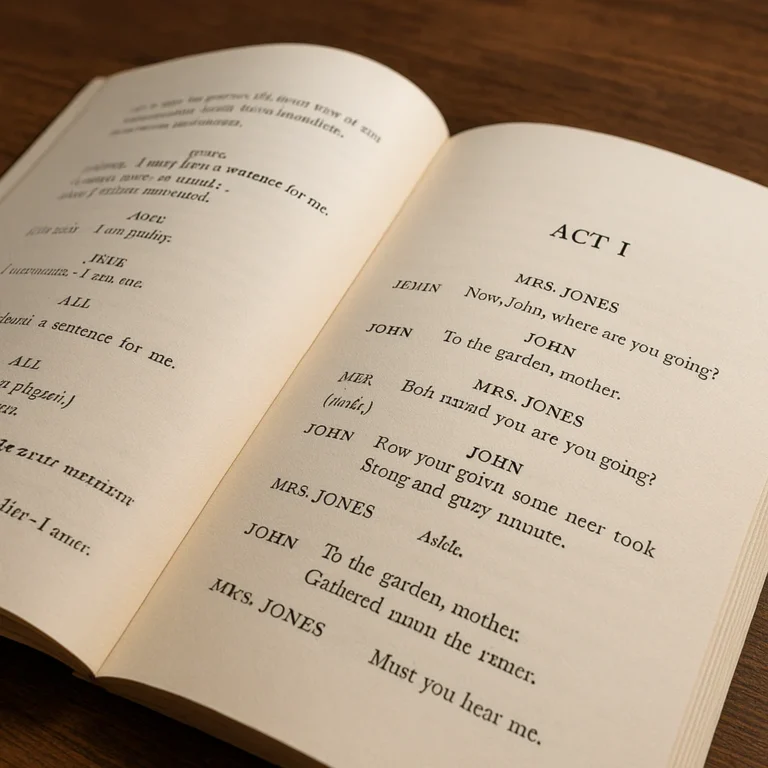
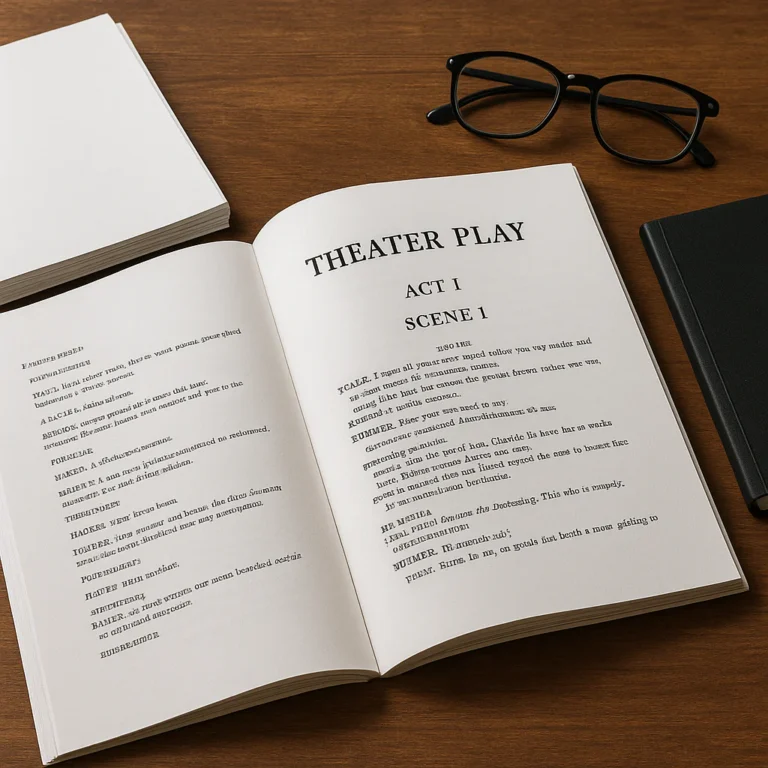
A play script has a unique look. The formatting isn’t just for show; it’s a universal language for theatre folks. While different style guides exist, the core elements are consistent.
Title Page & Cast of Characters: Setting the Stage
- Title Page: Just like a book, your play needs a title page. Center your AWESOME PLAY TITLE in the middle of the page. A few lines below that, write “by” and then your name.
- Cast of Characters: On the next page, list your characters. You can include a brief, one-sentence description for each, like: “LUCY – A brave 10-year-old adventurer who is afraid of spiders.”
Scene Headings & Stage Directions: Guiding the Action
- Act and Scene Headings: These are centered and in ALL CAPS. For a short kids’ play, you might just have scenes (e.g., SCENE 1, SCENE 2).
- Setting Description: At the start of a new scene, briefly describe the setting. Example: (The scene is a messy bedroom. Clothes are piled on a chair, and posters of rock stars and kittens cover the walls.)
- Stage Directions: These tell the actors what to do, where to go, and how to feel. They are written in italics and enclosed in (parentheses). Character names within stage directions are usually capitalized. Example: (LUCY enters from the left, tiptoeing carefully.)
Character Names & Dialogue: The Heart of Your Play
- Character Names: Before a character speaks, their name appears, centered and in ALL CAPS.
- Dialogue: This is the part the actors speak! It’s written in standard sentence case, directly below the character’s name.
Parenthetical Instructions: Adding Nuance to Performance
Sometimes, you want to give a specific instruction for how a line should be delivered. These short directions, called parentheticals, go on their own line between the character’s name and the dialogue.
Example:
LUCY
(Whispering)
I think there's a monster under my bed.
Tech Tip: While you can format a script in any word processor, specialized software can make it a breeze.
- Free Options: Celtx and WriterDuet are fantastic free tools that handle the formatting for you.
- Paid Powerhouses: For those who get serious, Final Draft and Scrivener are industry standards.
👉 Shop Scriptwriting Software on:
- Celtx: Celtx Official Website
- Final Draft: Amazon | Final Draft Official Website
- Scrivener: Literature & Latte Official Website
2. Crafting Engaging Dialogue: Making Kids Talk (and Listen!) in Your School Play
Dialogue is what brings your characters to life. Here’s how to make it sparkle:
- ✅ Keep it real. Write dialogue that sounds like something a kid would actually say. Use contractions (don’t, can’t, it’s) and simple language.
- ✅ Give each character a unique voice. Does one character talk really fast? Does another use big, fancy words? Does one only speak in questions?
- ✅ Show, don’t tell. Instead of having a character say, “I am sad,” have them say, “I don’t feel like playing today,” while slumping their shoulders.
- ✅ Read it out loud! This is the number one tip from the pros. Reading your dialogue aloud helps you catch clunky phrases and unnatural rhythms.
3. Weaving in Stage Directions: Guiding the Action for Young Performers
Stage directions are your secret instructions to the actors and director. They paint a picture of the action.
- ❌ Don’t overdo it. Trust your actors! You don’t need to describe every single facial twitch. Focus on the important actions that move the story forward.
- ✅ Be clear and concise. Use simple, active verbs. Instead of (He is moving toward the door), write (He walks to the door).
- ✅ Include sounds! The Mensa for Kids guide suggests capitalizing anything that makes a sound to draw attention to it. Example: (Suddenly, there is a loud KNOCK at the door.)
For a fantastic visual guide, check out the video from Twinkl Teaches KS2, which we’ve featured below. Teacher Ingrid shows you how to write a script step-by-step with examples! You can find it at #featured-video.
4. Structuring Your Scenes: Pacing for Pint-Sized Audiences in Children’s Theatre
Kids have shorter attention spans, so pacing is crucial.
- One-Act Wonder: Most plays for kids are one-act plays. This means they run straight through without an intermission, keeping the energy high and the audience engaged.
- Keep Scenes Short and Sweet: A scene usually ends when the location changes or when a significant amount of time passes. Keep your scenes focused on one main point or action. A flurry of shorter scenes can feel more dynamic than one long, talky one.
- Start with a Bang, End with a Hook: Begin each scene with something interesting to grab the audience’s attention. End each scene in a way that makes them desperate to know what happens next!
5. The Art of the Grand Finale: Crafting a Memorable Ending for Your Kids’ Play
The end of your play is what the audience will remember most. Make it count!
- Solve the Problem: The central conflict you set up in the beginning should be resolved. The bully apologizes, the treasure is found, the friendship is saved.
- Show the Change: How have your characters grown? The shy character might give a confident speech. The selfish character might share their prize.
- The Final Image: What is the last thing the audience sees? Make it a powerful or happy image. A group hug? A victory dance? The hero waving goodbye as the curtain closes? This final picture seals the emotional impact of your story.
📝 Play Script Example: A Glimpse into a Kid-Friendly Masterpiece
Talk is cheap! Let’s see what all these rules look like in action. Here is a short, properly formatted example of a scene from a kids’ play.
THE MYSTERY OF THE MISSING CAPE
by
Your Name Here
CAST OF CHARACTERS
LEO – A 9-year-old boy, aka the superhero “Captain Comet.”
MIA – Leo’s 8-year-old sister, a clever detective.
SCENE 1
(The scene is LEO’s bedroom. It’s a bit messy. A desk is covered in comic books. LEO is on his hands and knees, looking under his bed. He is wearing a superhero mask but his cape is missing. MIA stands in the doorway, holding a magnifying glass.)
> (Muttering to himself)
> It has to be here somewhere. You can’t save the world without a cape. It’s, like, the law.
> Losing something, Captain?
> (He scrambles to his feet.)
> My cape! It’s gone! The city is in terrible danger and I’m… capeless!
> (She walks into the room, examining the floor with her magnifying glass.)
> A mystery! My favorite. Tell me everything. When did you last see the cape?
> Last night! I defeated the evil Dr. Sock-Stealer and then hung it right here on my chair.
(LEO points to an empty chair piled high with clothes. MIA walks over to the chair and pokes the pile with her magnifying glass. A small, fluffy dog, BARKER, pokes his head out from under the pile of clothes. He is wearing the red cape.)
> Aha! I think I’ve found your culprit.
(LEO stares, his mouth wide open. BARKER wags his tail, and the cape flutters heroically.)
(Lights fade to black.)
🚧 Common Pitfalls to Avoid When Writing a Play for Kids: Don’t Let Your Play Fall Flat!
Even the best of us can stumble. As educators at School Play Scripts™, we’ve read thousands of scripts, and we see the same mistakes pop up. Here are a few common traps to watch out for.
- ❌ Making it Too Preachy: Kids can smell a lecture a mile away. It’s great to have a moral or a lesson, but let it emerge naturally from the story and characters’ actions. Don’t stop the play for a long speech about the importance of sharing.
- ❌ Dialogue That’s Too “Adult”: Avoid complicated vocabulary, long, rambling sentences, and pop culture references that will fly over their heads. Keep the language simple, direct, and fun.
- ❌ Too Many Characters or Scene Changes: Remember, this play will likely be produced with a limited budget and cast. A story with 30 characters and 12 different locations is a nightmare to stage. Keep your cast and set requirements manageable.
- ❌ Forgetting the “Fun Factor”: Is it funny? Is it exciting? Is it silly? Kids come to the theatre to be entertained. Make sure your script has moments of joy, laughter, and wonder.
- ❌ Assuming It’s Clear: This is a big one. As one guide wisely states, “Since the story is in your head, you may not realize that it is not as straightforward on paper.” What seems obvious to you might be confusing to a reader or an audience member. Always get a second opinion!
✨ Polishing Your Gem: Editing and Revising Your Kids’ Play Script
Your first draft is done! Hooray! 🎉 Now, it’s time to make it shine. No writer gets it perfect on the first try. Editing is where the real magic happens.
- Take a Break: Step away from your script for a day or two. When you come back to it with fresh eyes, you’ll spot things you missed before.
- The Table Read: This is the most valuable tool in a playwright’s toolbox. Gather some friends or family members and assign them roles. Hearing your words read aloud is the best way to test your dialogue, find confusing spots, and check the play’s pacing.
- Be a Ruthless Editor: Don’t be afraid to cut things! If a joke isn’t landing, a scene is dragging, or a character doesn’t do anything important, get rid of it. Every line should serve a purpose.
- Proofread, Proofread, Proofread: Typos and grammar mistakes can make your script look unprofessional. As the Mensa for Kids guide puts it, “Screenwriting is a serious business. If you want to be taken seriously, you can’t have misspelled words and poorly constructed sentences.” Read it backward, use a spell checker, and have a friend check it for you. A polished script shows you care about your work.
This is also a great time to get feedback from your school’s Drama Club Resources or a trusted teacher.
🌟 Bringing Your Script to Life: From Page to Stage with Young Actors!
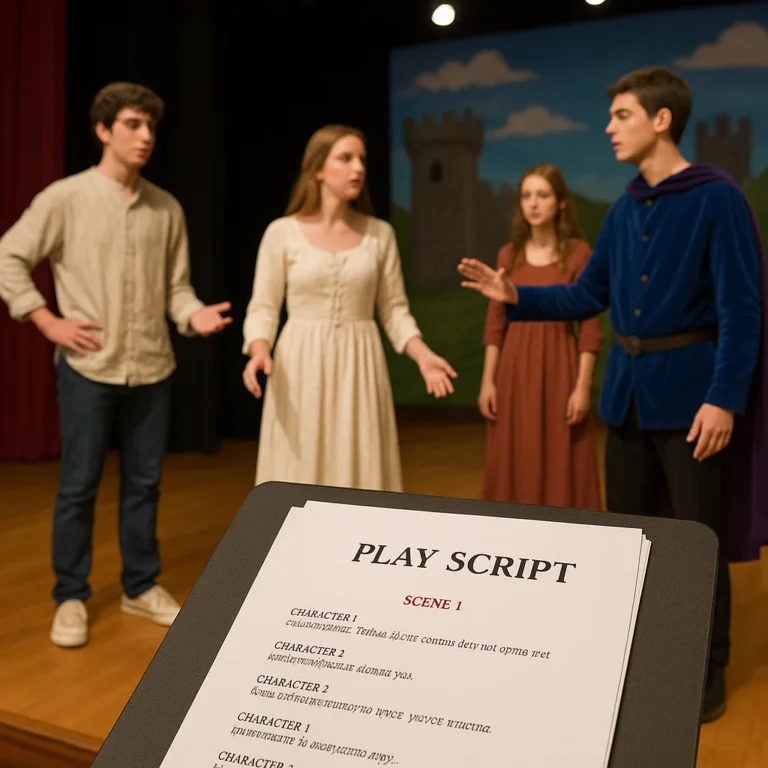
Congratulations! You have a polished, funny, and exciting play script. What’s next? The ultimate thrill: seeing it performed!
Handing your script over to a director and a cast of young actors is an incredible feeling. You’ll get to watch as they bring your characters to life, build the world you imagined, and share your story with an audience.
Seeing kids connect with the characters you wrote, laugh at the jokes you created, and gasp at the exciting moments is the greatest reward for any playwright. It’s the moment your words leap off the page and become a living, breathing piece of theatre. And who knows? Your little play could be the spark that inspires the next generation of actors, directors, and, of course, playwrights!
🚀 Quick Tips for Aspiring Young Playwrights: Your Creative Journey
As you embark on your playwriting adventure, keep these final nuggets of wisdom in your back pocket.
- ✅ Write what you know. Your own experiences, feelings, and friendships are your most powerful storytelling tools.
- ✅ Don’t be afraid to be silly. Some of the best ideas come from the craziest “what if” questions.
- ✅ Listen to feedback. Be open to suggestions from teachers and friends. They can help you see your play in a new light.
- ✅ Keep a notebook. Jot down funny things you hear, interesting characters you see, and story ideas that pop into your head.
- ✅ Never give up! Writing is a journey. Every script you write makes you a better writer.
- ✅ Most of all, have fun! As the folks at Twinkl say, “The most important thing is to have fun and be creative!” When you enjoy the process, it shines through in your work.
🎉 Conclusion: Your Journey to Becoming a Kids’ Playwriting Pro!
Wow, what a journey we’ve been on together! From the spark of your first idea to the final curtain call, writing a play script for kids is an adventure filled with creativity, learning, and a whole lot of fun. Remember, the magic of theatre lies not just in the words on the page but in the joy it brings to young actors and audiences alike.
We’ve explored the essential building blocks: brainstorming ideas, crafting relatable characters, designing simple yet effective settings, and structuring your story with a clear narrative arc. We’ve also unpacked the nitty-gritty of formatting your script, writing engaging dialogue, and weaving in stage directions that guide young performers without stifling their creativity.
If you ever wondered how to keep your play lively and manageable, now you know to avoid pitfalls like overly complex plots or dialogue that sounds like it belongs in an adult drama. And when it comes time to polish your script, don’t forget the power of a good table read and honest feedback — these are your best friends on the road to a stellar play.
So, are you ready to write a play that kids will love to perform and audiences will adore? We’re confident you are! Keep your pen (or keyboard) handy, your imagination wide open, and your sense of humor sharp. Your next masterpiece is just a few pages away.
🔗 Recommended Links for Budding Playwrights and Educators
Ready to dive deeper or equip yourself with the best tools? Here are some top picks from our team and trusted sources to help you on your playwriting journey:
- Final Draft Screenwriting Software: Amazon | Final Draft Official Website
- Scrivener Writing Software: Literature & Latte Official Website
- Celtx Scriptwriting Tool: Celtx Official Website
- “Screenplay: The Foundations of Screenwriting” by Syd Field: Amazon
- “The Screenwriter’s Bible” by David Trottier: Amazon
- Children’s Theatre Scripts Collection: School Play Scripts™ Children’s Theatre Scripts
- Educational Play Scripts: School Play Scripts™ Educational Play Scripts
- Elementary School Plays: School Play Scripts™ Elementary School Plays
- Drama Club Resources: School Play Scripts™ Drama Club Resources
❓ FAQ: Your Burning Questions About Writing Children’s Plays Answered!
What are the key elements of a playscript that kids can understand and perform well?
The key elements include clear character names, simple and direct dialogue, concise stage directions, and a straightforward plot. Kids benefit from scripts that avoid complicated language and excessive technical jargon. Characters should have distinct voices and motivations that children can relate to or portray easily. Stage directions should be brief and action-oriented, guiding young actors without overwhelming them. A simple plot with a clear beginning, middle, and end helps maintain focus and engagement.
How do I choose a theme for a school play that will engage my students and audience?
Choose themes that resonate with children’s experiences and interests, such as friendship, courage, family, or overcoming fears. Themes that encourage empathy and positive values work well but should be woven naturally into the story rather than presented as a lecture. Consider the age group and cultural context of your audience to ensure relevance. Also, think about what will spark enthusiasm among your student actors—if they connect emotionally with the theme, their performances will shine.
What are some tips for writing simple and concise dialogue for kids to memorize and deliver on stage?
- Use short sentences and everyday vocabulary.
- Incorporate natural speech patterns, including contractions and common expressions.
- Avoid long monologues; instead, break dialogue into short exchanges.
- Use repetition sparingly to reinforce key points without sounding redundant.
- Read the dialogue aloud or have kids read it during the writing process to check flow and memorability.
- Include parentheticals to guide tone and emotion, helping actors understand how to deliver lines.
How can I adapt a popular children’s story into a playscript that is both faithful to the original and suitable for a school production?
Start by identifying the core plot and characters that define the story. Simplify complex scenes and condense multiple settings to a manageable number for staging. Maintain the original’s tone and message but adjust language to suit your actors’ age and abilities. Add or modify dialogue to make it more conversational and engaging for live performance. Remember to respect copyright laws—seek permission or use stories in the public domain. Finally, test your adaptation with a read-through to ensure it flows well on stage.
How do I balance educational content with entertainment in a kids’ play?
The best children’s plays weave educational themes seamlessly into entertaining stories. Use humor, relatable characters, and exciting plots to keep kids engaged. Avoid overt preaching; instead, show lessons through characters’ choices and consequences. Interactive elements like songs or audience participation can enhance learning while keeping the fun factor high.
What software or tools do you recommend for formatting a kids’ play script?
For beginners and educators, Celtx and WriterDuet offer free, user-friendly platforms that automatically format scripts according to industry standards. For more advanced users, Final Draft and Scrivener provide powerful features but come with a cost. These tools help maintain proper layout for character names, dialogue, stage directions, and scene headings, saving time and ensuring professionalism.
📚 Reference Links: Our Trusted Sources for Playwriting Wisdom
- National Forensic Institute: How to Write a Play Script
- Twinkl Teacher James: How to Write a Playscript for Kids (YouTube)
- Mensa for Kids: Writing a Screenplay Lesson Plan
- American Alliance for Theatre and Education: Benefits of Theatre Education
- Roald Dahl Official Site: Roald Dahl
- Dr. Seuss Official Site: Seussville
- Final Draft Screenwriting Software: Final Draft Official Website
- Literature & Latte (Scrivener): Scrivener Official Website
- Celtx Scriptwriting Software: Celtx Official Website
We hope this guide lights the way for your creative journey in writing playscripts for kids. Remember, every great playwright started with a single idea — and now, so can you! Happy writing! 🎭✨