Support our educational content for free when you purchase through links on our site. Learn more
🎭 How to Write a Drama Script for School: The Ultimate 2026 Guide

Ever watched a school play where the dialogue sounded like a robot reading a dictionary? We have, and it’s painful! But here’s the secret: writing a drama script for school isn’t about being Shakespeare; it’s about understanding your audience, managing your budget, and letting your students shine. Whether you are a teacher looking for a fresh project or a student eager to make your mark, this guide walks you through every step of the process, from that first spark of an idea to the final bow.
We’ve seen it all in our years at School Play Scripts™. One year, a group of 4th graders wrote a play about a talking cafeteria tray that saved the school from a “pizza apocalypse.” It was chaotic, hilarious, and utterly magical. That’s the power of student creativity when given the right structure. In this article, we’ll reveal 10 inspiring concepts for elementary students, break down the Three-Act Structure so it’s easy to follow, and show you how to adapt your script for limited budgets and large casts.
Key Takeaways
- Structure is King: Master the Three-Act Structure (Setup, Confrontation, Resolution) to keep your story engaging and easy to follow.
- Character Depth: Create relatable characters with clear goals and flaws, avoiding one-dimensional stereotypes.
- Practicality First: Design your script with school constraints in mind, focusing on minimal props, flexible casting, and simple staging.
- Dialogue Matters: Write natural-sounding dialogue that avoids “on-the-nose” exposition and encourages actor interpretation.
- Iterate and Polish: Use read-throughs and feedback loops to refine your draft before the first rehearsal.
Table of Contents
- ⚡️ Quick Tips and Facts
- 🎭 Background: The Evolution of School Drama Scripts
- 📝 Step 1: Brainstorming Your Core Drama Concept and Theme
- 👥 Step 2: Crafting Memorable Characters for the School Stage
- 🗣️ Step 3: Writing Dialogue That Sounds Real, Not Robotic
- 🎬 Step 4: Structuring Your Plot with a Clear Beginning, Middle, and End
- 🏫 Step 5: Adapting Your Script for School Resources and Constraints
- 🎨 Step 6: Formatting Your Script Like a Pro (Stage Directions & Layout)
- 🛠️ Step 7: Revising, Editing, and Polishing Your Draft
- 🎭 Step 8: From Page to Stage: Rehearsal Tips for Student Actors
- 📚 10 Inspiring Short Drama Club Scripts for Elementary School Students
- 💡 Common Pitfalls to Avoid When Writing for Young Audiences
- 🔍 Quick Tips and Facts: The Do’s and Don’ts of Student Playwriting
- 🏆 Conclusion: Your Script is Ready for the Spotlight!
- 🔗 Recommended Links
- ❓ FAQ: Frequently Asked Questions About Writing School Drama Scripts
- 📖 Reference Links
⚡️ Quick Tips and Facts
Before we dive into the deep end of the creative pool, let’s splash around with some essential truths that every budding playwright needs to know. Writing a drama script for school isn’t just about making up cool lines; it’s about structure, timing, and understanding your audience.
Here are the non-negotiables for school play success:
| Fact | Why It Matters |
|---|---|
| Dialogue takes 3x longer to speak than to read | A 5-page script might only be a 10-minute play. Don’t write a novel! |
| Stage directions should be minimal | Actors need to breathe life into the role, not follow a robot manual. |
| The “Three-Act Structure” is your best friend | Beginning (Setup), Middle (Conflict), End (Resolution) keeps the story moving. |
| Cast size flexibility is key | School plays often need to accommodate 10, 20, or 50 students. Write roles that can be doubled or split. |
| Props must be “school-safe” | No real fire, no dangerous weapons, and nothing that requires a budget of $5,0. |
Pro Tip: If you find yourself writing a paragraph of description for a character’s outfit, stop! Put that energy into a line of dialogue that reveals their personality instead.
For more inspiration on how to spark that initial creative fire, check out our guide on 🎭 15 Best Play Scripts for Kids to Spark Creativity in 2026.
🎭 Background: The Evolution of School Drama Scripts
You might think writing a play is a modern invention, but the roots of school drama go back centuries. In ancient Greece, drama was a civic duty, not just a classroom activity. Fast forward to the 19th century, and schools began using plays as a tool for moral instruction and language development.
Today, the landscape has shifted dramatically. We’ve moved from rigid, didactic scripts to student-centered storytelling. Modern school drama scripts focus on:
- Inclusivity: Ensuring every student, regardless of ability or background, has a voice.
- Relevance: Tackling themes like bullying, climate change, and identity that resonate with Gen Z.
- Practicality: Designed for limited budgets, small stages, and short rehearsal times.
Why does this matter to you? Because understanding why we write these scripts helps you write better ones. If you’re writing for an elementary school, the goal is often engagement and confidence building. For high schoolers, it’s about complexity and social commentary.
Did you know? The first recorded school play in the US was performed at Harvard in 164, titled “The Tragedy of the King of France.” It was written by a student!
📝 Step 1: Brainstorming Your Core Drama Concept and Theme
So, you have a blank page. Terrifying, right? Don’t panic. Every great script starts with a spark. But how do you turn a spark into a bonfire?
Finding the “What If?”
The best school plays start with a simple question.
- What if the school mascot came to life?
- What if the cafeteria food was actually magic?
- What if the history teacher was a time traveler?
Defining Your Theme
A theme is the heart of your play. It’s the message you want the audience to take home.
- Friendship: “True friends stick together.”
- Courage: “It’s okay to be scared, but you must act anyway.”
- Honesty: “The truth always comes out.”
Crucial Insight: Avoid clichés! Instead of “Be yourself,” try “Being yourself is messy, but it’s worth it.”
Brainstorming Techniques
- Mind Mapping: Write your central idea in the middle of a page and branch out with characters, settings, and conflicts.
- The “Yes, And…” Game: Borrowed from improv, this technique helps build ideas without judgment.
- Audience Analysis: Who is watching? If it’s 1st graders, keep it visual and fast-paced. If it’s 10th graders, they can handle nuance and irony.
Wait, what about the plot? Don’t worry, we’ll get to the nitty-gritty of plot structure in Step 4. Right now, just focus on the idea.
👥 Step 2: Crafting Memorable Characters for the School Stage
Characters are the engine of your play. Without them, you just have a bunch of people standing on a stage saying words.
The “Three-Part” Character Formula
Every character needs:
- A Goal: What do they want? (e.g., To win the talent show, to hide a secret).
- An Obstacle: What’s stopping them? (e.g., A rival, a fear of failure, a strict teacher).
- A Flaw: What makes them human? (e.g., They are too arrogant, too shy, or too honest).
Casting Considerations
When writing for school, you must be strategic.
- Gender Neutrality: Can a role be played by any gender? This helps if you have a surplus of boys or girls.
- Age Flexibility: Can a 6th grader play a 12th grader? (Yes, with the right costume and attitude!).
- Ensemble Roles: Not every student needs a monologue. Create strong ensemble roles where the group speaks together or reacts as a chorus.
Character Archetypes vs. Real People
While archetypes (The Jock, The Nerd, The Rebel) are easy to write, real people are better.
- The Jock who secretly loves poetry.
- The Nerd who is actually the class prankster.
- The Rebel who is terrified of disappointing their parents.
Teacher’s Note: We once had a student write a play where the “villain” was actually just misunderstood. The audience cried! That’s the power of complex characters.
🗣️ Step 3: Writing Dialogue That Sounds Real, Not Robotic
This is where many student writers stumble. They write dialogue that sounds like a textbook, not a conversation.
The “Subtext” Secret
Subtext is what characters mean but don’t say.
- Robotic: “I am angry at you because you stole my pencil.”
- Real: “Nice pencil. Did you find it in the lost and found, or did you just take it?”
Tips for Natural Dialogue
- Use Contractions: “I am” sounds stiff. “I’m” sounds human.
- Interrupt Each Other: Real people talk over one another. Use dashes (—) to show interruptions.
- Avoid “On the Nose” Dialogue: Don’t have characters explain the plot. Let the audience figure it out.
- Read It Aloud: If you stumble over a line, your actors will too. Rewrite it.
The “Economy of Language” Rule
As noted in the first YouTube video on this topic, “When it comes to dialogue, less is definitely more.” A slim script allows actors to interpret the subtext. If a character can say “I’m fine” with a trembling voice, don’t write “I am not fine, I am terrified.”
Challenge: Try writing a scene where two characters are arguing about the weather, but they are actually arguing about their friendship. No mention of friendship allowed!
🎬 Step 4: Structuring Your Plot with a Clear Beginning, Middle, and End
A story without structure is like a rollercoaster with no tracks. It’s just a mess. We need the Three-Act Structure.
Act 1: The Setup (The Hook)
- Introduce the characters and their normal world.
- Inciting Incident: Something happens that disrupts the status quo. (e.g., The school play is cancelled, or a mystery letter arrives).
- Goal: The protagonist decides to do something about it.
Act 2: The Confrontation (The Meat)
- Rising Action: Obstacles get harder. The hero tries and fails.
- Midpoint: A major revelation or twist.
- All Is Lost: The hero hits rock bottom. It looks like they will fail.
Act 3: The Resolution (The Payoff)
- Climax: The final showdown. The hero uses what they learned to overcome the obstacle.
- Falling Action: The dust settles.
- Resolution: The new normal. How has the character changed?
Pacing Tips
- Keep scenes short: 2-3 minutes per scene is ideal for school plays.
- End on a cliffhanger: If you have intermission, end Act 1 with a big question.
- Cut the fluff: If a scene doesn’t move the plot or develop a character, cut it.
Question: What happens if your play runs too long? We’ll discuss timing and constraints in the next section!
🏫 Step 5: Adapting Your Script for School Resources and Constraints
Here is the reality check: You don’t have a million-dollar budget. You have a gym floor, a few cardboard boxes, and a teacher named Mr. Henderson who is great at painting backdrops.
Budget-Friendly Writing
- One-Location Plays: Set your entire play in the school cafeteria or a single classroom. It saves on set changes.
- Minimal Props: If a character needs a “magic wand,” can it be a ruler? If they need a “sword,” can it be a rolled-up newspaper?
- Costume Clues: Instead of full period costumes, use one key item (a hat, a cape, a tie) to signify a character’s role.
Technical Constraints
- Lighting: Can your school do a “blackout”? If not, write scenes that work in full light.
- Sound: Avoid complex sound effects. Use live sound (clapping, stomping, singing) instead of recorded tracks if the tech crew is inexperienced.
- Cast Size: Write “doubling” options. If you have 30 students but only 10 roles, write 20 ensemble lines that can be shared.
Accessibility
- Mobility: Ensure characters who use wheelchairs or have mobility issues have roles that fit their abilities naturally.
- Sensory: Avoid flashing lights or sudden loud noises if you have students with sensory processing sensitivities.
Real Story: We once saw a play set entirely in a “time capsule” (a cardboard box). The creativity was off the charts because the constraints forced the writers to be innovative.
🎨 Step 6: Formatting Your Script Like a Pro (Stage Directions & Layout)
Formatting might seem boring, but it’s the difference between a script that gets produced and one that gets thrown in the trash. Professional formatting ensures clarity.
The Standard Format
- Font: Courier New, 12-point. (It’s the industry standard for a reason: 1 page = 1 minute of stage time).
- Margins: 1.5″ left, 1″ right, 1″ top, 1″ bottom.
- Character Names: Centered and capitalized above dialogue.
- Dialogue: Left-aligned, indented slightly from the name.
- Stage Directions: Italicized, in parentheses, indented.
What to Include in Stage Directions
- Essential Action: “John enters,” “She drops the letter.”
- Tone: “Said angrily,” “Whispering.”
- What NOT to Include: Don’t direct the actor’s internal thoughts or micro-expressions. Let them decide how to say it.
Video Insight: As highlighted in the featured video on script formatting, “Limit stage directions to the bare necessities.” Over-directing stifles the actor’s creativity.
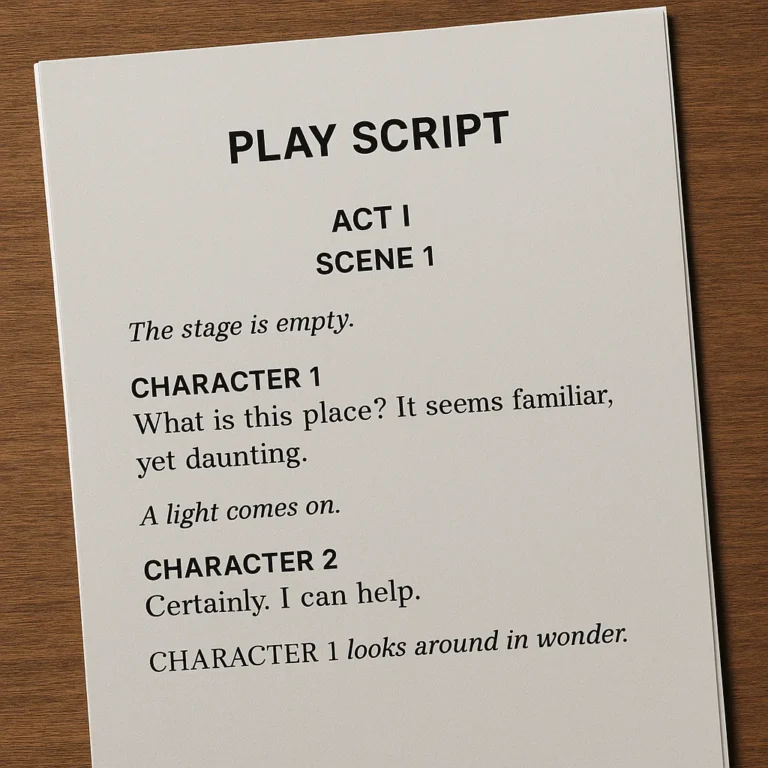
Sample Layout
 JOHN
 (looking at the letter)
 I can't believe this.

 MARY
 Believe it. It's the truth.

 John crumples the letter and throws it
 into the trash can.
🛠️ Step 7: Revising, Editing, and Polishing Your Draft
Your first draft is just the clay. Now you have to sculpt it.
The “Cool Down” Period
Put your script away for a few days. When you come back, you’ll see mistakes you missed before.
The Read-Through
This is the most important step. Gather your friends or classmates and have them read the script aloud.
- Listen for awkward phrasing.
- Time the scenes.
- Ask for honest feedback. “Was that funny?” “Did you understand what was happening?”
Common Fixes
- Cuting: If a line doesn’t land, cut it.
- Clarifying: If the audience is confused, add a line of dialogue or a stage direction.
- Tightening: Shorten long speeches.
Pro Tip: If a character says “As you know, Bob, we are in 5th grade,” delete it. That’s “As You Know, Bob” syndrome, and it’s a cardinal sin of playwriting.
🎭 Step 8: From Page to Stage: Rehearsal Tips for Student Actors
You’ve written the script. Now what? The script is a blueprint, but the building happens in rehearsal.
Working with Directors
- Be Open: If the director suggests a change, try it! You might like it better.
- Ask Questions: If a line doesn’t make sense, ask the writer (you!) or the director.
Rehearsal Techniques
- Table Read: Read the script sitting down to focus on the words.
- Blocking: Figure out where everyone moves.
- Run-Throughs: Perform the whole play without stopping.
- Tech Rehearsal: Add lights, sound, and costumes.
The Final Polish
- Dress Rehearsal: Perform in full costume.
- Audience Feedback: Watch the audience. If they are laughing, keep it. If they are checking their phones, cut it.
Remember: The script is not finished until the audience sees it. Be ready to make changes even on opening night!
📚 10 Inspiring Short Drama Club Scripts for Elementary School Students
Looking for inspiration? Here are 10 themes and concepts that have worked wonders in elementary schools. These are perfect for Drama Club Resources and can be adapted to fit your specific cast.
- The Mystery of the Missing Lunch: A detective story set in the cafeteria.
- The Time-Traveling Recess: Kids get stuck in different historical eras during recess.
- The Robot Who Wanted to Feel: A robot learns about emotions through a school play.
- The Great Garden Heist: Animals in the school garden try to steal the prize pumpkin.
- Superheroes in the Library: Kids discover they have powers when they read books.
- The Talking Backpack: A backpack gives advice to a nervous student.
- The Haunted School Bus: A spooky but funny adventure on a field trip.
- The Magic Art Class: Paintings come to life and cause chaos.
- The Alien Exchange Student: An alien tries to fit in at a human school.
- The Secret of the Old Gym: A ghost from the 1950s helps the team win the game.
Need more ideas? Explore our collection of Elementary School Plays for full scripts you can use or adapt.
💡 Common Pitfalls to Avoid When Writing for Young Audiences
Even the best writers make mistakes. Here are the traps to avoid.
1. Talking Down to Kids
Kids are smart. Don’t simplify the language too much. They can handle complex emotions if they are presented honestly.
2. Too Many Characters
It’s tempting to give every student a line, but too many characters confuse the audience. Focus on a core group and use the ensemble for background.
3. Ignoring the Setting
If your play is set in a school, make sure it fels like a school. Use school-specific slang and scenarios.
4. The “Happy Ending” Trap
Not every problem needs a perfect solution. Sometimes, a “good enough” ending is more realistic and satisfying.
5. Over-Reliance on Props
If the play stops because a prop breaks, the show is over. Keep it simple.
Final Thought: The best school plays are the ones where the kids have fun. If you’re having fun writing it, they’ll have fun performing it!
🔍 Quick Tips and Facts: The Do’s and Don’ts of Student Playwriting
Let’s recap with a quick checklist to ensure your script is stage-ready.
✅ The Do’s
- Do write dialogue that sounds like real kids.
- Do keep stage directions simple and actionable.
- Do consider your budget and cast size.
- Do read your script aloud during the editing process.
- Do leave room for actor interpretation.
❌ The Don’ts
- Don’t write long monologues for young actors.
- Don’t use complex technical requirements.
- Don’t ignore the “Three-Act Structure.”
- Don’t be afraid to cut your favorite lines if they don’t serve the story.
- Don’t forget to have fun!
Ready to write? Grab your pen (or keyboard) and start your masterpiece today!
🏆 Conclusion: Your Script is Ready for the Spotlight!
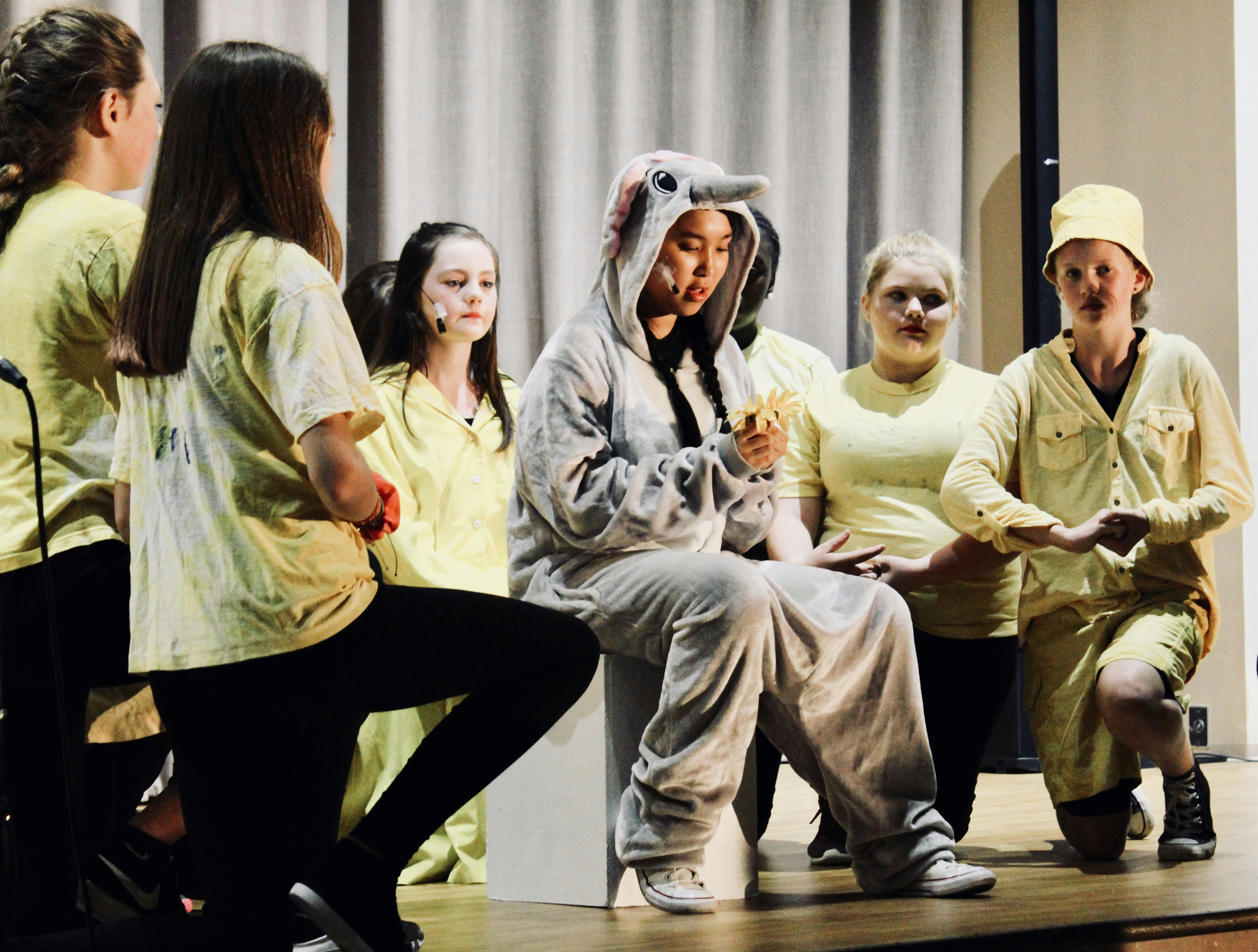
So, there you have it! From the spark of an idea to the final polish, you now have the tools to write a drama script for school that will captivate your audience and showcase the talents of your students.
Remember, the journey of a thousand miles begins with a single line of dialogue. Don’t let the fear of the blank page stop you. Embrace the messiness of the first draft, refine your characters, and trust in the power of storytelling.
Whether you are writing a short skit for a 5th-grade assembly or a full-length play for the spring festival, the most important ingredient is heart. Your students will pour their energy into your words, and the result will be something magical.
Final Question: What story will you tell? The curtain is rising, and the world is waiting to hear your voice.
🔗 Recommended Links
Ready to get started? Here are some resources to help you find the perfect script or tools for your production.
🎭 Find the Perfect Script
- Educational Play Scripts: Browse our collection of educational scripts
- Elementary School Plays: Perfect for younger students
- Children’s Theatre Scripts: Adventures for all ages
- Drama Club Resources: Tips and tools for directors
- English Learning Drama Scripts: Great for ESL students
🛒 Essential Tools for Playwrights
- Scriptwriting Software:
Final Draft: Search on Amazon | Final Draft Official
Celtx: Search on Amazon | Celtx Official - Playwriting Books:
The Playwright’s Guidebook by Stuart Spencer: Search on Amazon
Writing the Short Film by Patricia Cooper: Search on Amazon
❓ FAQ: Frequently Asked Questions About Writing School Drama Scripts
What are the essential elements of a school drama script?
A solid school drama script needs three main elements:
- A Clear Plot: A beginning, middle, and end that keeps the audience engaged.
- Relatable Characters: Students who face challenges the audience understands.
- Practicality: A script that fits within the school’s budget, cast size, and time limits.
Without these, even the most beautiful dialogue won’t save the play.
Read more about “🎭 15 Best Play Scripts for Kids to Spark Creativity in 2026”
How long should a script be for a middle school play?
For middle school, 15 to 30 minutes is usually the sweet spot.
- Shorter (10-15 mins): Great for assemblies or talent shows.
- Medium (20-30 mins): Perfect for a standalone performance.
- Longer (45+ mins): Usually reserved for full-length productions with intermission.
Remember, 1 page of script equals roughly 1 minute of stage time.
Read more about “🎭 Can I Adapt a Book into a School Play Script? (2026 Guide)”
Where can I find free drama scripts for students?
There are many places to find free scripts:
- School Play Scripts™: We offer a wide range of free and premium scripts for all ages.
- Project Gutenberg: Great for public domain classics.
- Drama Notebook: A community resource for teachers.
- Local Libraries: Often have collections of play scripts.
Tip: Always check the licensing requirements before performing a script publicly.
Read more about “🎭 15 Best School Play Scripts for Middle School Students (2026)”
How do I format a script for a school production?
Use Courier New, 12-point font.
- Character Names: Centered and capitalized.
- Dialogue: Left-aligned.
- Stage Directions: Italicized and in parentheses.
- Scene Headings: Bold and capitalized (e.g., SCENE 1: THE CLASSROOM).
This format ensures that everyone from the director to the stagehand can read it easily.
Read more about “💸 How Much Does It Cost to License a School Play Script? (2026 Guide)”
📖 Reference Links
- National Endowment for the Arts: Theater Education Resources
- Drama Notebook: Free Scripts and Resources
- The Playwrights’ Center: Resources for Writers
- Community Theatre Resource Group: Short drama club scripts for elementary school students
- Final Draft: Script Formatting Standards