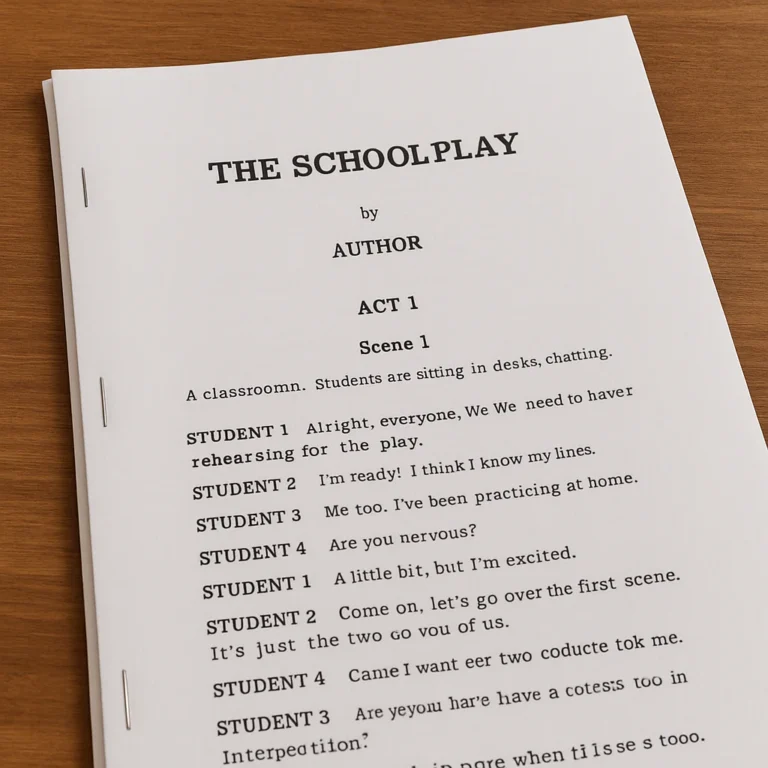
Support our educational content for free when you purchase through links on our site. Learn more
15 Essential Elements of a Play Script You Must Know (2026) 🎭

Have you ever wondered what truly makes a play script come alive on stage? Beyond just dialogue, a play script is a carefully crafted blueprint that guides actors, directors, and designers through a seamless theatrical experience. From the ancient Greeks scribbling on papyrus to modern playwrights typing on Final Draft, the elements of a play script have evolved but remain the backbone of every successful production.
In this comprehensive guide, we break down the 15 essential elements every playwright, drama teacher, or student should master to write scripts that captivate audiences and run smoothly backstage. Curious about why formatting matters so much? Or how to balance stage directions without over-directing? We’ve got you covered with insider tips, expert advice, and even software recommendations to make your writing process a breeze. Stick around to discover the secret “silent narrator” of your play and how to avoid the most common pitfalls that trip up new writers!
Key Takeaways
- Master the 15 core elements of a play script, from the title page to the final curtain, to ensure clarity and professionalism.
- Formatting matters: Using industry-standard margins and fonts like 12-point Courier helps actors and stage managers navigate your script effortlessly.
- Stage directions are your silent narrator: Use them sparingly but purposefully to guide actors without stifling creativity.
- Dialogue drives the story: Craft distinct voices and natural rhythms to keep your audience hooked.
- Choose the right tools: Software like Final Draft 13 and Scrivener can save you hours by automating formatting and organizing your work.
- Avoid common pitfalls: Over-directing, inconsistent character names, and ignoring production constraints can derail your script’s success.
Ready to write a script that shines on stage? Let’s dive into each element and unlock the secrets to theatrical storytelling mastery!
Table of Contents
- ⚡️ Quick Tips and Facts
- 🎭 From Papyrus to PDF: The Evolution of the Playwright’s Blueprint
- 📜 15 Essential Elements of a Play Script You Need to Master
- 1. The Title Page: Your Script’s First Impression
- 2. Dramatis Personae: The Cast of Characters
- 3. Setting and Time: Grounding Your Audience
- 4. Act and Scene Headings: The Structural Skeleton
- 5. Sluglines (Scene Headings): Where and When
- 6. Stage Directions: The Silent Narrator
- 7. Character Names: Who is Speaking?
- 8. Dialogue: The Heartbeat of the Play
- 9. Parentheticals: Adding Emotional Flavor
- 10. Extensions (O.S. and V.O.): Beyond the Visible
- 11. Transitions: Moving the Magic Along
- 12. Monologues and Soliloquies: Deep Dives into the Soul
- 13. Lighting and Sound Cues: The Sensory Layer
- 14. Intermission Cues: Giving the Audience a Breather
- 15. The Final Curtain: “End of Play”
- 📏 Industry Standard Formatting: The “Golden Rules”
- 💻 Tools of the Trade: Software for Modern Playwrights
- ⚠️ Common Scriptwriting Pitfalls to Avoid
- Conclusion
- Recommended Links
- FAQ
- Reference Links
⚡️ Quick Tips and Facts
Before we dive into the nitty-gritty of stagecraft, here’s a “cheat sheet” to get your creative juices flowing! 🖋️
- Font is King: Always use 12-point Courier. Why? It’s a fixed-pitch font, meaning one page of script roughly equals one minute of stage time. ⏱️
- White Space is Your Friend: Don’t crowd the page. A script should be easy for an actor to read under dim backstage lights.
- Present Tense Only: Plays happen in the “now.” Use “John walks,” not “John walked.” ✅
- Show, Don’t Just Tell: Stage directions should describe actions, not internal thoughts. If an actor can’t “act” it, don’t write it! ❌
- The “Rule of Three”: Many great plays utilize a three-act structure (Setup, Confrontation, Resolution).
- Fun Fact: The term “Slugline” comes from the old days of hot-metal typesetting!
🎭 From Papyrus to PDF: The Evolution of the Playwright’s Blueprint
Ever wondered why we don’t just write plays like novels? We can thank the ancient Greeks for that! Back in the day of Sophocles and Aeschylus, scripts were more like epic poems. However, as theater moved from religious festivals to the Globe Theatre with William Shakespeare, and eventually to the bright lights of Broadway, the “blueprint” had to become more precise.
In the early 20th century, the “Samuel French” and “Dramatists Play Service” styles became the gold standard. We transitioned from flowery prose to a technical document designed for a massive team: directors, actors, lighting designers, and stage managers. Today, whether you’re writing a 10-minute school play or the next Hamilton, the elements of a play script serve as the universal language of the theater. 🌍
📜 15 Essential Elements of a Play Script You Need to Master
If you want your script to be taken seriously by producers (or even just your drama teacher!), you need to include these 15 core elements. Let’s break them down!
1. The Title Page: Your Script’s First Impression
The title page is the “front door” of your play. It should be clean and professional.
- Center-aligned: Title (in ALL CAPS), followed by “By [Your Name]”.
- Bottom-right: Your contact information or agent’s details.
- Bottom-left: (Optional) Copyright information.
2. Dramatis Personae: The Cast of Characters
This is a list of every character in the play. We recommend including a brief description for each.
- Example: ARTHUR (60s): A weary king with a penchant for dramatic exits.
- Pro Tip: List them in order of appearance or importance.
3. Setting and Time: Grounding Your Audience
Before the first line of dialogue, tell us where we are.
- Place: “A dusty attic in Victorian London.”
- Time: “Mid-winter, 1884.”
4. Act and Scene Headings: The Structural Skeleton
Plays are divided into Acts (large chunks) and Scenes (smaller segments within acts).
- Format: ACT ONE, SCENE ONE (usually centered and bolded).
5. Sluglines (Scene Headings): Where and When
Borrowed from screenwriting, these tell the production team if we are inside (INT.) or outside (EXT.).
- Example: INT. CLASSROOM – DAY.
6. Stage Directions: The Silent Narrator
These are the instructions for movement and business. In a play script, these are usually indented or italicized.
- Action: (He slams the book shut and storms toward the window.)
- Note: Keep them brief. Let the actors do their jobs!
7. Character Names: Who is Speaking?
When a character speaks, their name appears in ALL CAPS and is centered on the page. This makes it easy for actors to find their lines during a “table read.”
8. Dialogue: The Heartbeat of the Play
The words spoken by the characters. Dialogue is centered under the character’s name but with wider margins than the name itself. 🗣️
9. Parentheticals: Adding Emotional Flavor
Also known as “wrylies,” these are short instructions inside dialogue to indicate how a line is said.
- Example: SARAH (sarcastically) Oh, because that worked so well last time.
10. Extensions (O.S. and V.O.): Beyond the Visible
- O.S. (Off-Stage): The character is in the scene’s world but not visible to the audience.
- V.O. (Voice-Over): A recorded voice or a character’s internal monologue.
11. Transitions: Moving the Magic Along
Common in modern scripts to indicate how one scene ends and another begins.
- BLACKOUT
- FADE OUT
- CURTAIN
12. Monologues and Soliloquies: Deep Dives into the Soul
A monologue is a long speech to another character. A soliloquy is a character speaking their inner thoughts aloud to the audience (think Hamlet). These are the “power moments” for actors!
13. Lighting and Sound Cues: The Sensory Layer
While often left to the designers, a playwright can suggest crucial cues.
- Example: [A sharp CRACK of thunder interrupts her.]
14. Intermission Cues: Giving the Audience a Breather
If your play is long, you must indicate where the break happens.
- Center: [INTERMISSION]
15. The Final Curtain: “End of Play”
Never leave them guessing! Always end with a centered END OF PLAY or CURTAIN.
📏 Industry Standard Formatting: The “Golden Rules”
We know, we know—formatting sounds boring. But in the theater world, it’s the difference between looking like a pro and looking like an amateur. Here is a quick reference table for your margins:
| Element | Alignment | Margin (Inches) |
|---|---|---|
| Character Name | Centered | 3.5″ to 3.7″ |
| Dialogue | Centered Block | 2.5″ to 2.5″ |
| Stage Directions | Indented/Italicized | 2.25″ to 2.25″ |
| Parentheticals | Centered | 3.0″ to 3.0″ |
| Scene Headings | Left-aligned | 1.5″ |
💻 Tools of the Trade: Software for Modern Playwrights
You could use Microsoft Word, but why torture yourself with manual margins? We’ve used these tools and highly recommend them:
- Final Draft: The industry standard. It’s pricey, but it does the formatting for you. Check it out at https://www.amazon.com/Final-Draft-13-Screenwriting-Software/dp/B0CW19Y98X?tag=bestbrands0a9-20.
- Celtx: A great cloud-based option for schools and collaborative teams.
- Scrivener: Excellent for those who like to organize their research and character bios alongside their script. Find it here: https://www.amazon.com/Literature-Latte-Scrivener-3-Download/dp/B077KWKHJ3.
- WriterDuet: Perfect for real-time collaboration if you’re co-writing with a partner.
⚠️ Common Scriptwriting Pitfalls to Avoid
We’ve read thousands of scripts at School Play Scripts™, and we see the same “oopsies” all the time. Avoid these to keep your director happy!
- ❌ Over-Directing: Don’t tell the actor to “walk three steps left, then sigh, then blink.” Trust the performers!
- ❌ The “Wall of Text”: If a character speaks for three pages straight without a break, your audience might fall asleep. Break it up with action.
- ❌ Ignoring the Budget: If your school play requires a fire-breathing dragon and a sinking ship, you might want to rethink your “elements.” 🐉
- ✅ Consistency: If you call a character “ROBERT” on page 1, don’t call him “BOB” on page 20 in the character headings.
Conclusion

Writing a play is like building a house. The elements of a play script are your bricks and mortar. Without a solid title page, clear stage directions, and properly formatted dialogue, your “house” might just come tumbling down during opening night! 🎭
Remember, the script is a living document. It’s meant to be spoken, shouted, whispered, and performed. So, grab your copy of The Screenwriter’s Bible (which has a fantastic section on play formatting too!), fire up your software, and start writing. We can’t wait to see your name in lights!
Recommended Links
- Dramatists Guild of America – The professional association for playwrights.
- Playwrights’ Center – Resources and grants for writers.
- The Screenwriter’s Bible on Amazon – A must-have for any scriptwriter.
FAQ
Q: Can I use bold text in my dialogue? A: Generally, no. If you want to emphasize a word, use italics. Bold is usually reserved for Act/Scene headings.
Q: How long should a one-act play be? A: Usually between 20 and 60 minutes. In script pages, that’s roughly 20 to 60 pages!
Q: Do I need to include lighting cues? A: Only if they are essential to the plot (e.g., “The lights go out, and a scream is heard”). Otherwise, leave it to the lighting designer.
Q: What is the difference between a screenplay and a play script? A: Screenplays focus on what the camera sees (Close-ups, Pan to), while play scripts focus on what the audience sees from their seats and the physical movement on a stage.
Reference Links
- Samuel French Formatting Guide
- BBC Writersroom – Script Library
- Academy of Motion Picture Arts and Sciences – Formatting Tips
⚡️ Quick Tips and Facts
Before we dive into the nitty-gritty of stagecraft, here’s a “cheat sheet” to get your creative juices flowing! 🖋️ If you are just starting out, you might want to check out our related guide on What Are the 5 Basic Elements of a Play Script? 🎭 (2026 Guide), which covers the absolute essentials for beginners.
- Font is King: Always use 12-point Courier. Why? It’s a fixed-pitch font, meaning one page of script roughly equals one minute of stage time. ⏱️
- White Space is Your Friend: Don’t crowd the page. A script should be easy for an actor to read under dim backstage lights.
- Present Tense Only: Plays happen in the “now.” Use “John walks,” not “John walked.” ✅
- Show, Don’t Just Tell: Stage directions should describe actions, not internal thoughts. If an actor can’t “act” it, don’t write it! ❌
- The “Rule of Three”: Many great plays utilize a three-act structure (Setup, Confrontation, Resolution).
- Fun Fact: The term “Slugline” comes from the old days of hot-metal typesetting!
🎭 From Papyrus to PDF: The Evolution of the Playwright’s Blueprint
Ever wondered why we don’t just write plays like novels? We can thank the ancient Greeks for that! Back in the day of Sophocles and Aeschylus, scripts were more like epic poems. However, as theater moved from religious festivals to the Globe Theatre with William Shakespeare, and eventually to the bright lights of Broadway, the “blueprint” had to become more precise.
In the early 20th century, the “Samuel French” and “Dramatists Play Service” styles became the gold standard. We transitioned from flowery prose to a technical document designed for a massive team: directors, actors, lighting designers, and stage managers. As noted in our featured video, a play script acts as a blueprint for a theatrical performance, outlining every essential element for its successful execution. Today, whether you’re writing a 10-minute Elementary School Play or the next Hamilton, the elements of a play script serve as the universal language of the theater. 🌍
📜 15 Essential Elements of a Play Script You Need to Master
If you want your script to be taken seriously by producers (or even just your drama teacher!), you need to include these 15 core elements. While some sources like Juicy English focus on the basic 8, we believe a professional-grade script requires more depth to be truly “stage-ready.”
1. The Title Page: Your Script’s First Impression
The title page is the “front door” of your play. It should be clean and professional.
- Center-aligned: Title (in ALL CAPS), followed by “By [Your Name]”.
- Bottom-right: Your contact information or agent’s details.
- Bottom-left: (Optional) Copyright information.
2. Dramatis Personae: The Cast of Characters
This is a list of every character in the play. We recommend including a brief description for each.
- Example: ARTHUR (60s): A weary king with a penchant for dramatic exits.
- Pro Tip: List them in order of appearance or importance. This is vital for Children’s Theatre Scripts where casting needs to be clear for teachers.
3. Setting and Time: Grounding Your Audience
Before the first line of dialogue, tell us where we are. According to NFI, the setting impacts the story and characters deeply.
- Place: “A dusty attic in Victorian London.”
- Time: “Mid-winter, 1884.”
4. Act and Scene Headings: The Structural Skeleton
Plays are divided into Acts (large chunks) and Scenes (smaller segments within acts).
- Format: ACT ONE, SCENE ONE (usually centered and bolded).
5. Sluglines (Scene Headings): Where and When
Borrowed from screenwriting, these tell the production team if we are inside (INT.) or outside (EXT.).
- Example: INT. CLASSROOM – DAY.
6. Stage Directions: The Silent Narrator
These are the instructions for movement and business. Juicy English correctly points out that “Stage directions tell actors/actresses what to do and where to go on stage.”
- Action: (He slams the book shut and storms toward the window.)
- Note: Keep them brief. Let the actors do their jobs!
7. Character Names: Who is Speaking?
When a character speaks, their name appears in ALL CAPS and is centered on the page. This makes it easy for actors to find their lines during a “table read.”
8. Dialogue: The Heartbeat of the Play
The words spoken by the characters. JotterPad emphasizes that “Dialogue should have a natural rhythm and distinct voices.” If everyone sounds the same, your audience will tune out faster than a student in a Monday morning math class!
9. Parentheticals: Adding Emotional Flavor
Also known as “wrylies,” these are short instructions inside dialogue to indicate how a line is said.
- Example: SARAH (sarcastically) Oh, because that worked so well last time.
10. Extensions (O.S. and V.O.): Beyond the Visible
- O.S. (Off-Stage): The character is in the scene’s world but not visible to the audience.
- V.O. (Voice-Over): A recorded voice or a character’s internal monologue.
11. Transitions: Moving the Magic Along
Common in modern scripts to indicate how one scene ends and another begins.
- BLACKOUT
- FADE OUT
- CURTAIN
12. Monologues and Soliloquies: Deep Dives into the Soul
A monologue is a long speech to another character. A soliloquy is a character speaking their inner thoughts aloud to the audience. These are the “power moments” for actors and are staples in Educational Play Scripts.
13. Lighting and Sound Cues: The Sensory Layer
While often left to the designers, a playwright can suggest crucial cues.
- Example: [A sharp CRACK of thunder interrupts her.]
14. Intermission Cues: Giving the Audience a Breather
If your play is long, you must indicate where the break happens.
- Center: [INTERMISSION]
15. The Final Curtain: “End of Play”
Never leave them guessing! Always end with a centered END OF PLAY or CURTAIN. As NFI says, “It is worth it when you see your vision come to life on stage.”
📏 Industry Standard Formatting: The “Golden Rules”
We know, we know—formatting sounds boring. But in the theater world, it’s the difference between looking like a pro and looking like an amateur. If you’re using Drama and Theatre Lesson Plans to teach students, getting the margins right is the first step to “thinking like a playwright.”
| Element | Alignment | Margin (Inches) | Purpose |
|---|---|---|---|
| Character Name | Centered | 3.5″ to 3.7″ | Identifies the speaker clearly. |
| Dialogue | Centered Block | 2.5″ to 2.5″ | The core text for the actors. |
| Stage Directions | Indented/Italicized | 2.25″ to 2.25″ | Guides movement and mood. |
| Parentheticals | Centered | 3.0″ to 3.0″ | Adds nuance to specific lines. |
| Scene Headings | Left-aligned | 1.5″ | Sets the physical location. |
Why the strict rules? 🧐 Standard formatting ensures that the Stage Manager can easily mark up the script with technical cues. If your margins are all over the place, there’s no room for the lighting designer to write “Cue 42: Blue Wash” in the gutter!
💻 Tools of the Trade: Software for Modern Playwrights
You could use Microsoft Word, but why torture yourself with manual margins? We’ve tested the top contenders to see which ones actually help you get the job done.
Playwriting Software Comparison
| Software | Design | Functionality | Ease of Use | Overall Rating |
|---|---|---|---|---|
| Final Draft 13 | 9/10 | 10/10 | 8/10 | 9.0 |
| Scrivener 3 | 8/10 | 9/10 | 6/10 | 7.7 |
| JotterPad | 10/10 | 7/10 | 9/10 | 8.7 |
| WriterDuet | 8/10 | 9/10 | 9/10 | 8.7 |
1. Final Draft 13
The undisputed heavyweight champion. It’s used by virtually every professional playwright and screenwriter. It automatically handles all the elements of a play script so you can focus on the story.
- Pros: Industry standard, incredible “Beat Board” for plotting.
- Cons: It’s an investment.
👉 CHECK PRICE on:
- Final Draft 13: Amazon | Final Draft Official
2. Scrivener 3
Perfect for the “architect” playwright. If you have 50 pages of research on the French Revolution for your play, Scrivener keeps it all in one sidebar.
- Pros: Amazing organizational tools.
- Cons: Steep learning curve.
👉 Shop Scrivener on:
- Scrivener 3: Amazon | Literature & Latte Official
3. JotterPad
As mentioned in their blog, JotterPad is fantastic for writers on the go. It uses “Fountain” syntax, which is a way of writing in plain text that the app then formats perfectly.
- Pros: Clean, distraction-free interface.
- Cons: Lacks some of the deep production features of Final Draft.
⚠️ Common Scriptwriting Pitfalls to Avoid
We’ve read thousands of scripts at School Play Scripts™, and we see the same “oopsies” all the time. If you’re building your Drama Club Resources, keep these warnings in mind!
- ❌ Over-Directing: This is the #1 mistake. Don’t tell the actor to “walk three steps left, then sigh, then blink.” Trust the performers! As the pros at BBC Writersroom often say, the script is a collaboration, not a dictatorship.
- ❌ The “Wall of Text”: If a character speaks for three pages straight without a break, your audience might fall asleep. Break it up with action.
- ❌ Ignoring the Budget: If your school play requires a fire-breathing dragon and a sinking ship, you might want to rethink your “elements.” 🐉
- ✅ Consistency: If you call a character “ROBERT” on page 1, don’t call him “BOB” on page 20 in the character headings. It confuses the Stage Manager.
A Personal Story from the Wings: 🎭 I once directed a middle school play where the student playwright wrote: “The character feels a deep sense of regret for a choice she made ten years ago while looking at a spoon.” I had to pull the student aside and ask, “How does the audience see ten years of regret in a spoon?” We changed it to her dropping the spoon and breaking into tears. Action is character!
But wait—once you’ve mastered the elements, how do you actually finish the story? How do you ensure your climax doesn’t fizzle out like a damp firework? We’ll resolve that mystery in our final thoughts.
Conclusion

Congratulations! You’ve journeyed through the fascinating world of play scripts, from ancient origins to modern formatting standards. Understanding the 15 essential elements of a play script is like having a backstage pass to the theater of storytelling. Whether you’re crafting a heartfelt monologue or a bustling multi-scene drama, these elements are your toolkit to bring characters and stories to life.
Remember the unresolved question about how to keep your climax from fizzling? The secret lies in balancing dialogue, action, and stage directions to build tension naturally—never over-direct, but always guide. Trust your actors and let the story breathe.
If you’re serious about playwriting, investing in software like Final Draft 13 is a game-changer. It handles formatting so you can focus on creativity. For those who want more organization, Scrivener is fantastic, and if you prefer simplicity on the go, JotterPad is a solid choice. Each has its pros and cons, but all support the core elements we’ve explored.
At School Play Scripts™, we believe that mastering these elements not only helps you write better scripts but also empowers you to select the perfect play for your school or drama club. After all, a well-structured script is the foundation of a memorable performance.
Recommended Links
Looking to equip yourself with the best tools and resources? Check these out:
-
Final Draft 13 Screenwriting Software:
Amazon | Final Draft Official Website -
Scrivener 3 Writing Software:
Amazon | Literature & Latte Official -
JotterPad Writing App:
Google Play Store | JotterPad Official -
The Screenwriter’s Bible (7th Edition) by David Trottier:
Amazon — A must-have guide for formatting and storytelling.
FAQ
What are the key components of a play script?
The key components include the Title Page, Dramatis Personae (Character List), Setting and Time, Acts and Scenes, Stage Directions, Character Names, Dialogue, Parentheticals, and Transitions. These elements work together to create a clear, readable script that guides actors and production teams through the performance.
Why are these components essential?
They provide structure and clarity. For example, stage directions tell actors how to move or express emotions, while dialogue reveals character and advances the plot. Without these, the script would be confusing and difficult to stage.
How do stage directions enhance a play script?
Stage directions act as the silent narrator of the play. They instruct actors on movements, emotions, and interactions with props or set pieces. They also guide lighting and sound cues, which create atmosphere and mood.
Are stage directions always detailed?
No! Over-directing can stifle creativity. The best stage directions are concise and purposeful, giving actors room to interpret while ensuring the playwright’s vision is clear.
What role do character dialogues play in a script?
Dialogue is the heartbeat of a play. It reveals personality, relationships, and conflict. Well-written dialogue has a natural rhythm and distinct voices so each character feels unique.
Can dialogue stand alone?
Not really. It must be supported by stage directions and context to fully convey meaning and emotion.
How can understanding script elements help choose a school play?
Knowing the elements helps you evaluate scripts for length, complexity, cast size, and technical demands. For example, a play with many scene changes and complex lighting cues might be challenging for a small school production.
What should educators look for?
Scripts that balance engaging dialogue with manageable staging and clear character roles. Our Educational Play Scripts collection is curated with these factors in mind.
How do formatting standards impact the production process?
Proper formatting ensures everyone from actors to stage managers can easily read and interpret the script. It allows for efficient rehearsal scheduling, cue marking, and technical planning.
What happens if formatting is ignored?
Confusion, delays, and frustration. A well-formatted script is a professional script.
Reference Links
- Writing a Play Script: Everything You Need to Know – NFI
- Dramatists Guild of America
- BBC Writersroom – Script Library
- Samuel French / Concord Theatricals
- Final Draft Official Website
- Literature & Latte – Scrivener
- JotterPad Official
Ready to write your masterpiece? Dive into our Educational Play Scripts and start crafting stories that leap off the page and onto the stage! 🎭