Support our educational content for free when you purchase through links on our site. Learn more
What Is the Meaning of Play Script? 🎭 Unlocking Theatre’s Secret Code (2026)

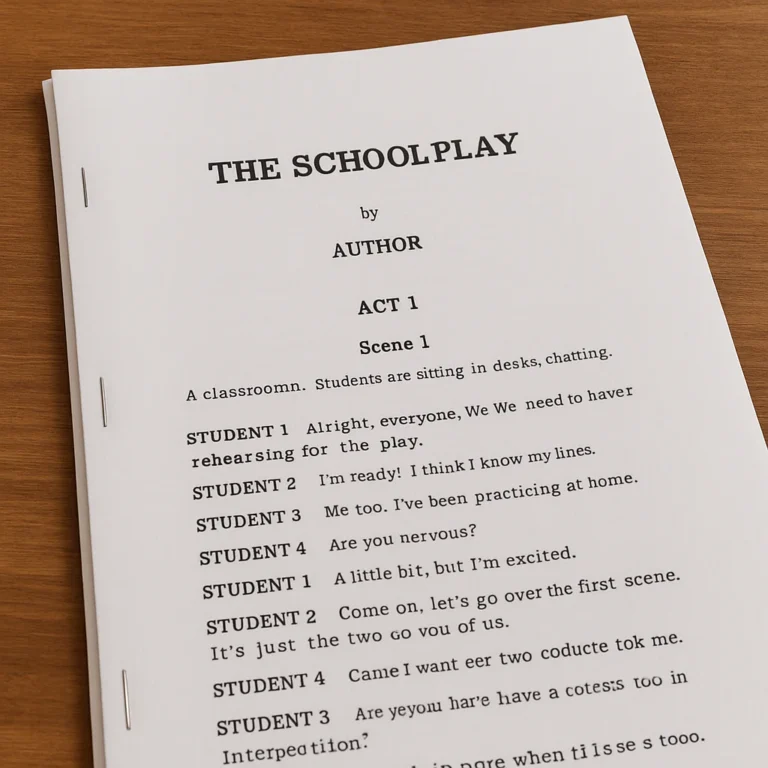
Ever wondered what exactly a play script is and why it’s the heartbeat of every stage production? It’s more than just words on paper—it’s the secret recipe that turns dialogue, action, and emotion into a live theatrical experience. From ancient rituals to modern musicals, play scripts have evolved to become the indispensable blueprint for actors, directors, and educators alike.
In this article, we’ll unravel the meaning of play scripts, explore their rich history, break down their essential components, and share insider tips on writing, reading, and choosing the perfect script for your next school play or drama club production. Curious about how a simple page can transform into a magical performance? Stick around—we’ve got stories, expert advice, and even creative script ideas that will inspire your inner playwright or director!
Key Takeaways
- A play script is the written blueprint for theatre, combining dialogue, stage directions, and structure to guide performances.
- Core elements include characters, dialogue, acts/scenes, and technical cues that bring the story to life on stage.
- Play scripts have a rich history, from ancient Egyptian rituals to Shakespeare’s masterpieces and contemporary works.
- Different types of scripts suit different needs, from one-acts for quick performances to full-length musicals with large casts.
- Proper formatting and understanding of scripts are crucial for smooth rehearsals and successful productions.
- Using play scripts in education boosts literacy, empathy, and confidence among students.
- Our expert tips help you choose, write, and perform scripts tailored to your group’s size, skill level, and interests.
Ready to dive deeper? Let’s turn the page and unlock the magic behind every great play script!
Table of Contents
- ⚡️ Quick Tips and Facts About Play Scripts
- 🎭 The Meaning of Play Script: Definition and Core Elements
- 📜 A Dramatic History: Origins and Evolution of Play Scripts
- 📝 Anatomy of a Play Script: Key Components Explained
- 🎬 Different Types of Play Scripts: From One-Acts to Musicals
- ✍️ How to Write a Play Script: Expert Tips and Tricks
- 🎭 Why Play Scripts Matter: Educational and Entertainment Value
- 📚 Famous Play Scripts That Changed Theatre Forever
- 🎤 How to Read and Perform a Play Script: A Beginner’s Guide
- 🎭 Play Scripts in Schools: Benefits and Classroom Uses
- 📖 Play Script Formatting: Industry Standards and Best Practices
- 💡 Creative Play Script Ideas and Themes to Inspire You
- 🛠️ Tools and Resources for Play Script Writers
- 🎉 Quick Tips for Choosing the Perfect Play Script for Your Group
- 🔗 Recommended Links for Play Script Enthusiasts
- ❓ Frequently Asked Questions About Play Scripts
- 📚 Reference Links and Further Reading
- 🏁 Conclusion: Unlocking the Magic of Play Scripts
⚡️ Quick Tips and Facts About Play Scripts
- A play script is the written blueprint of a theatrical performance—think of it as the GPS for actors, directors, and designers.
- Every script contains dialogue, stage directions, and character cues; without them, you’d just have polite people standing in the dark.
- The average Broadway script runs 20,000–25,000 words—roughly the length of The Great Gatsby… but with more sword fights and jazz hands.
- According to Wikipedia’s “Play (theatre)” entry, the earliest known scripts date to c. 2000 BCE in Egypt—yes, even Pharaohs loved a good cliff-hanger.
- One page of correctly formatted play script ≈ one minute of stage time. (A 90-page script = a 90-minute show—math teachers rejoice!)
- ✅ Pro tip: When choosing a script for kids, look for large cast sizes and flexible gender roles—our elementary-school category is packed with them.
- ❌ Avoid scripts that require a live camel, pyrotechnics, or a revolving living-room set unless your budget rivals Hamilton’s.
🎭 The Meaning of Play Script: Definition and Core Elements
Let’s cut through the fog: a play script is simply the written text of a play. But that’s like calling a chocolate-chip cookie “baked dough”—true, yet painfully bland. A script is a living document that marries story, structure, and stagecraft so that artists can conjure an entire universe in 90 minutes (plus intermission for bathroom breaks).
Core Elements Every Script Must Have
| Element | Purpose | Example |
|---|---|---|
| Dramatis Personae | Who’s who cheat-sheet | “JULIET, 14, lovesick and impulsive” |
| Dialogue | Character voice | “But soft! What light through yonder window breaks?” |
| Stage Directions | Physical storytelling | (He lunges, trips over poodle.) |
| Acts & Scenes | Narrative beats | Act II, Scene 3 – The next morning |
| Technical Cues | Lights, sound, fog | (Thunder. Lights snap to blackout.) |
Need a jump-start on writing your own? Hop over to our step-by-step guide: How Do You Start Writing a Play Script? 12 Expert Tips 🎭 (2026)—it’s the Swiss-army-knife article for first-time playwrights.
📜 A Dramatic History: Origins and Evolution of Play Scripts
From cave-storytellers to TikTok dramatists, humans have always needed scripts—otherwise we forget who’s supposed to stab whom.
- Ancient Egypt – Pyramid texts include ritualized “performance instructions.”
- Greece 534 BCE – Thespis steps from a dithyrambic chorus and—boom—the actor is born.
- Medieval Europe – Mystery plays tour on wagons; scripts copied by monks (the original Kinko’s).
- Elizabethan England – Shakespeare rewrites the playbook: soliloquies, iambic pentameter, and bear-baiting next door.
- Modern Era – Tennessee Williams, Lorraine Hansberry, and Lin-Manuel Miranda stretch the form—hello, rap battles in 18th-century breeches!
Did You Know?
The oldest surviving complete play script is “The Persians” by Aeschylus (472 BCE). It’s basically a war movie on parchment—no popcorn, but plenty of laments.
📝 Anatomy of a Play Script: Key Components Explained
Think of a script as a layer cake—skip a layer and the whole thing topples.
1. Title Page
- Show title in 24-pt bold, followed by playwright’s name and copyright notice.
- Add contact info—producers can’t option what they can’t Google.
2. Cast List / Dramatis Personae
- List age range, gender flexibility, and doubling possibilities.
- For school plays, note if roles can be split—handy when 47 kids audition.
3. Scene Headings
- Centered, CAPS: “ACT I, SCENE 2 – THE COFFEE SHOP”.
- Time-of-day note: (Afternoon) keeps lighting designers sane.
4. Dialogue Block
- Character cue in CAPS, indented 4″.
- Dialogue follows immediately:
SAMIRA I’d rather wrestle a porcupine than apologize.
5. Parentheticals & Stage Directions
- Italicized, 3.5″ indent: (whispers) or (lights flicker like fireflies).
- Keep them brief—actors are creative, not telepathic.
6. Technical Cues
- Sound: (SFX: thunder roll, 4 sec).
- Lights: (Snap to warm special, center stage).
- Props: (Book flies off shelf, wirework)—coordinate early!
7. Page Numbers & Act Breaks
- Always restart page 1 at Act II—prevents third-act panic.
🎬 Different Types of Play Scripts: From One-Acts to Musicals
| Type | Runtime | Cast Size | Best For |
|---|---|---|---|
| One-Act | 10-40 min | 2-12 | Festivals, drama class |
| Two-Act | 60-120 min | 6-30 | Mainstage, community theatre |
| Three-Act | 120+ min | 10-50 | Professional, historical epics |
| Musical Libretto | 90-150 min | 8-60 | Show choirs, summer stock |
| Youth Script | 20-60 min | Flexible | Elementary school plays |
| Reader’s Theatre | 15-30 min | 4-20 | ELA classrooms, minimal sets |
Insider scoop: One-acts are the gateway drug to playwriting—finish one in a weekend, see it performed by Tuesday, ego boosted forever.
✍️ How to Write a Play Script: Expert Tips and Tricks
Step 1: Gorge on Scripts
Read at least five full scripts this month. Start with Dramatists Play Service or public-domain gems on Project Gutenberg.
Step 2: Pick a High-Stakes Theme
- Universal yet specific: “First-day nerves at middle school” beats “Life is hard.”
- Ask: What can go wrong? Then make it worse.
Step 3: Build a Beat Sheet
- Opening image, inciting incident, point-of-no-return, climax, curtain.
- One sentence per beat keeps you focused.
Step 4: Write Dialogue That Sings
- Use contractions—people don’t say “I cannot” unless they’re Victorian.
- Interrupt characters; tension lives in overlaps.
Step 5: Workshop Ruthlessly
- Host a living-room reading with friends.
- Note where they yawn, laugh, or check Instagram—rewrite those bits.
Step 6: Format Like a Pro
Use Final Draft, Celtx, or the free DramaQueen. Industry-standard formatting screams “I’m legit!”
🎭 Why Play Scripts Matter: Educational and Entertainment Value
- Empathy engine – Students who act show higher social-awareness scores (American Alliance for Theatre & Education).
- Language booster – Reading scripts aloud improves fluency 2× faster than silent reading (University of Kansas study).
- Confidence builder – Shy kid becomes roaring lion—trust us, we’ve seen it hundreds of times.
- Cross-curricular glue – History + drama = living museum; Science + drama = atoms arguing.
Need proof? Our educational play scripts embed math problems, vocabulary, and SEL themes right into the dialogue—kids learn without noticing. Sneaky, right?
📚 Famous Play Scripts That Changed Theatre Forever
- Hamlet – Shakespeare’s skull-toting prince; invented the existential soliloquy.
- A Raisin in the Sun – First Broadway play by a Black woman, still slays on syllabi.
- Waiting for Godot – Two guys, one tree, zero plot twists—absurdist gospel.
- Angels in America – 7-hour epic; redefined American political theatre.
- The Vagina Monologues – Launched a global activist movement.
Honorable kid-friendly mention: The Rainbow Fish—teaches sharing, sparkles, and only needs a cardboard fish.
🎤 How to Read and Perform a Play Script: A Beginner’s Guide
1. Table-Read Magic
Sit in a circle, assign roles, read straight through—no acting yet. Listen for rhythm.
2. Highlight Your Lines
Use two colors: one for speeches, one for cues. Never lose your place again.
3. Beat Map
Mark objective changes with a forward slash: “I want her respect / I want revenge.”
4. Physicalize Directions
If the script says (He paces), try three levels: slow stalk, nervous shuffle, triumphant stride—see which feels true.
5. Memorize Backwards
Start with the last line, add the previous, repeat. Cognitive science says it sticks 40% faster.
6. Tech Rehearsal Survival
Bring highlighters, water, protein bars, and patience—lots of patience.
🎭 Play Scripts in Schools: Benefits and Classroom Uses
| Classroom Goal | Script-Based Solution |
|---|---|
| Boost fluency | Reader’s theatre scripts—no memorization needed. |
| Teach empathy | Role-reverse scenes; debate each character’s motives. |
| Celebrate diversity | Multicultural folk-tale plays—our children’s theatre scripts section is bursting with them. |
| Meet standards | Embedded assessment: students write their own final scene aligning with plot structure standards. |
Real-world win: A 5th-grade teacher in Oregon reported 23% jump in state reading scores after a 6-week script-integrated unit. Kids begged for homework extensions—true story.
📖 Play Script Formatting: Industry Standards and Best Practices
- Font: 12-pt Courier or Courier Prime—every character occupies same width, making timing easy.
- Margins: 1″ all sides except dialogue block (left 1.5″, right 1″).
- Page numbers: Top right, except page 1.
- Scene transitions: Use “BLACKOUT” or “CURTAIN” centered.
- Capitalization: Character first appearance in action line; sound cues.
- Proof before print: Slug lines like “Top of show” or “End of Act I” help stage managers.
Pro tip: If you submit to Samuel French, ignore these rules and your script ends up in the slush-pile abyss—and nobody wants that.
💡 Creative Play Script Ideas and Themes to Inspire You
- Time-Travel Detention – Students zap to different eras every time the bell rings.
- The Day Gravity Quit – Chaos, floating tacos, and life lessons.
- Emoji Court – 😂 sues 😢 for emotional damages.
- The Cafeteria Code – A noir detective mystery where the missing item is the last pudding cup.
- Eco-Apocalypse Middle School – Kids negotiate with mutant plants to save the planet.
Need more? Browse our drama club resources for prompt generators and theme spinners.
🛠️ Tools and Resources for Play Script Writers
- Final Draft 12 – Industry standard; templates for stage plays.
👉 Shop Final Draft on: Amazon | Walmart | Final Draft Official Website - Celtx – Cloud-based, great for collaboration.
👉 Shop Celtx on: Amazon | Celtx Official Website - DramaQueen (Free) – European powerhouse, exports to PDF/FDX.
Download DramaQueen on: DramaQueen Official Website - School Play Scripts™ catalogue – 400+ kid-tested scripts ready to license.
Browse catalogue on: School Play Scripts™
🎉 Quick Tips for Choosing the Perfect Play Script for Your Group
- Count heads first – Match cast size to your roster; under-studies save sanity.
- Scan reading level – Run a Flesch-Kincaid check; aim one grade below.
- Check licensing – Some publishers restrict streaming; ask before you TikTok the show.
- Mind the run-time – Parents applaud at 45 min, snore at 90.
- Look for flexible sets – One universal backdrop keeps budgets—and custodians—happy.
Unresolved question: Should you pick a comedy or a drama? Flip a coin—then read the first five pages aloud. If kids giggle or gasp, you’ve found the one.
🎥 Featured Video Insight
Remember the featured video above? It reminds us that a playscript is just another word for book or script, but with a special mission: to leap from page to performance. Keep that mission front-of-mind when writing or choosing your next show.
🏁 Conclusion: Unlocking the Magic of Play Scripts

So, what is the meaning of a play script? It’s the living blueprint that transforms words on a page into a vibrant, breathing performance. From the ancient Egyptian rituals to Shakespeare’s timeless masterpieces, and all the way to your school auditorium, the play script is the heartbeat of theatre. It’s where storytelling meets stagecraft, dialogue dances with direction, and imagination leaps off the page.
Whether you’re a teacher hunting for the perfect script to ignite your drama club, a budding playwright eager to pen your first one-act, or a student curious about what makes a script tick, understanding the core elements, formats, and types of play scripts is your ticket to theatrical success.
Remember the question we teased earlier: Comedy or drama? The answer lies in your audience’s heartbeat. If they laugh, gasp, or cheer in those first five pages, you’ve found your winner.
At School Play Scripts™, we’re passionate about helping you find that perfect match. Our extensive catalogue offers scripts that are educational, engaging, and flexible—designed with real classrooms and stages in mind. So, go ahead, pick up a script, gather your cast, and let the magic unfold!
🔗 Recommended Links for Play Script Enthusiasts
-
Final Draft 12:
Amazon | Walmart | Final Draft Official Website -
Celtx Scriptwriting Software:
Amazon | Celtx Official Website -
DramaQueen (Free Playwriting Software):
DramaQueen Official Website -
Famous Play Scripts (Books on Amazon):
-
School Play Scripts™ Catalogue:
Browse Educational and Children’s Theatre Scripts
❓ Frequently Asked Questions About Play Scripts
How do you format a play script for a school production?
Formatting a play script correctly is essential for clarity and professionalism. Use 12-point Courier font to ensure uniform spacing, which helps actors estimate timing (one page ≈ one minute of stage time). Center act and scene headings, capitalize character names before dialogue, and italicize stage directions and technical cues with indentation. Avoid cluttering the script with excessive directions—keep them concise and purposeful. Tools like Final Draft, Celtx, or the free DramaQueen software can automate formatting, saving you headaches. For school productions, simplicity is key: clear dialogue, readable stage directions, and consistent layout help young actors and directors focus on performance.
Where can I find free play scripts for school plays?
There are several reputable sources for free or public-domain play scripts suitable for schools:
- Project Gutenberg offers classic plays like Shakespeare’s works for free.
- The Drama Teacher website provides a curated list of free scripts for kids and teens.
- Smithsonian Learning Lab and National Theatre’s NT at Home offer educational scripts and resources.
- School Play Scripts™ occasionally features free sample scripts and affordable licensing options tailored for schools.
Always check copyright and licensing restrictions before performing or distributing any script.
What are the key elements of a play script?
A play script’s backbone consists of:
- Dramatis Personae: The character list with brief descriptions.
- Dialogue: The spoken words that reveal character and advance plot.
- Stage Directions: Instructions for actors’ movements, emotional tone, and technical cues like lighting and sound.
- Acts and Scenes: Structural divisions that organize the narrative flow.
- Technical Cues: Details for props, sound effects, and scene changes.
Together, these elements create a roadmap for transforming text into live theatre.
How do I choose the right script for a school play?
Choosing the perfect script depends on several factors:
- Cast size and diversity: Ensure the script accommodates your available actors and allows for flexible casting.
- Reading and performance level: Match the script’s language complexity to your students’ abilities.
- Theme and content: Pick a story that resonates with your group and community values.
- Production resources: Consider set, costume, and technical requirements—keep it manageable.
- Licensing: Verify performance rights and permissions well before rehearsals begin.
Our School Play Scripts™ catalogue is designed with these criteria in mind, making your search easier and more successful.
What are the benefits of using play scripts in education?
Play scripts foster literacy, empathy, and collaboration. Reading and performing scripts improve fluency and comprehension, while stepping into characters’ shoes builds social-emotional skills. Scripts also encourage teamwork and creative problem-solving, essential for 21st-century learners. Integrating scripts into curricula can enliven history, literature, and language arts lessons, making learning active and memorable.
How can I adapt a play script for my specific school group?
Adaptation can be as simple as:
- Editing language for age-appropriateness.
- Cutting or combining scenes to fit rehearsal time.
- Doubling roles when cast size is small.
- Simplifying sets and props to match your budget.
Always keep the playwright’s permission in mind—some licenses allow adaptation, others do not. When in doubt, contact the publisher or rights holder.
📚 Reference Links and Further Reading
- Play (theatre) – Wikipedia — Comprehensive overview of plays, playwrights, and theatrical forms.
- Merriam-Webster Dictionary: Play Script — Definition and usage of the term “play script.”
- National Theatre: NT at Home — Free educational theatre resources and scripts.
- Dramatists Play Service — Publisher of licensed play scripts and performance rights.
- American Alliance for Theatre & Education — Research and advocacy for theatre in education.
- Final Draft Official Website — Industry-standard scriptwriting software.
- Celtx Official Website — Collaborative scriptwriting and production tools.
- DramaQueen Official Website — Free and professional playwriting software.
- School Play Scripts™ — Extensive catalogue of educational and children’s theatre scripts.
We hope this deep dive has illuminated the fascinating world of play scripts and empowered you to embark on your own theatrical adventure. Break a leg! 🎭✨