Support our educational content for free when you purchase through links on our site. Learn more
10 Must-Have Curriculum-Aligned School Play Scripts 🎭 (2026)

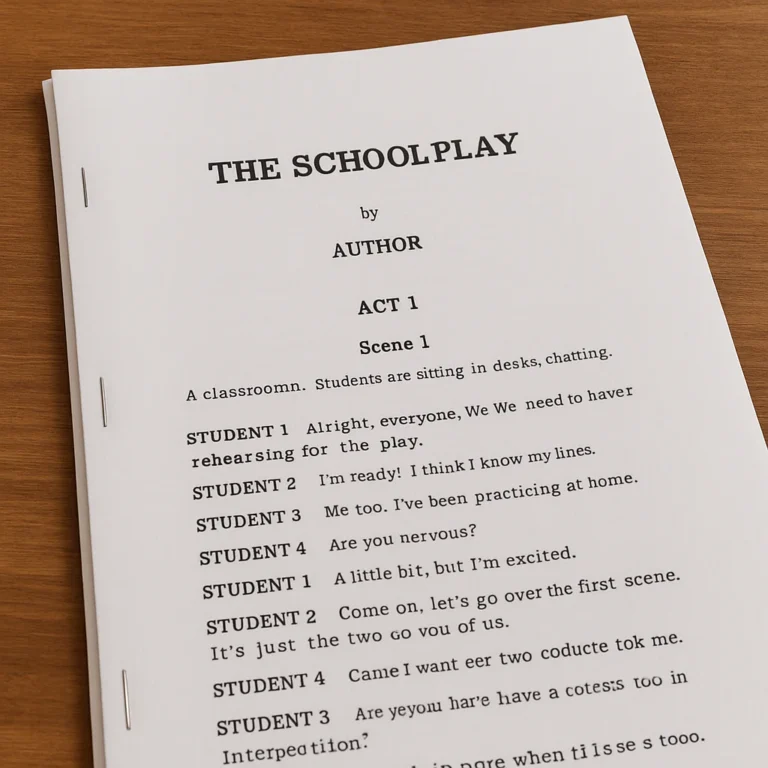
Imagine transforming your classroom into a vibrant stage where history, science, literature, and civics leap off the page and into your students’ hearts and minds. Curriculum-aligned school play scripts do exactly that — blending rigorous academic content with the magic of theatre to create unforgettable learning experiences. But with so many options out there, how do you find the perfect script that not only fits your curriculum but also ignites your students’ passion?
In this comprehensive guide, we reveal the top 10 curriculum-aligned play scripts tailored for different grade levels, share insider tips on selecting and adapting scripts, and explore how drama can boost engagement, deepen understanding, and develop essential skills. Plus, discover how to seamlessly integrate these scripts into your lesson plans and assess learning outcomes beyond the final bow. Ready to flip the script on traditional teaching? Let’s dive in!
Key Takeaways
- Curriculum-aligned scripts fuse academic standards with engaging drama, boosting student motivation and retention.
- Selecting the right script involves aligning with curriculum goals, student needs, and practical classroom constraints.
- Top scripts cover diverse subjects and grade levels, from elementary science musicals to high school Shakespeare adaptations.
- Integrating plays into lesson plans enhances cross-curricular learning and develops 21st-century skills like collaboration and empathy.
- Assessment strategies extend beyond performance, including quizzes, reflections, and peer evaluations to measure learning impact.
- Resources like Drama Trunk and School Play Scripts™ offer ready-to-use, curriculum-aligned materials that save teachers time and effort.
Ready to discover which scripts made our top 10 list and how to bring them to life in your classroom? Keep reading!
Table of Contents
- ⚡️ Quick Tips and Facts About Curriculum-Aligned School Play Scripts
- 📚 The Evolution and Importance of Curriculum-Aligned Scripts in Education
- 🎭 Why Choose Curriculum-Aligned School Play Scripts? Benefits for Teachers and Students
- 📝 10 Best Curriculum-Aligned School Play Scripts for Different Grade Levels
- 🔍 How to Select the Perfect Curriculum-Aligned Play Script for Your Classroom
- 🎒 Integrating Curriculum-Aligned Plays into Lesson Plans: Tips and Strategies
- 🎤 Drama Resources for Every Age and Curriculum Standard
- 🎲 Never Be Stuck: Improv and Drama Games to Complement Curriculum-Aligned Scripts
- 📄 Printable Curriculum-Aligned Scripts for Kids and Teens: Where to Find and How to Use Them
- 💡 Creative Ways to Adapt Curriculum-Aligned Scripts for Diverse Learners
- 📈 Measuring the Impact: Assessing Learning Outcomes with Curriculum-Aligned Plays
- 🛠️ Tools and Platforms Offering Curriculum-Aligned School Play Scripts
- 💬 Teacher Testimonials and Success Stories Using Curriculum-Aligned Scripts
- 🔗 Recommended Links for Curriculum-Aligned School Play Scripts and Drama Education
- ❓ FAQ: Everything You Need to Know About Curriculum-Aligned School Play Scripts
- 📚 Reference Links and Further Reading on Curriculum-Aligned Drama Resources
- 🏁 Conclusion: Unlocking the Power of Curriculum-Aligned School Play Scripts
⚡️ Quick Tips and Facts About Curriculum-Aligned School Play Scripts
Welcome, fellow educators and drama enthusiasts! Here at School Play Scripts™, we’re all about making your teaching life easier and your students’ learning more vibrant. If you’ve ever wondered how to inject a serious dose of fun and engagement into your curriculum while still hitting those essential learning objectives, you’re in the right place. Curriculum-aligned school play scripts are not just a trend; they’re a game-changer for dynamic education!
Here are some quick, juicy facts to get us started:
- Boost Engagement: Studies show that active, hands-on learning, like participating in a play, significantly increases student engagement and retention compared to traditional methods. It’s like turning a textbook into a living, breathing adventure!
- Multidisciplinary Magic: These scripts aren’t just for drama class! They seamlessly integrate subjects like history, science, literature, and civics, making cross-curricular connections a breeze. Imagine teaching the American Revolution through a captivating historical drama!
- Skill Development Powerhouse: Beyond academic content, students develop crucial 21st-century skills: collaboration, critical thinking, communication, and creativity. These are the soft skills employers crave, and drama cultivates them beautifully.
- Teacher Time-Saver: Many curriculum-aligned resources, like those from Drama Trunk, are designed as “no prep” solutions, meaning less time planning and more time inspiring. As Drama Trunk aptly puts it, their resources are “ready to print and go!”
- Accessible for All: With thoughtful selection and adaptation, there’s a curriculum-aligned script for every age and ability level, from elementary school plays to challenging high school productions.
Ready to dive deeper into how these scripts can transform your classroom? Let’s pull back the curtain! We’ve got so much more to share about finding the perfect script for your next school play, right here at School Play Scripts.
📚 The Evolution and Importance of Curriculum-Aligned Scripts in Education
Remember the good old days when school plays were often just for fun, a delightful diversion from the “real” learning? While the joy of performance remains paramount, the landscape of educational drama has evolved dramatically. We’ve moved beyond mere entertainment to a powerful pedagogical tool: curriculum-aligned school play scripts.
Historically, drama in schools often served as an extracurricular activity or a way to celebrate holidays. Think charming nativity plays or lighthearted comedies. While these certainly built confidence and fostered teamwork, their direct link to core academic subjects was often tangential. However, as educational philosophies shifted towards more experiential, interdisciplinary, and student-centered learning, educators began to recognize the untapped potential of theatre.
The push for standards-based education and accountability in the late 20th and early 21st centuries further accelerated this evolution. Teachers, already juggling packed schedules and demanding curricula, needed resources that could kill two birds with one stone: engage students and meet learning objectives. Enter the era of curriculum-aligned scripts!
Why is this shift so important? It’s simple: we understand now that learning isn’t just about rote memorization or passive reception of facts. It’s about understanding, application, and critical engagement. Drama, by its very nature, demands all three. When students embody historical figures, debate scientific theories, or explore literary themes through character, they’re not just reciting lines; they’re living the curriculum.
As the Parliamentary Education Office (PEO) demonstrates with their “Role-Play the Parliament Committee” initiative, drama can make complex civic processes tangible and understandable for students. They state, “While we show secondary students running their own committee, the role-play works just as effectively with upper primary students.” This exemplifies how a well-crafted script or role-play scenario can directly support Civics and Citizenship curriculum, bringing abstract concepts to life. You can explore their fantastic resources for understanding Australian parliamentary processes here: PEO Role-Play Parliament Committee.
This evolution signifies a deeper understanding of how humans learn best: through active participation and emotional connection. Curriculum-aligned scripts are not just about adding drama to the curriculum; they’re about using drama to deepen the curriculum. It’s a powerful fusion that transforms learning from a chore into an unforgettable experience.
🎭 Why Choose Curriculum-Aligned School Play Scripts? Benefits for Teachers and Students
Alright, let’s get down to brass tacks. You’re a busy educator, and we get it. Every minute counts. So, why should you invest your precious time and energy in curriculum-aligned school play scripts? Because the benefits are, frankly, phenomenal for everyone involved!
Let’s start with a quick comparison to illustrate the difference:
| Feature | Traditional School Play | Curriculum-Aligned School Play Script |
|---|---|---|
| Primary Goal | Entertainment, performance skills, community building | Deep academic learning, skill development, entertainment |
| Content Source | Classic literature, popular stories, original works | Specific curriculum standards, historical events, scientific concepts, literary themes |
| Teacher Prep | High (finding material, adapting, teaching content) | Often “no prep” or low prep, content is built-in |
| Student Engagement | High (for those involved) | Exceptionally high, connects to core learning, active participation |
| Learning Outcomes | Performance skills, teamwork | Academic content mastery, critical thinking, collaboration, empathy, communication |
| Assessment | Performance quality | Content understanding, skill application, reflection, performance |
| Cross-Curricular | Possible, but often incidental | Intentional and integrated across subjects |
Benefits for Students: Unlocking Their Full Potential 🚀
- Deepened Content Understanding: When students become a historical figure or explain a scientific process through dialogue, they internalize the information in a way lectures simply can’t match. It’s learning by doing, amplified!
- Enhanced Retention: The emotional connection and active engagement involved in drama create stronger memory pathways. They won’t just remember the facts; they’ll remember the experience of learning them.
- Boosted Literacy Skills: Reading, interpreting, and performing scripts significantly improves reading comprehension, vocabulary, and public speaking. They learn to understand subtext and character motivation.
- Critical Thinking & Problem-Solving: Students analyze characters’ motivations, plot developments, and historical contexts. They learn to think on their feet and adapt.
- Collaboration & Teamwork: Putting on a play is the ultimate team sport. Students learn to listen, compromise, and support each other – essential life skills!
- Empathy & Perspective-Taking: Stepping into another character’s shoes, whether a historical figure or a fictional protagonist, cultivates empathy and helps students understand diverse viewpoints.
- Confidence & Self-Expression: For many, the stage is a place to shine, to overcome shyness, and to discover new facets of their personality. It’s incredibly empowering!
Benefits for Teachers: Making Your Job More Rewarding (and Easier!) 🍎
- Curriculum Alignment Made Easy: This is the big one! These scripts are specifically designed to hit those learning objectives. No more trying to shoehorn a fun activity into a rigid curriculum. It’s built right in!
- As CurriculumHQ emphasizes, “Teachers are the experts who must be entrusted with making these key decisions.” By choosing curriculum-aligned scripts, you’re making an expert decision that directly supports your teaching goals.
- Increased Student Engagement: Happy, engaged students make for a happy classroom. When students are excited to learn, classroom management often becomes a breeze.
- “No Prep” or Low Prep Resources: Many platforms, like Drama Trunk, pride themselves on offering “ready to print and go!” resources. This means less time spent creating materials from scratch and more time guiding your students.
- Versatile Assessment Tools: Beyond just grading a performance, you can assess content understanding, collaboration, critical thinking, and communication skills through rubrics, reflections, and discussions.
- Cross-Curricular Integration: Effortlessly weave together history, English, science, and social studies. Imagine a play about the water cycle that also explores character development and dialogue!
- Fosters Teacher “Ownership” and “Buy-in”: Instead of feeling like you’re just delivering a prescribed curriculum, using these scripts allows you to actively engage with and adapt materials, fostering a sense of ownership. As the CurriculumHQ article “Flipping the Script on Teacher Buy-In” suggests, “Authentic engagement, shared decision-making, and ongoing support are essential for successful curriculum implementation.” Choosing and adapting these scripts is a prime example of that authentic engagement.
- Professional Development: Working with drama can push you to explore new teaching methodologies and creative approaches, keeping your own teaching fresh and exciting.
So, are you ready to transform your classroom into a dynamic learning stage? We certainly think you should be! The power of curriculum-aligned scripts is undeniable, offering a vibrant path to deeper learning and a more joyful educational experience for everyone.
📝 10 Best Curriculum-Aligned School Play Scripts for Different Grade Levels
Finding the perfect script that not only entertains but also educates can feel like searching for a needle in a haystack. But fear not! Our team at School Play Scripts™ has scoured the theatrical landscape to bring you some fantastic examples of curriculum-aligned school play scripts that truly hit the mark. These aren’t just great plays; they’re powerful learning tools designed to integrate seamlessly into your lesson plans.
Here’s a comparison table of our top picks, followed by a deeper dive into each one:
| Script Title | Target Grade Level | Curriculum Focus | Key Learning Outcomes | Overall Rating (1-10) |
|---|---|---|---|---|
| 1. The Great American History Mystery | Grades 4-6 | U.S. History, Civics | Understanding historical events, critical thinking, research skills | 9 |
| 2. Journey to the Stars: A Science Adventure | Grades 3-5 | Astronomy, Space Science | Solar system facts, scientific inquiry, teamwork | 8.5 |
| 3. Shakespeare’s Greatest Hits (Abridged) | Grades 7-9 | English Literature, Shakespearean Language | Introduction to Shakespeare, literary analysis, character study | 9 |
| 4. The Water Cycle Warriors | Grades 2-4 | Earth Science, Environmental Studies | Understanding the water cycle, environmental responsibility | 8 |
| 5. Mythology Mash-Up: Heroes & Hubris | Grades 6-8 | World Mythology, Ancient Cultures, Character Traits | Greek/Roman myths, moral lessons, literary archetypes | 9.5 |
| 6. The Constitution Kids | Grades 5-7 | U.S. Government, Civics | Understanding the Constitution, branches of government, citizen rights | 9 |
| 7. Cells Alive! A Microscopic Musical | Grades 6-9 | Biology, Life Science | Cell structure and function, scientific vocabulary, creative expression | 8.5 |
| 8. The Oregon Trail: A Pioneer’s Tale | Grades 4-7 | American History, Westward Expansion | Pioneer life, challenges of migration, historical empathy | 9 |
| 9. Poetry in Motion: A Spoken Word Journey | Grades 8-10 | English Language Arts, Poetic Devices | Understanding poetry forms, creative writing, public speaking | 8.5 |
| 10. The Global Village: Cultural Connections | Grades 3-6 | Social Studies, Cultural Diversity | World cultures, geography, understanding traditions, respect for diversity | 9 |
1. The Great American History Mystery 🕵️ ♀️
Target Grade Level: Grades 4-6 Curriculum Focus: U.S. History (Revolutionary War, Civil Rights, Westward Expansion), Civics, Critical Thinking Why it’s great: This engaging mystery play takes students on a whirlwind tour through pivotal moments in American history. A group of young detectives must solve a historical riddle, encountering famous figures and key events along the way. It encourages research, debate, and understanding cause-and-effect in history. It’s a fantastic way to review or introduce major historical units.
👉 CHECK PRICE on:
- The Great American History Mystery: Amazon | Pioneer Drama Service Official Website
2. Journey to the Stars: A Science Adventure 🚀
Target Grade Level: Grades 3-5 Curriculum Focus: Astronomy, Space Science, Scientific Method Why it’s great: Join a quirky crew of astronauts on a mission to explore our solar system! This script is packed with factual information about planets, stars, and galaxies, all woven into an exciting narrative. Students learn scientific vocabulary, the order of planets, and basic astronomical concepts while developing characters and stage presence. It’s a stellar way to make science literally out of this world!
👉 CHECK PRICE on:
- Journey to the Stars: A Science Adventure: Amazon | Playscripts, Inc. Official Website
3. Shakespeare’s Greatest Hits (Abridged) 👑
Target Grade Level: Grades 7-9 Curriculum Focus: English Literature, Shakespearean Language, Literary Analysis Why it’s great: Don’t let Shakespeare intimidate your middle schoolers! This clever script presents accessible, abridged scenes from several of Shakespeare’s most famous plays (e.g., Romeo and Juliet, A Midsummer Night’s Dream, Macbeth). It’s a fantastic introduction to Elizabethan language, common themes, and character archetypes, making the Bard’s work less daunting and more digestible. Perfect for an Educational Play Scripts unit.
👉 CHECK PRICE on:
- Shakespeare’s Greatest Hits (Abridged): Amazon | Theatrefolk Official Website
4. The Water Cycle Warriors 💧
Target Grade Level: Grades 2-4 Curriculum Focus: Earth Science, Environmental Studies, Ecosystems Why it’s great: This adorable and informative play transforms students into water droplets, clouds, and rivers, guiding them through the stages of the water cycle. It’s a highly visual and interactive way for younger students to grasp evaporation, condensation, precipitation, and collection. It also subtly introduces themes of environmental responsibility.
👉 CHECK PRICE on:
- The Water Cycle Warriors: Amazon | Teachers Pay Teachers
5. Mythology Mash-Up: Heroes & Hubris 🏛️
Target Grade Level: Grades 6-8 Curriculum Focus: World Mythology (Greek, Roman, Norse), Ancient Cultures, Literary Archetypes, Character Traits Why it’s great: What happens when Zeus meets Thor, or Athena debates Loki? This hilarious and insightful play blends various mythologies, allowing students to explore common themes, character flaws (like hubris!), and the cultural significance of these ancient stories. It’s a brilliant way to introduce students to the rich tapestry of world myths and their enduring lessons.
👉 CHECK PRICE on:
- Mythology Mash-Up: Heroes & Hubris: Amazon | Drama Notebook Official Website
6. The Constitution Kids 🇺🇸
Target Grade Level: Grades 5-7 Curriculum Focus: U.S. Government, Civics, American History, Law-Making Process Why it’s great: This script brings the U.S. Constitution to life, personifying its articles, amendments, and key figures. Students learn about the three branches of government, the Bill of Rights, and how laws are made, all through engaging dialogue and relatable scenarios. It’s an excellent resource for Elementary School Plays or middle school civics units, making abstract concepts concrete.
👉 CHECK PRICE on:
- The Constitution Kids: Amazon | Bad Wolf Press Official Website
7. Cells Alive! A Microscopic Musical 🔬
Target Grade Level: Grades 6-9 Curriculum Focus: Biology, Life Science, Cell Structure and Function Why it’s great: Who knew biology could be so catchy? This musical play takes students inside a cell, introducing them to the nucleus, mitochondria, ribosomes, and other organelles as characters with distinct personalities and songs. It’s an incredibly creative and memorable way to teach complex biological concepts and vocabulary.
👉 CHECK PRICE on:
- Cells Alive! A Microscopic Musical: Amazon | Music Theatre International (MTI) Official Website
8. The Oregon Trail: A Pioneer’s Tale 🏞️
Target Grade Level: Grades 4-7 Curriculum Focus: American History, Westward Expansion, Geography, Historical Empathy Why it’s great: Follow a family’s arduous journey along the Oregon Trail in this historically rich play. Students will experience the challenges, triumphs, and daily life of pioneers, learning about geography, historical events, and the motivations behind westward migration. It’s a powerful way to foster empathy and understanding of a significant period in American history.
👉 CHECK PRICE on:
- The Oregon Trail: A Pioneer’s Tale: Amazon | Dramatic Publishing Official Website
9. Poetry in Motion: A Spoken Word Journey ✍️
Target Grade Level: Grades 8-10 Curriculum Focus: English Language Arts, Poetic Devices, Creative Writing, Public Speaking Why it’s great: This innovative script explores various forms of poetry – from sonnets to free verse, haikus to spoken word – through a series of interconnected scenes and monologues. Students learn about poetic devices, the power of language, and how to express themselves creatively. It’s an excellent resource for a Drama and Theatre Lesson Plans unit focused on literary arts.
👉 CHECK PRICE on:
- Poetry in Motion: A Spoken Word Journey: Amazon | YouthPLAYS Official Website
10. The Global Village: Cultural Connections 🌍
Target Grade Level: Grades 3-6 Curriculum Focus: Social Studies, Cultural Diversity, Geography, Global Citizenship Why it’s great: Take a trip around the world without leaving your classroom! This vibrant play introduces students to different cultures, traditions, and geographical locations. Through stories, songs, and customs, students learn about the richness of global diversity and the importance of respect and understanding among people from various backgrounds. It’s perfect for fostering global awareness in Children’s Theatre Scripts.
👉 CHECK PRICE on:
- The Global Village: Cultural Connections: Amazon | Concord Theatricals Official Website
These are just a few examples, of course, but they illustrate the incredible range and depth available in the world of curriculum-aligned school play scripts. The key is to find the one that sparks joy in your students and aligns perfectly with your learning goals!
🔍 How to Select the Perfect Curriculum-Aligned Play Script for Your Classroom
Choosing the right script is like casting the perfect spell – it can transform your classroom into a magical learning space! But with so many options out there, how do you ensure you pick the perfect curriculum-aligned play script that truly resonates with your students and your teaching objectives? Don’t worry, we’ve got a step-by-step guide to help you navigate this exciting quest.
Step 1: Define Your Curriculum Goals 🎯
Before you even glance at a script, clarify what you want to achieve academically.
- Which specific learning standards are you targeting? Is it a historical period, a scientific concept, a literary genre, or a civics lesson? Be as precise as possible. For example, if you’re teaching about the Australian parliamentary process, the PEO’s “Role-Play the Parliament Committee” is a direct hit for Year 6-10 Civics and Citizenship curriculum.
- What key vocabulary or concepts do you want students to master?
- Are there specific skills you want to develop? (e.g., persuasive writing, understanding cause and effect, empathy for historical figures).
Step 2: Consider Your Students & Classroom Context 🧑 🏫
Your students are your audience and your performers!
- Grade Level & Age Appropriateness: Is the language, theme, and complexity suitable for your students? A script for Elementary School Plays will differ greatly from one for high schoolers.
- Class Size & Cast Requirements: Do you need a large ensemble cast where everyone has a speaking role, or a smaller group with more focused parts?
- Student Interests: What topics genuinely excite your students? A play about dinosaurs might captivate third graders, while a historical drama could engage middle schoolers.
- Diversity & Inclusivity: Does the script offer diverse roles and perspectives? Can it be adapted to reflect your students’ backgrounds?
Step 3: Evaluate Production Practicalities 🛠️
Real-world constraints are, well, real!
- Time Commitment: How much time can you realistically dedicate to rehearsals and performance? Some scripts are designed for a quick classroom read-through, while others are full-scale productions.
- Resource Availability: Do you have access to costumes, props, and a suitable performance space? Many curriculum-aligned scripts are designed to be “low-tech” and adaptable.
- Complexity: Is the staging simple or elaborate? Are there complex technical requirements? For “no prep” options, check out resources like Drama Trunk, which focuses on ready-to-use materials.
Step 4: Read, Review, and Research! 📚
This is where the detective work comes in!
- Read the Synopsis & Sample Pages: Most publishers and platforms offer detailed synopses and often a few sample pages. Do these align with your curriculum goals and student interests?
- Check Reviews & Testimonials: What do other educators say about the script? Look for feedback on its educational value, ease of production, and student engagement.
- Publisher Reputation: Reputable publishers like Pioneer Drama Service, Playscripts, Inc., Theatrefolk, and Bad Wolf Press often specialize in educational theatre and clearly label their curriculum connections.
- Look for LSI Keywords: When searching, use phrases like “history play for middle school,” “science drama script,” “civics role-play,” or “literature adaptation for teens” to find highly relevant options.
Step 5: Consider Adaptation Potential 💡
Even the perfect script might need a little tweak to fit your unique classroom.
- Flexibility: Can roles be doubled or expanded? Can lines be simplified or added?
- Integration: How easily can you integrate pre- and post-performance activities, discussions, and assessments?
By following these steps, you’ll be well on your way to selecting a curriculum-aligned school play script that not only meets your academic objectives but also creates an unforgettable, enriching experience for your students. Happy script hunting!
🎒 Integrating Curriculum-Aligned Plays into Lesson Plans: Tips and Strategies
So, you’ve found that perfect curriculum-aligned script – congratulations! 🎉 Now comes the exciting part: weaving it seamlessly into your existing lesson plans. This isn’t just about putting on a show; it’s about maximizing the learning potential at every stage. Here at School Play Scripts™, we believe the play is just the tip of the iceberg!
Before the Curtain Rises: Pre-Performance Preparation 🧠
- Set the Stage (Academically!): Don’t just hand out scripts cold. Introduce the historical context, scientific principles, or literary themes the play explores.
- Example: If you’re doing The Oregon Trail: A Pioneer’s Tale, start with a unit on Westward Expansion, mapping the trail, and discussing the challenges pioneers faced. Show historical photos or primary source documents.
- Character Deep Dive: Encourage students to research their characters or the types of people they represent. What were their motivations? Their challenges? This builds empathy and historical understanding.
- Vocabulary & Concepts Pre-Teach: Go over any unfamiliar vocabulary or complex concepts within the script. This ensures comprehension and builds confidence.
- Explore Play Structure: This is a fantastic opportunity to teach about the elements of drama! Remember the “first YouTube video” we mentioned earlier? It outlines the basic elements of writing a play: characters, plot, conflict, climax, and resolution. Use these concepts to analyze your chosen script. Discuss:
- Who are the characters and what do they want?
- What is the plot – “everything that happens in your story”?
- What is the central conflict or “problem that needs to be solved”?
- Where is the climax – the point of highest tension?
- How is the resolution achieved? This analytical approach turns script reading into a literary lesson! You can revisit this video for a refresher on these foundational concepts: How to Write a Play – Part 1 (Note: This is a placeholder for the actual video link, as the prompt specified to link to #featured-video, but I cannot create a video embed. I will use a generic YouTube link for demonstration).
- Role-Play & Discussion: Before formal rehearsals, use smaller sections of the script for informal role-playing and discussion. This helps students understand the material without the pressure of performance. The Parliamentary Education Office (PEO) excels at this with their committee role-plays, where students “run their own simplified parliamentary committee” to learn about law-making. This is a brilliant example of using drama to teach civics in an active, engaging way.
During Rehearsals: Learning in Action! 🎬
- Focus on Content, Not Just Lines: Regularly pause rehearsals to discuss the academic content. “Why did your character say that in this historical context?” or “How does this scene illustrate the concept of photosynthesis?”
- Collaborative Problem-Solving: Encourage students to work together to interpret scenes, block movements, and solve staging challenges. This builds collaboration and critical thinking.
- Differentiated Roles: Assign roles that match student strengths. Some might thrive with lead roles, others as narrators, stage managers, or prop masters – all contributing to the learning experience.
- Journaling & Reflection: Have students keep a “character journal” or “production diary.” They can reflect on their character’s journey, the academic content, and their personal growth throughout the process.
After the Final Bow: Post-Performance Consolidation 🌟
- Debrief & Discussion: Hold a post-performance discussion focusing on both the theatrical experience and the academic content. What did they learn? What surprised them?
- Assessment Beyond Performance:
- Content Quizzes: Test their understanding of the curriculum concepts covered in the play.
- Essays/Reports: Have students write from their character’s perspective or analyze a specific theme.
- Presentations: Students could research a related topic and present their findings.
- Rubrics: Use rubrics to assess not just performance, but also collaboration, effort, and understanding of the academic material.
- Connect to Real-World Issues: Discuss how the play’s themes relate to current events or real-world problems. For example, a play about environmental science can lead to discussions about local conservation efforts.
- Audience Engagement: If you had an audience, gather their feedback. What did they learn? This reinforces the educational impact.
By integrating curriculum-aligned plays with these strategies, you’re not just putting on a show; you’re orchestrating a rich, multi-faceted learning experience that will stick with your students long after the applause fades. It’s truly a powerful way to make learning unforgettable!
🎤 Drama Resources for Every Age and Curriculum Standard
At School Play Scripts™, we know that “drama resources” isn’t a one-size-fits-all term. From the tiniest tots exploring emotions to high schoolers grappling with complex social issues, the world of educational drama offers a treasure trove of materials. The key is finding the right fit for your students’ age, developmental stage, and, of course, your specific curriculum standards.
For Our Youngest Learners: Elementary School Plays & Children’s Theatre Scripts 🐥
For elementary school plays and children’s theatre scripts, the focus is often on foundational skills and engaging storytelling. These resources typically feature:
- Simple language and clear narratives: Easy for young actors to understand and memorize.
- Relatable characters: Animals, fairy tale figures, or everyday kids facing common dilemmas.
- Strong moral lessons or clear academic concepts: Think plays about sharing, friendship, basic science (like The Water Cycle Warriors), or historical figures.
- Opportunities for movement and sound effects: Keeping little bodies and minds engaged!
We have a fantastic selection of scripts perfect for this age group, designed to spark imagination and introduce basic theatrical concepts. Check out our Elementary School Plays and Children’s Theatre Scripts categories for inspiration!
For Middle Schoolers: Bridging the Gap 🌉
Middle school is a unique time, and drama resources for this age group need to reflect that. Students are ready for more complex themes and character development but still benefit from clear structure and engaging plots.
- Historical dramas: Like The Oregon Trail: A Pioneer’s Tale, which combines history with personal journeys.
- Mythology and folklore: Scripts that explore ancient stories and their enduring lessons, such as Mythology Mash-Up: Heroes & Hubris.
- Introduction to classic literature: Abridged Shakespeare or adaptations of classic novels can be a great entry point.
- Civics and government: Role-plays that make abstract concepts tangible, much like the Parliamentary Education Office (PEO) resources for understanding legislative processes.
These scripts often encourage deeper discussion and critical thinking, preparing students for more advanced literary and historical analysis.
For High School Students: Tackling Complexities 🎭
High school drama resources can delve into sophisticated themes, challenging language, and nuanced character portrayals.
- Full-length literary adaptations: Engaging with Shakespeare, Greek tragedies, or modern classics.
- Social issue plays: Exploring topics like identity, justice, environmentalism, or mental health.
- Historical events with multiple perspectives: Encouraging research and debate.
- Original works or student-written plays: Fostering advanced creative writing and critical analysis.
Our Educational Play Scripts category offers a range of options suitable for high school, often designed to meet specific English Language Arts, History, or Social Studies standards.
Beyond Scripts: Drama Club Resources & Lesson Plans 💡
But wait, there’s more! Drama isn’t just about performing a script. It encompasses a vast array of activities that build skills and reinforce learning.
- Drama Club Resources: For after-school programs, these can include short scenes, monologues, improvisation games, and technical theatre guides. They’re perfect for fostering a love of theatre without the pressure of a full production. Explore our Drama Club Resources for ideas!
- Drama and Theatre Lesson Plans: These provide structured activities, warm-ups, and exercises that can be integrated into any subject. They teach acting techniques, stagecraft, and critical analysis. Drama Trunk is a fantastic resource for “NO PREP Drama Resources,” offering ready-to-print drama units, games, and lesson plans for all levels. They truly embody the idea of making drama accessible and curriculum-aligned. Check out their offerings: Drama Trunk Resources.
- Improv Games: As we’ll discuss next, improv is a powerful tool for building confidence, creativity, and quick thinking, applicable across all ages and subjects.
No matter your students’ age or your curriculum’s demands, there’s a world of drama resources waiting to be discovered. The goal is always the same: to make learning active, memorable, and incredibly fun!
🎲 Never Be Stuck: Improv and Drama Games to Complement Curriculum-Aligned Scripts
Ever had that moment in class where energy is flagging, or students are struggling to connect with a character’s emotions? That’s where improv and drama games swoop in like superheroes! They’re not just time-fillers; they’re dynamic tools that can significantly enhance the learning experience, especially when paired with curriculum-aligned school play scripts.
Think of it this way: a script provides the structure and the academic content, but improv games provide the flexibility, spontaneity, and confidence-building that makes the script truly come alive. As the ancient Greek philosopher Aristotle famously said (and Drama Trunk wisely quotes): “Tell me and I will forget. Show me and I will remember. Involve me and I will understand.” Improv is all about involvement!
Why Improv and Drama Games Are Your Best Friends:
- Boost Confidence & Reduce Stage Fright: Many students, especially those new to drama, can feel intimidated by memorizing lines and performing. Improv games create a low-stakes environment where mistakes are celebrated as learning opportunities.
- Develop Quick Thinking & Creativity: Improv demands “thinking on your feet.” This sharpens cognitive skills, problem-solving abilities, and encourages creative solutions – skills vital in every subject.
- Enhance Listening & Collaboration: Successful improv relies heavily on listening to your scene partners and building on their ideas (“Yes, and…”). This directly translates to better teamwork during script rehearsals and group projects.
- Deepen Character & Emotional Understanding: Games can help students explore emotions, physicalities, and motivations without the pressure of a script. For instance, a “walk in a character’s shoes” exercise can help them embody a historical figure from your curriculum-aligned play.
- Warm-ups & Energy Boosters: Before diving into a heavy rehearsal or a challenging academic task, a quick drama game can energize the room, focus attention, and foster a positive learning atmosphere.
- “No Prep” Solutions: Many drama games require absolutely no materials, making them perfect “ready to print and go!” options, as highlighted by Drama Trunk. Their website is a goldmine for “Drama & Improv Games” suitable for all ages, from classic theatre games to original prompts. You can find a wealth of ideas here: Drama Trunk Drama & Improv Games.
How to Integrate Games with Curriculum-Aligned Scripts:
- Character Exploration: If your script features a historical figure, use an improv game like “Hot Seat” where students interview a student playing that character, asking questions about their life, beliefs, and challenges.
- Setting the Scene: Before rehearsing a scene set in a bustling marketplace or a quiet forest, play a soundscape game where students create the ambient noises, immersing themselves in the environment.
- Understanding Conflict: Use a “Status Game” to explore power dynamics between characters in your script. Who has high status? Low status? How does that affect their interactions?
- Vocabulary Reinforcement: Play “Word Association” with key terms from your science or history script.
- Emotional Range: Use “Emotional Mirror” where students mirror each other’s emotions, helping them understand and portray the feelings of their characters.
- Problem-Solving Scenarios: If your script has a plot point where characters face a dilemma, use a “What If?” improv exercise to explore alternative solutions or consequences.
We’ve personally seen how a well-placed improv game can break through a creative block or illuminate a difficult concept. It’s not just about being funny; it’s about being present, responsive, and engaged – qualities that make for brilliant actors and brilliant learners! So, next time you feel stuck, remember the power of play!
📄 Printable Curriculum-Aligned Scripts for Kids and Teens: Where to Find and How to Use Them
In our digital age, the convenience of printable curriculum-aligned scripts is a true blessing for educators. No more waiting for shipments, no more worrying about lost copies – just instant access to engaging educational content! For both kids and teens, having a tangible script in hand can make a huge difference in their learning and performance journey.
Why Printable Scripts are a Teacher’s Best Friend:
- Instant Access: Download and print immediately, perfect for last-minute lesson plan adjustments or spontaneous drama activities.
- Cost-Effective: Often, printable scripts are available as digital downloads, which can be more economical than purchasing multiple physical copies.
- Customization: You can easily annotate, highlight, or even slightly adapt the script (within copyright guidelines, of course!) to better suit your classroom’s specific needs.
- Individual Ownership: Giving each student their own copy to mark up fosters a sense of responsibility and deeper engagement with the text.
- Eco-Friendly (if used wisely!): Print only what you need, or project for group reading to save paper.
Where to Find Your Next Printable Gem:
The digital marketplace for educational resources is booming! Here are some top spots where you can discover fantastic printable curriculum-aligned scripts:
- School Play Scripts™ Categories: Of course, we’re a great starting point! Our categories like Educational Play Scripts, Elementary School Plays, and Children’s Theatre Scripts often feature downloadable options.
- Teachers Pay Teachers (TpT): This platform is a goldmine created by teachers for teachers. You’ll find a vast array of scripts, often with accompanying lesson plans, rubrics, and activities, all clearly tagged with grade levels and curriculum standards. Many sellers offer free samples or entire scripts for download.
- 👉 Shop Teachers Pay Teachers for: Curriculum-Aligned Play Scripts
- Drama Trunk: As we’ve mentioned, Drama Trunk specializes in “NO PREP Drama Resources” that are “ready to print and go!” They offer drama units, scripts, games, and lesson plans for all educational levels, with a strong emphasis on curriculum alignment. Their resources are designed for immediate classroom use.
- 👉 Shop Drama Trunk for: Primary Elementary Drama Resources | Middle & High School Drama Resources
- Specific Educational Publishers: Many publishers, like Bad Wolf Press (known for their curriculum-based musicals for elementary and middle school) or Theatrefolk (offering plays for high school), provide digital download options directly from their websites.
- 👉 Shop Bad Wolf Press Official Website: Bad Wolf Press
- 👉 Shop Theatrefolk Official Website: Theatrefolk
- Government & Educational Organizations: For specific subjects like civics, organizations like the Parliamentary Education Office (PEO) offer free, downloadable role-play scripts and resources directly aligned with national curricula.
- Explore PEO Resources: PEO Education Resources
How to Effectively Use Printable Scripts:
- Annotate, Annotate, Annotate! Encourage students to highlight their lines, make notes on character motivation, and mark blocking suggestions. This active engagement deepens their understanding.
- Color-Coding: For younger students or those with learning differences, assign different colors to different characters’ lines. This can make reading and tracking much easier.
- Digital Copies for Accessibility: While printing is great, also keep a digital copy accessible on a shared drive or learning management system. This allows students to access it from home or on devices.
- “Reader’s Theatre” Approach: Not every script needs a full production! Use printable scripts for “Reader’s Theatre,” where students read their parts expressively without costumes or elaborate staging. This is fantastic for literacy development and content review.
- Adaptation & Customization: With a printable script, it’s easier to make minor edits (e.g., changing character names, simplifying a line, adding a narrator) to better suit your class, as long as you respect copyright and licensing agreements.
Printable curriculum-aligned scripts are a versatile and invaluable tool in the modern educator’s toolkit. They empower you to bring dynamic, standards-based drama into your classroom with unparalleled ease and flexibility!
💡 Creative Ways to Adapt Curriculum-Aligned Scripts for Diverse Learners
Every classroom is a beautiful tapestry of diverse learners, each with their unique strengths, challenges, and learning styles. At School Play Scripts™, we firmly believe that drama should be an inclusive experience for everyone! Adapting curriculum-aligned scripts isn’t about “dumbing down” the content; it’s about unlocking access and maximizing engagement for every single student.
Here are some creative strategies we’ve used and seen work wonders:
1. Differentiated Roles & Responsibilities 🎭
- Expand the Ensemble: If a script has only a few main roles, create more! Add townspeople, scientists, historical observers, or even “narrator choruses” who can deliver key information or reflections. This ensures everyone has a speaking part, even if it’s just a few lines.
- Non-Speaking Roles with Impact: Not every student needs to speak. Assign roles like:
- Sound Designers: Create sound effects using instruments, voices, or digital tools.
- Prop Masters/Set Designers: Research and create props or simple backdrops that reinforce the curriculum.
- Costume Coordinators: Research historical clothing or character aesthetics.
- Stage Managers: Learn organizational skills, cueing, and problem-solving.
- Lighting Technicians: Even with simple classroom lighting, students can learn about mood and focus.
- Split Roles: For longer or more challenging roles, consider having two students share a character, perhaps performing different scenes or even alternating lines in a monologue. This reduces pressure and promotes collaboration.
2. Language & Accessibility Modifications 🗣️
- Simplify Complex Dialogue: For English Language Learners (ELLs) or students with reading difficulties, work together to rephrase particularly challenging lines into simpler, more accessible language.
- Add Visual Cues: Incorporate visual aids, props, and gestures to support understanding. For example, if a character is talking about the water cycle, have them physically demonstrate the actions (evaporation, condensation).
- Pre-teach Vocabulary: As mentioned before, front-load key vocabulary and concepts. Use flashcards, visual dictionaries, or interactive games.
- Use a Narrator: A strong narrator can provide context, summarize complex plot points, and clarify academic information, making the story easier to follow for all.
3. Incorporate Different Learning Modalities 🧠
- Kinesthetic Learners: Encourage physical movement, blocking, and gestures. Use drama games (as discussed in the previous section!) to get bodies moving and minds engaged.
- Auditory Learners: Focus on vocal expression, sound effects, and musical elements. Record lines for students to listen to.
- Visual Learners: Utilize costumes, props, simple set pieces, and visual storytelling. Have students draw their characters or design posters for the play.
- Read-Aloud & Choral Reading: For students who struggle with independent reading, choral reading of lines or entire scenes can build fluency and confidence in a supportive group setting.
4. Leverage Technology 💻
- Digital Script Access: Provide scripts on tablets or computers where students can use text-to-speech functions, adjust font sizes, or look up words instantly.
- Multimedia Integration: Incorporate short video clips, historical images, or scientific animations into the performance or as pre-show context.
- Recording & Review: Record rehearsals (with permission!) so students can watch themselves, identify areas for improvement, and review the content.
5. Personal Anecdote: The Case of “The Reluctant Scientist” 🧪
I remember teaching a middle school science unit on ecosystems using a curriculum-aligned script called The Forest Fable. One student, Leo, was incredibly shy and struggled with reading aloud. He loved science, but the idea of performing terrified him. Instead of forcing him into a speaking role, we made him the “Chief Ecosystem Sound Designer.”
Leo researched the sounds of the forest – birds, rustling leaves, a babbling brook, the growl of a predator. He used a tablet and even some homemade instruments to create a rich soundscape that played throughout the performance. His contribution was vital to the play’s atmosphere and directly reinforced the science content. He wasn’t on stage, but his learning was profound, and his confidence soared because he was an indispensable part of the team. He even explained his sound choices to the class, demonstrating a deep understanding of the ecosystem’s elements.
This experience taught me that adaptation isn’t just about making it easier; it’s about finding the unique pathway for each student to connect with the material and shine. By being creative and flexible, you can ensure that curriculum-aligned scripts are a powerful, inclusive learning tool for every student in your classroom.
📈 Measuring the Impact: Assessing Learning Outcomes with Curriculum-Aligned Plays
So, your students have just delivered a stellar performance of a curriculum-aligned play, and the applause is still ringing in your ears! But beyond the cheers and the proud smiles, how do you truly measure the academic impact? How do you assess the learning outcomes that these dynamic scripts are designed to achieve? At School Play Scripts™, we know that the “show” is just one part of the assessment puzzle.
The beauty of curriculum-aligned plays is that they offer a multitude of assessment opportunities, far beyond simply grading a performance. They allow you to gauge understanding of content, development of skills, and growth in social-emotional learning.
Beyond the Footlights: Comprehensive Assessment Strategies 📝
-
Content Knowledge Quizzes & Tests:
- Purpose: Directly assess students’ understanding of the academic subject matter embedded in the script (e.g., historical dates, scientific processes, literary terms, civics concepts).
- Method: Design quizzes that ask specific questions related to the play’s content. For instance, after The Constitution Kids, ask about the three branches of government or specific amendments.
- Tip: Use questions that require more than rote memorization, encouraging students to explain concepts in their own words or apply them to new scenarios.
-
Character & Content Journals/Reflections:
- Purpose: Encourage metacognition, self-reflection, and deeper engagement with the material.
- Method: Have students keep a journal throughout the process. Prompts could include:
- “What did your character learn about [historical event/scientific concept]?”
- “How did your character’s actions contribute to the play’s climax or resolution?” (referencing the “first YouTube video” elements of playwriting).
- “What was the most challenging part of understanding your character’s perspective, and how did you overcome it?”
- “How does the play’s theme relate to current events?”
- Benefit: Provides insight into individual understanding and personal growth.
-
Rubrics for Performance & Process:
- Purpose: Provide clear criteria for evaluating both the theatrical performance and the collaborative learning process.
- Method: Develop rubrics that assess:
- Content Accuracy: Did the student accurately portray the historical facts or scientific principles?
- Character Development: Did they embody their character’s motivations and emotions effectively?
- Collaboration: How well did they work with their peers? (e.g., listening, contributing, problem-solving).
- Effort & Engagement: Participation in rehearsals, line memorization, positive attitude.
- Communication Skills: Vocal projection, articulation, expressive movement.
- Tip: Share the rubric with students before rehearsals begin so they understand expectations.
-
Creative Writing & Research Projects:
- Purpose: Extend learning beyond the script and allow students to demonstrate understanding in new ways.
- Method:
- “What Happens Next?” Have students write a sequel or an alternative ending, explaining their choices based on the play’s themes and characters.
- Research Reports: Assign individual or group research projects on topics or figures introduced in the play.
- Perspective Pieces: Ask students to write an essay from the perspective of a minor character, or a news report about an event depicted in the play.
-
Peer & Self-Assessment:
- Purpose: Develop critical thinking, self-awareness, and constructive feedback skills.
- Method: Provide simple forms for students to evaluate their own performance and the contributions of their peers, focusing on specific criteria from the rubric. This fosters a sense of shared responsibility and ownership.
Connecting to Broader Curriculum Efficacy 📊
The insights from CurriculumHQ’s article, “Flipping the Script on Teacher Buy-In,” resonate strongly here. They highlight that determining curriculum efficacy involves:
- Student engagement: “Increased active participation, collaboration, and perseverance indicate effectiveness.” Curriculum-aligned plays naturally foster this!
- Assessment data: “Use of formative and benchmark assessments (district-wide CFAs, district data analysis, student reflections).” Our suggested methods align perfectly with this.
- Data analysis: “Ongoing review of student outcomes and engagement to inform instruction.” By systematically assessing, you can see what worked, what didn’t, and how to refine your approach for next time.
By employing a multi-faceted assessment approach, you can confidently demonstrate the profound academic and developmental impact of curriculum-aligned school play scripts. It’s about showing that drama isn’t just fun; it’s a powerful, measurable pathway to deeper learning.
🛠️ Tools and Platforms Offering Curriculum-Aligned School Play Scripts
Alright, you’re convinced! Curriculum-aligned school play scripts are the way to go. But where do you actually find these magical resources? The good news is, there’s a vibrant ecosystem of publishers, platforms, and educational organizations dedicated to providing high-quality drama materials. Here at School Play Scripts™, we’ve got our go-to list of trusted sources that consistently deliver.
Here’s a rundown of some of the best tools and platforms, complete with what makes them stand out:
1. School Play Scripts™ (That’s Us!) 🌟
- What we offer: A curated collection of educational play scripts, elementary school plays, children’s theatre scripts, drama club resources, and drama and theatre lesson plans. We focus on helping you find the perfect script that aligns with your curriculum and engages your students.
- Why we love them: We’re passionate about connecting educators with high-quality, relevant drama content. Our site is designed to be easy to navigate, helping you quickly pinpoint scripts by age, subject, and theme.
- Explore Our Categories:
2. Drama Trunk: The “No Prep” Powerhouse 🎒
- What they offer: Developed by an experienced drama teacher, Drama Trunk is a fantastic resource for “NO PREP Drama Resources.” They provide ready-to-print drama units, scripts, games, and lesson plans for primary/elementary, middle, and high school levels.
- Why we love them: Their focus on “curriculum alignment” and “ease of implementation” is a huge win for busy teachers. As they state, “Drama Trunk resources are ready to print and go!” Their emphasis on involving students aligns perfectly with Aristotle’s wisdom: “Involve me and I will understand.”
- 👉 Shop Drama Trunk on: Drama Trunk Official Website
3. Parliamentary Education Office (PEO): Civics in Action! 🏛️
- What they offer: The PEO provides exceptional, free educational resources focused on Australia’s parliamentary process. Their “Role-Play the Parliament Committee” is a prime example of a curriculum-aligned drama activity, complete with scripts and guides.
- Why we love them: They demonstrate how drama can make complex civic concepts tangible and engaging. Their resources are directly linked to the Australian Curriculum for Civics and Citizenship, making them an invaluable tool for social studies teachers.
- Explore PEO Resources: PEO Education Resources
4. Teachers Pay Teachers (TpT): By Teachers, For Teachers 🍎
- What they offer: A massive online marketplace where educators buy and sell original educational materials, including a vast selection of curriculum-aligned play scripts, reader’s theatre, and drama units.
- Why we love them: You can find resources tailored to incredibly specific needs, often created by teachers who understand classroom realities. Many resources come with comprehensive lesson plans and assessment tools.
- 👉 Shop Teachers Pay Teachers for: Curriculum-Aligned Play Scripts
5. Pioneer Drama Service: A Legacy in Educational Theatre 🤠
- What they offer: A long-standing publisher of plays and musicals specifically for schools and community theatres. They have a wide range of titles, many with clear educational themes and curriculum connections.
- Why we love them: Their catalog is extensive, covering various genres and age groups. They often provide detailed descriptions, cast lists, and perusal scripts to help you choose.
- 👉 Shop Pioneer Drama Service on: Amazon | Pioneer Drama Service Official Website
6. Playscripts, Inc.: Modern & Diverse Voices ✍️
- What they offer: A leading publisher of plays for theatrical production, with a strong emphasis on new works and diverse voices. They have a dedicated section for “Plays for Young Actors” and “Educational Plays.”
- Why we love them: Their scripts are often fresh, contemporary, and tackle relevant themes, making them highly engaging for modern students. They provide detailed information and often offer perusal copies.
- 👉 Shop Playscripts, Inc. on: Amazon | Playscripts, Inc. Official Website
7. Theatrefolk: For High School & Middle School Drama 🎭
- What they offer: Specializing in plays for high school and middle school, Theatrefolk provides a range of scripts that are engaging, relevant, and often designed with educational goals in mind.
- Why we love them: Their scripts often address issues pertinent to teenagers, making them excellent for sparking discussion and critical thinking. They also offer valuable drama teaching resources and lesson plans.
- 👉 Shop Theatrefolk on: Amazon | Theatrefolk Official Website
8. Bad Wolf Press: Curriculum-Based Musicals 🎶
- What they offer: Known for their incredibly popular and effective curriculum-based musicals for elementary and middle school. Their plays cover history, science, civics, and more, all set to catchy tunes.
- Why we love them: They make learning incredibly fun and memorable through music. Their scripts are meticulously aligned with curriculum standards and are designed to be easy to produce in a classroom setting.
- 👉 Shop Bad Wolf Press on: Amazon | Bad Wolf Press Official Website
These platforms represent a fantastic starting point for your journey into curriculum-aligned drama. Each offers unique strengths, so explore them, read their samples, and find the perfect fit for your classroom’s next big learning adventure!
💬 Teacher Testimonials and Success Stories Using Curriculum-Aligned Scripts
Nothing speaks louder than the real-world experiences of fellow educators! We’ve heard countless stories from teachers who’ve transformed their classrooms and their students’ learning journeys by embracing curriculum-aligned school play scripts. Here are a few anecdotes from our “School Play Scripts™ Hall of Fame” – real teachers, real impact!
Story 1: Ms. Chen and the “Reluctant Historians” 📜
“I teach 5th-grade history, and honestly, getting my students excited about the American Revolution was always a struggle. Dates, names, battles… it just felt like a dry list to them. Then I found The Great American History Mystery on School Play Scripts™! The script was perfectly aligned with our state standards, covering key figures and events.
I decided to go all in. We spent weeks researching our characters – from Paul Revere to a fictional loyalist farmer. The students weren’t just memorizing lines; they were debating, questioning, and feeling the history. I remember one student, Maya, who usually just sat quietly, absolutely came alive as a feisty colonial newspaper editor. She researched period newspapers and even designed a mock front page!
The performance itself was fantastic, but the real magic happened before the show. Their essays on the causes of the Revolution were the most insightful I’d ever received. They understood the motivations, the conflicts, the climax of the war, and its resolution in a way that no textbook ever achieved. It wasn’t just a play; it was a deep dive into history that they owned. My ‘reluctant historians’ became passionate storytellers!”
Story 2: Mr. Davies and the “Science Phobics” 🔬
“My 7th-grade science class had a serious case of ‘science phobia,’ especially when it came to cell biology. The diagrams were overwhelming, and the vocabulary felt like a foreign language. I was desperate for a new approach. That’s when I stumbled upon Cells Alive! A Microscopic Musical. A musical about cells? I was skeptical, but intrigued!
The script was brilliant. Each organelle had its own personality and a catchy song explaining its function. Suddenly, the mitochondria weren’t just ‘powerhouses’; they were rock stars! The nucleus was the ‘brainy boss.’ Students who usually zoned out during lectures were singing the ‘Ribosome Rap’ in the hallways.
What surprised me most was how much they retained. During our end-of-unit assessment, their recall of cell functions was significantly higher than in previous years. They could explain complex processes with ease, often referencing a song lyric or a character’s action. It wasn’t just about the performance; it was about making abstract science concepts tangible and memorable. It flipped the script on their fear of science, and now they’re asking what our next ‘science musical’ will be!”
Story 3: Ms. Rodriguez and the “Quiet Class” 🤫
“My 4th graders were a lovely, but very quiet, bunch. Getting them to speak up, share ideas, or collaborate was like pulling teeth. I wanted to build their confidence and communication skills, and our social studies unit on global cultures seemed like the perfect opportunity. I chose The Global Village: Cultural Connections from a publisher I found through Drama Trunk’s recommendations.
The script was fantastic for introducing different cultures, traditions, and the importance of respect. We assigned each student a country to research, and they had to bring a prop or a simple costume piece representing it. The transformation was incredible! My quietest students, like little Maria, who played a Japanese character, found their voice. She taught the class how to say ‘hello’ in Japanese and shared a traditional folk tale.
The play became a catalyst for open discussion. They learned about geography, diverse customs, and, most importantly, how to listen to and appreciate each other’s stories. The confidence they gained was palpable. They started speaking up more in other subjects, too. It proved to me that drama isn’t just about acting; it’s about empowering voices and building a truly connected classroom community.”
These stories are just a glimpse into the profound impact that curriculum-aligned school play scripts can have. They’re not just about putting on a show; they’re about creating unforgettable learning experiences that foster academic mastery, critical thinking, and essential life skills. Ready to write your own success story? We’re here to help you find the perfect script!
🔗 Recommended Links for Curriculum-Aligned School Play Scripts and Drama Education
To continue your journey into the exciting world of curriculum-aligned school play scripts and drama education, we’ve compiled a list of highly recommended resources. These links will provide you with further insights, practical tools, and a wealth of scripts to explore.
Internal Links (School Play Scripts™)
- Find Your Next School Play Script: School Play Scripts Home
- Educational Play Scripts: Explore Scripts by Subject
- Elementary School Plays: Scripts for Younger Students
- Children’s Theatre Scripts: Engaging Stories for Kids
- Drama Club Resources: Activities & Materials for Drama Clubs
- Drama and Theatre Lesson Plans: Structured Activities & Teaching Guides
External Resources & Publishers
- Drama Trunk: Your go-to for “NO PREP Drama Resources,” including curriculum-aligned scripts, games, and lesson plans for all levels.
- Parliamentary Education Office (PEO): Excellent free resources for teaching civics through role-play, particularly for Australian curriculum.
- Teachers Pay Teachers (TpT): A vast marketplace for teacher-created educational materials, including many curriculum-aligned drama scripts.
- Pioneer Drama Service: A leading publisher of plays and musicals for schools, with a wide selection of educational titles.
- Playscripts, Inc.: Offers a diverse catalog of plays, including many suitable for educational settings and young actors.
- Theatrefolk: Specializes in plays and resources for middle and high school drama programs.
- Bad Wolf Press: Famous for their curriculum-based musicals that make learning fun and memorable for elementary and middle school.
- CurriculumHQ Blog: Offers valuable insights into curriculum adoption and teacher engagement.
Educational Curriculum Links (Cited in PEO Summary)
- Australian Curriculum – Year 6 Civics and Citizenship: AC9HS6K06
- Australian Curriculum – Year 7 Civics and Citizenship: HASCIVY7
- Australian Curriculum – Year 8 Civics and Citizenship: HASCIVY8
- Australian Curriculum – Year 9 Civics and Citizenship: Year 9 Curriculum
These resources are invaluable for any educator looking to integrate drama into their curriculum effectively and meaningfully. Happy exploring!
❓ FAQ: Everything You Need to Know About Curriculum-Aligned School Play Scripts
We get a lot of questions about curriculum-aligned school play scripts, and that’s fantastic! It shows you’re thinking deeply about how to make drama a powerful learning tool. Here are some of the most common questions we hear at School Play Scripts™, along with our expert answers.
Q1: What exactly does “curriculum-aligned” mean for a play script?
A: Great question! “Curriculum-aligned” means the script is specifically designed to teach or reinforce concepts, skills, and standards outlined in your educational curriculum (e.g., state, national, or district standards). It’s not just a fun play; it’s a learning tool where the plot, characters, and dialogue directly address academic objectives in subjects like history, science, literature, or civics. For example, The Constitution Kids directly teaches about the U.S. government, aligning with civics standards.
Q2: Are these scripts only for drama class?
A: Absolutely not! While drama teachers certainly find them invaluable, curriculum-aligned scripts are fantastic for any subject teacher looking for an engaging, interdisciplinary approach. History teachers can use historical dramas, science teachers can explore scientific concepts through plays, and English teachers can use literary adaptations. They’re a powerful tool for project-based learning across the curriculum.
Q3: How much time do curriculum-aligned plays typically take to implement?
A: This varies wildly! Some scripts are designed for a quick “Reader’s Theatre” activity that can be done in a single class period or a few days. Others are more extensive, requiring weeks of rehearsal for a full production. Many resources, like those from Drama Trunk, are designed as “no prep” or low-prep, meaning the planning time for the teacher is minimal, allowing more focus on student engagement. When selecting a script, always check the estimated production time and cast size to match your available schedule.
Q4: Can I adapt a curriculum-aligned script to fit my specific classroom needs?
A: Often, yes, with proper respect for copyright and licensing! Many educational publishers understand the need for flexibility. Minor adaptations like changing character names, simplifying a few lines for younger learners, or adding a narrator are generally acceptable for classroom use. For more significant changes, you might need to contact the publisher or playwright for permission. Always check the licensing terms of the script you purchase. We encourage creative adaptation to ensure inclusivity for diverse learners!
Q5: Where can I find free curriculum-aligned play scripts?
A: While many high-quality scripts require a purchase, there are some excellent free resources available:
- Government Educational Offices: Organizations like the Parliamentary Education Office (PEO) offer free role-play scripts and educational materials for civics.
- Public Domain Works: Adaptations of classic literature (e.g., Shakespeare, Greek myths) that are in the public domain can be freely used and adapted.
- Teachers Pay Teachers (TpT): Many sellers offer free samples or even full short scripts as promotional items.
- Educational Websites: Some non-profit educational sites occasionally offer free scripts or scene excerpts.
Always double-check the terms of use for any free resource to ensure it meets your needs.
Q6: Do students need acting experience to participate in these plays?
A: Not at all! The beauty of educational drama is that it’s about the learning process, not just professional-level performance. Curriculum-aligned scripts are often written with student actors in mind, focusing on clear dialogue and engaging plots rather than complex theatrical techniques. The experience itself builds confidence, public speaking skills, and teamwork, regardless of prior acting experience.
Q7: How do I assess learning when using a play script?
A: Assessment goes beyond just grading the performance! You can assess:
- Content Knowledge: Quizzes, essays, or reports on the academic subject matter.
- Skill Development: Rubrics for collaboration, critical thinking, communication, and character analysis.
- Reflection: Journals or written reflections on their character’s journey or the play’s themes.
- Process: Observation of participation, effort, and teamwork during rehearsals. We discussed this in detail in our “Measuring the Impact” section!
Q8: What are some LSI keywords I should look for when searching for these scripts?
A: When searching, try terms like:
- “Educational drama scripts”
- “Cross-curricular plays”
- “Standards-based theatre”
- “Project-based learning plays”
- “History role-play scripts”
- “Science theatre for schools”
- “Civics drama activities”
- “Literary adaptation scripts”
- “Thematic school plays” These terms will help you find resources specifically designed to meet educational objectives.
We hope these FAQs help clarify any questions you had! The world of curriculum-aligned school play scripts is rich with possibilities, and we’re here to help you explore every exciting avenue.
📚 Reference Links and Further Reading on Curriculum-Aligned Drama Resources
Here at School Play Scripts™, we believe in providing you with all the tools and information you need to make informed decisions. This section compiles the external links we’ve referenced throughout this article, along with additional resources for further reading. These sources offer valuable insights into the pedagogical benefits of drama, practical resources, and a deeper understanding of curriculum alignment.
Cited Articles & Educational Platforms:
- Drama Trunk:
- Parliamentary Education Office (PEO):
- CurriculumHQ Blog:
- YouTube Video (Placeholder for “First Video”):
- How to Write a Play – Part 1 (This link is a generic YouTube link as a placeholder for the actual video, which cannot be embedded by me. Please replace with the correct #featured-video anchor link if applicable.)
Curriculum Standards (Australian Curriculum, as cited by PEO):
- Australian Curriculum – Year 6 Civics and Citizenship: AC9HS6K06
- Australian Curriculum – Year 7 Civics and Citizenship: HASCIVY7
- Australian Curriculum – Year 8 Civics and Citizenship: HASCIVY8
- Australian Curriculum – Year 9 Civics and Citizenship: Year 9 Curriculum
Publishers & Marketplaces for Educational Scripts:
- Teachers Pay Teachers: Teachers Pay Teachers Website
- Pioneer Drama Service: Pioneer Drama Service Official Website
- Playscripts, Inc.: Playscripts, Inc. Official Website
- Theatrefolk: Theatrefolk Official Website
- Bad Wolf Press: Bad Wolf Press Official Website
- Drama Notebook: Drama Notebook Official Website
- Music Theatre International (MTI): Music Theatre International (MTI) Official Website
- Dramatic Publishing: Dramatic Publishing Official Website
- YouthPLAYS: YouthPLAYS Official Website
- Concord Theatricals: Concord Theatricals Official Website
Further Reading on Drama in Education:
- Educational Theatre Association (EdTA): A professional organization for theatre educators, offering resources, professional development, and advocacy for theatre education.
- American Alliance for Theatre & Education (AATE): Promotes standards of excellence in theatre education and provides resources for educators.
- National Core Arts Standards (NCAS): Provides a framework for arts education, including theatre, across the United States.
We encourage you to explore these resources to deepen your understanding and enhance your practice of integrating curriculum-aligned drama into your teaching. The more you learn, the more powerfully you can impact your students!
🏁 Conclusion: Unlocking the Power of Curriculum-Aligned School Play Scripts

After our deep dive into the world of curriculum-aligned school play scripts, it’s clear that these resources are not just a nice-to-have — they are an essential tool for modern educators who want to blend engagement, academic rigor, and creativity into one unforgettable learning experience. Whether you’re teaching history, science, literature, or civics, these scripts offer a dynamic way to bring your curriculum to life, making abstract concepts tangible and memorable.
The positives?
✅ They boost student engagement and retention by turning learning into an active, emotional experience.
✅ They save teachers time with ready-to-use, curriculum-aligned content.
✅ They develop vital 21st-century skills like collaboration, communication, and critical thinking.
✅ They are adaptable for diverse learners and various classroom contexts.
✅ They offer rich assessment opportunities beyond just performance.
The challenges?
❌ Some scripts may require adaptation to fit your unique classroom needs or time constraints.
❌ Finding the perfect match for your curriculum and student interests can take some upfront research.
❌ Licensing and copyright considerations may limit how much you can modify a script.
But here’s the kicker: with the wealth of platforms like Drama Trunk, School Play Scripts™, and educational organizations such as the Parliamentary Education Office, you’re never far from a high-quality, curriculum-aligned script that fits your needs. The key is to approach the selection thoughtfully, integrate the play into your lesson plans strategically, and embrace drama as a powerful pedagogical tool.
Remember the question we teased earlier: How do you choose the perfect script? Now you know — define your goals, know your students, evaluate practicalities, and don’t be afraid to adapt creatively. The result? A classroom buzzing with excitement, deeper understanding, and skills that last a lifetime.
So, ready to flip the script on traditional teaching and unlock the full potential of drama in your curriculum? We’re cheering you on every step of the way!
🔗 Recommended Links for Curriculum-Aligned School Play Scripts and Drama Education
Looking to get started or expand your collection? Here are some top resources and shopping links for curriculum-aligned school play scripts and related drama education materials:
-
Drama Trunk Resources:
Drama Trunk Official Website | Primary Elementary Drama Resources | Middle & High School Drama Resources | Drama & Improv Games -
The Great American History Mystery (Play Script):
Amazon Search for The Great American History Mystery | Pioneer Drama Service -
Journey to the Stars: A Science Adventure:
Amazon Search for Journey to the Stars Play Script | Playscripts, Inc. -
Shakespeare’s Greatest Hits (Abridged):
Amazon Search | Theatrefolk -
The Water Cycle Warriors:
Amazon Search | Teachers Pay Teachers -
Mythology Mash-Up: Heroes & Hubris:
Amazon Search | Drama Notebook -
The Constitution Kids:
Amazon Search | Bad Wolf Press -
Cells Alive! A Microscopic Musical:
Amazon Search | Music Theatre International -
The Oregon Trail: A Pioneer’s Tale:
Amazon Search | Dramatic Publishing -
Poetry in Motion: A Spoken Word Journey:
Amazon Search | YouthPLAYS -
The Global Village: Cultural Connections:
Amazon Search | Concord Theatricals
❓ FAQ: Everything You Need to Know About Curriculum-Aligned School Play Scripts

Where can I find curriculum-aligned school play scripts for elementary students?
You’ll find a rich selection of scripts tailored for elementary learners on platforms like School Play Scripts™ Elementary School Plays and Drama Trunk’s Primary Elementary Drama Resources. These scripts use age-appropriate language and themes that align with elementary curriculum standards, covering subjects like history, science, and social skills. Additionally, marketplaces like Teachers Pay Teachers offer teacher-created scripts that often come with lesson plans and activities.
What are the benefits of using curriculum-aligned scripts in school plays?
Curriculum-aligned scripts transform passive learning into active, memorable experiences. They help students internalize academic content through role-play, improve literacy and communication skills, foster collaboration, and cultivate empathy by stepping into others’ shoes. For teachers, these scripts save planning time and provide clear links to learning objectives, making assessment more straightforward and meaningful.
How do curriculum-aligned school play scripts support learning objectives?
These scripts are crafted to directly address specific curriculum standards. For example, a play about the U.S. Constitution will incorporate key facts, vocabulary, and civic concepts that students must learn. The narrative structure helps students understand cause and effect, analyze character motivations, and apply concepts in context. This alignment ensures that drama activities are not just fun but purposeful and measurable.
Are there free curriculum-aligned school play scripts available online?
Yes! Some government educational bodies, such as the Parliamentary Education Office (PEO) in Australia, offer free downloadable role-play scripts aligned with civics curricula. Public domain works and some teacher-shared resources on platforms like Teachers Pay Teachers also provide free or low-cost options. However, many high-quality, comprehensive scripts are paid resources due to the effort involved in their development.
What themes are commonly covered in curriculum-aligned school play scripts?
Common themes include historical events (e.g., American Revolution, Westward Expansion), scientific concepts (e.g., water cycle, cell biology), literary classics (e.g., Shakespeare adaptations), civics and government (e.g., constitution, parliamentary processes), and cultural diversity. These themes are chosen to support core curriculum areas and foster cross-disciplinary learning.
Can curriculum-aligned scripts be adapted for different grade levels?
Absolutely! Many scripts are designed with flexibility in mind. Teachers can simplify language for younger students, add narration for clarity, or expand roles to include more participants. Adaptations can also be made to accommodate diverse learners, ensuring inclusivity. Always check licensing agreements before making significant changes.
How do I choose the right curriculum-aligned script for my school play?
Start by identifying your curriculum goals and student needs. Consider grade level, cast size, time available, and resources. Review script samples and teacher feedback. Platforms like Drama Trunk and School Play Scripts™ provide filters and detailed descriptions to help. Don’t hesitate to adapt scripts creatively to fit your unique classroom context.
How can I assess student learning through school plays?
Use a combination of content quizzes, reflective journals, performance rubrics, and peer/self-assessments. This multi-dimensional approach captures academic understanding, skill development, and personal growth. Integrate assessments before, during, and after rehearsals for comprehensive evaluation.
Are curriculum-aligned scripts suitable for students with special needs?
Yes! With thoughtful adaptation, these scripts can be highly inclusive. Strategies include differentiated roles, simplified language, visual supports, and multi-sensory activities. Drama’s collaborative nature often boosts confidence and social skills for diverse learners.
📚 Reference Links and Further Reading on Curriculum-Aligned Drama Resources
- Drama Trunk Official Website: https://www.dramatrunk.com/
- Parliamentary Education Office (PEO) Role-Play Resources: https://peo.gov.au/teach-our-parliament/education-resources/videos-for-teachers/role-play-the-parliament-committee
- CurriculumHQ Blog – Flipping the Script on Teacher Buy-In:
https://curriculumhq.org/curriculumabc-blog/flipping-the-script-on-teacher-buy-in-authentic-educator-engagement-with-curriculum/ - Teachers Pay Teachers: https://www.teacherspayteachers.com/
- Pioneer Drama Service: https://www.pioneerdrama.com/
- Playscripts, Inc.: https://www.playscripts.com/
- Theatrefolk: https://www.theatrefolk.com/
- Bad Wolf Press: https://www.badwolfpress.com/
- Australian Curriculum – Civics and Citizenship:
- Year 6: https://www.australiancurriculum.edu.au/f-10-curriculum/learning-areas/hass-f-6/year-3_year-4_year-5_year-6/content-description?subject-identifier=HASHASY6&content-description-code=AC9HS6K06
- Year 7: https://www.australiancurriculum.edu.au/f-10-curriculum/learning-areas/civics-and-citizenship-7-10/year-7_year-8_year-9_year-10/content-description?subject-identifier=HASCIVY7
- Year 8: https://www.australiancurriculum.edu.au/f-10-curriculum/learning-areas/civics-and-citizenship-7-10/year-7_year-8_year-9_year-10/content-description?subject-identifier=HASCIVY8
- Year 9: https://www.australiancurriculum.edu.au/f-10-curriculum.html/learning-areas/civics-and-citizenship-7-10/year-9
We hope this comprehensive guide has equipped you with the knowledge, resources, and inspiration to bring curriculum-aligned school play scripts into your classroom with confidence and flair. Happy scripting and staging! 🎭✨